

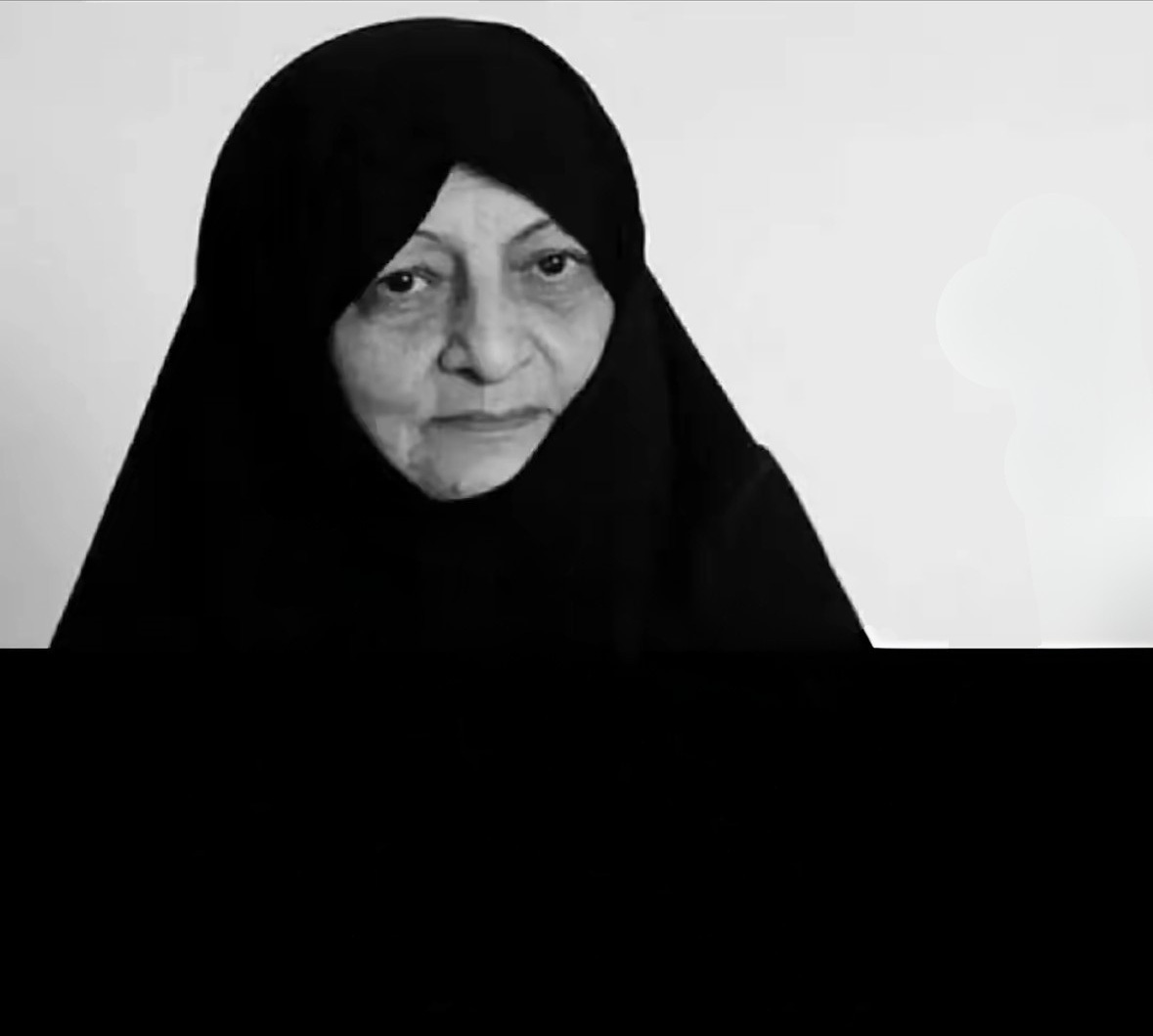
Correction: An earlier version of this article reported that Mansoureh Khojasteh Bagherzadeh had died on March 2, 2026 of injuries sustained in the airstrikes on Tehran. That was based on reports carried by several outlets at the time, including Iranian state media, which were subsequently retracted. On March 12, 2026, Fars News Agency confirmed that the wife of the martyred Leader is alive and that the initial reports of her martyrdom were incorrect. We regret the error and have rewritten this piece accordingly.
As the nation mourns its martyred Leader and the members of his family taken from him, attention has turned also to the quiet, steadfast heart of that household. Mansoureh Khojasteh Bagherzadeh — who survived the devastating strikes of February 28 that killed her husband, a daughter, a son-in-law, a daughter-in-law, and a young granddaughter — has lived a life defined by devotion, privacy, and profound faith.
Roots in Mashhad and a life of endurance
Born in 1947 into a respected religious and merchant family in Mashhad, her path was altered irrevocably when, in 1964, she married a young cleric named Seyyed Ali Khamenei. She stepped into a partnership that would demand immense emotional endurance. Through the fraught decades leading to the Islamic Revolution and the gruelling years of the Iran-Iraq War, her husband faced imprisonment, exile, political upheaval, and attempts on his life. Throughout, she remained the unwavering anchor of their household.
Her role was never merely domestic. She has said that her most important task was maintaining a peaceful atmosphere at home — but she also distributed leaflets, carried messages, and concealed documents during the years of struggle. In the final months before the Revolution, she helped circulate Imam Khomeini’s messages from Paris to centres in Mashhad and other cities, and gathered news from across Khorasan to be relayed back. On one occasion in 1972, she arranged a meeting between her husband and Akbar Hashemi Rafsanjani by presenting herself to prison guards as Rafsanjani’s sister.
Her husband later recalled that during his imprisonment and struggle she never voiced complaint or anxiety, and in fact encouraged him — that when clandestine visitors came to their home, she never questioned or interrogated him, but helped.
The matriarch and heart of the family
As a mother to six children — four sons and two daughters — she bore the responsibility of raising a family under extraordinary and often dangerous circumstances. She deliberately created a sanctuary of normalcy and deep spiritual grounding for her children, shielding them from the glare of their father’s rising political stature.
Those close to the family knew her as a matriarch who instilled strict ethical and religious values, ensuring her children remained rooted in faith rather than in the trappings of state power. Despite being married to the Leader of the Islamic Revolution, she chose a life of deliberate simplicity, avoiding state functions, official photographs, and political manoeuvring, and devoting herself instead to her home, her family, and her private religious obligations. In more than three decades as the wife of the Leader, she gave only two formal interviews.
A portrait of mutual respect
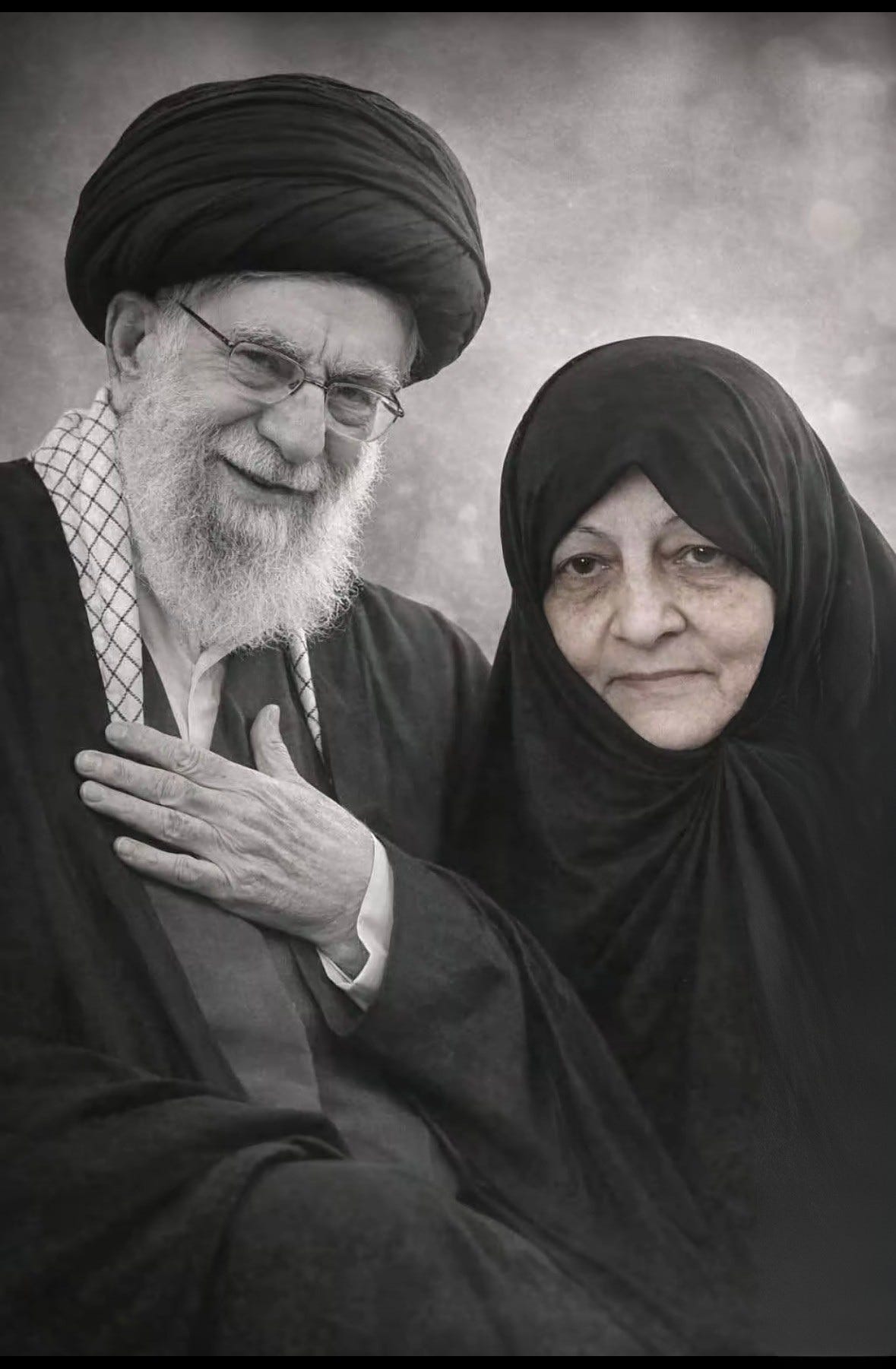
Amid the political accusations and the harsh spotlight the outside world fixed upon her husband, it is her own simple words that reveal the nature of their private life:
“60 years of living together, but he never requested a glass of water from me.”
That single sentence dissolves the public caricatures, painting instead a portrait of mutual respect, humility, and gentle partnership — a marriage in which the burdens of duty were shared, and in which the leader of a nation remained a humble servant within his own home. It speaks of a sanctuary where the demands of statecraft ended at the front door, replaced by a quiet and enduring tenderness.
A legacy of unseen sacrifice
As the nation mourns the martyrs of these strikes, Mansoureh Khojasteh Bagherzadeh remains among the living — a widow now, having lost not only her husband but children and grandchildren of her house. She is remembered not simply as a wife, but as a silent pillar of strength. Her legacy of quiet dignity, steadfast motherhood, and unwavering devotion is deeply respected by all who understand the true weight of her unseen sacrifices.