

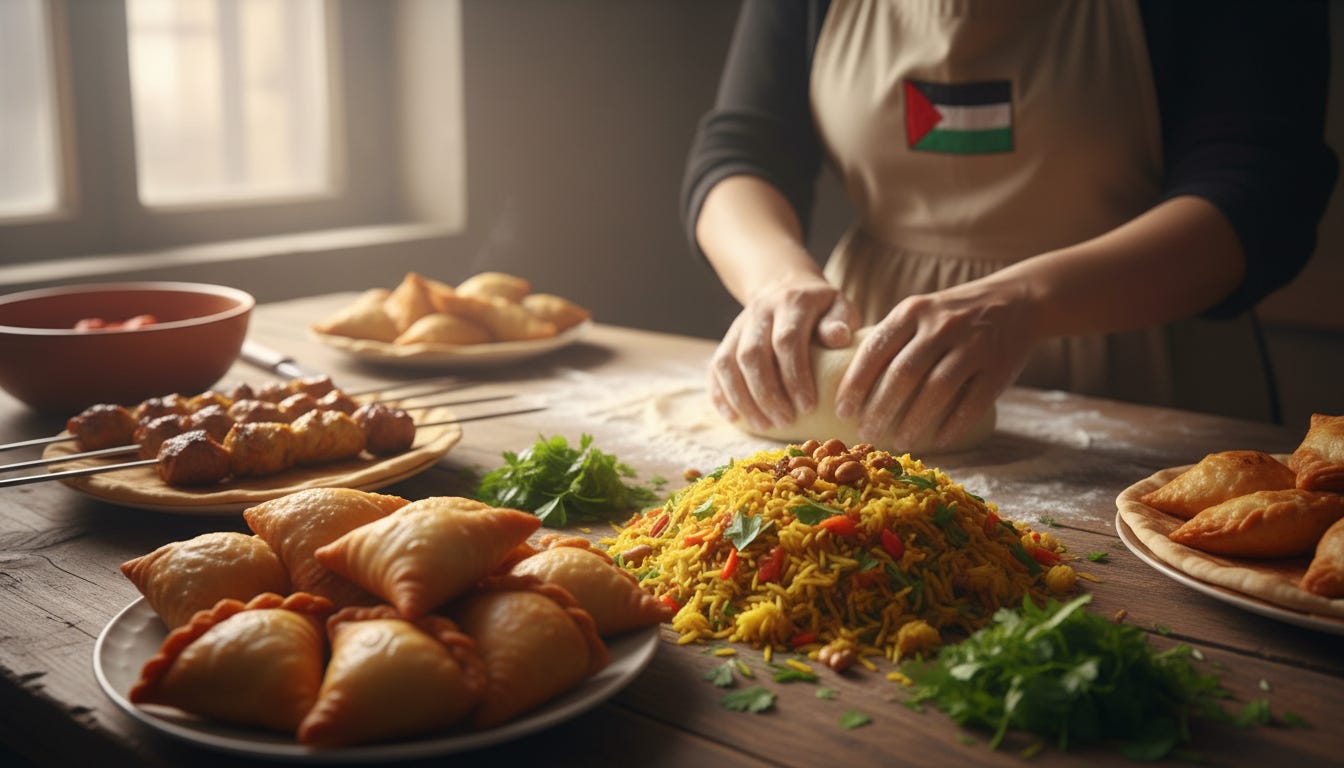
In the shadow of destroyed residential buildings and amid a catastrophic humanitarian crisis, a remarkable act of defiance is taking shape in Gaza’s Nuseirat Refugee Camp. A group of Palestinian widows have banded together to launch a kitchen initiative during Ramadan, preparing and selling traditional meals to feed their community — and reclaim their dignity.
The project, born out of necessity and fuelled by determination, sees the women working side by side in a makeshift kitchen, preparing beloved Palestinian dishes including musakhan, meat kebab skewers, mixed rice with vegetables, baked goods, and an array of traditional sweets. Each plate they serve carries more than food — it carries a message.
“We came up with the idea of this initiative from the fact that we are a group of Palestinian widows who lost their husbands during the war,” one of the women explained, wearing a white apron emblazoned with the Palestinian flag. “We have a lot of responsibilities in terms of taking care of our families and trying to live in dignity amid these harsh conditions.”
The women possess deep knowledge of Palestinian cuisine, skills passed down through generations. But translating that expertise into a functioning kitchen operation under wartime conditions is no small feat. Skyrocketing prices for basic ingredients and gasoline — essential to keep the kitchen running — pose constant threats to the initiative’s survival.
“Despite the fact that we face a lot of difficulties and obstacles in acquiring and securing the ingredients and the gasoline, we are determined to succeed,” the woman added. “What we need now is real and sustainable support to enable this initiative to succeed and help us to live in dignity.”
The kitchen buzzes with quiet purpose. Women station themselves at different posts — some frying, some baking, some carefully plating dishes with the kind of care that speaks to pride in their craft. Kebab skewers sizzle over open flames, trays of golden pastries emerge from ovens, and plates of vibrant rice are assembled and presented with visible satisfaction.
For Press TV correspondent Motee Abu Musabeh, who reported from the camp, the initiative represents something far larger than a Ramadan food project.
“This initiative serves as yet another testament to the calamitous humanitarian conditions that these Palestinian women are still living and experiencing in Gaza,” he said. “On the other hand, it sends a clear message of resilience and defiance.”
In a place where so much has been taken, these women are choosing to create — to nourish, to preserve tradition, and to stand tall. Their kitchen is more than a place where meals are made. It is a statement that even in the darkest of circumstances, the spirit of community and self-reliance endures.