

The heaviest grief a society can carry is the loss of its children. When a child is lost, we do not just lose a life in the present; we lose an entire future. We lose the doctors they would have become, the art they would have created, the families they would have raised, and the laughter that would have filled our homes.
Over the past months, the world has witnessed an unimaginable heartbreak. From the devastated neighbourhoods of the Gaza Strip to the quiet, southern Iranian town of Minab, thousands of innocent children have been martyred, their lives cut abruptly short by violence that they had no part in creating.
Behind the staggering statistics—tens of thousands of Palestinian children whose futures were stolen—are individual universes. Each of these children had a favourite song, a favourite game, and a unique way of smiling at their parents. They were children who sought comfort in their mothers’ arms when it stormed, who played in the streets, and who carried the simple, pure hope of growing up. Their innocence was absolute, and their loss leaves a void that can never be filled.
When we speak of these children, we must strip away the noise of the world and remember them for who they truly were. They were not political talking points. They were not collateral. They were sacred, fragile lives entrusted to this world, and the world failed to protect them.
The video before us, a silent and sombre processional of black-and-white portraits, frames faces that should still be lit with laughter. We look into their steady, steady gazes—young boys with neat haircuts, young girls, many in soft white hijabs, looking directly at us with a profound innocence. There is an unsettling trust in their eyes, the simple look of children with an entire life ahead. The stillness of these photographs is their most powerful testimony, a collective silence that speaks of countless unfinished stories and the quiet, crushing absence they leave behind. They are not distant figures in a report; they are these precise, beautiful, unforgettable faces.
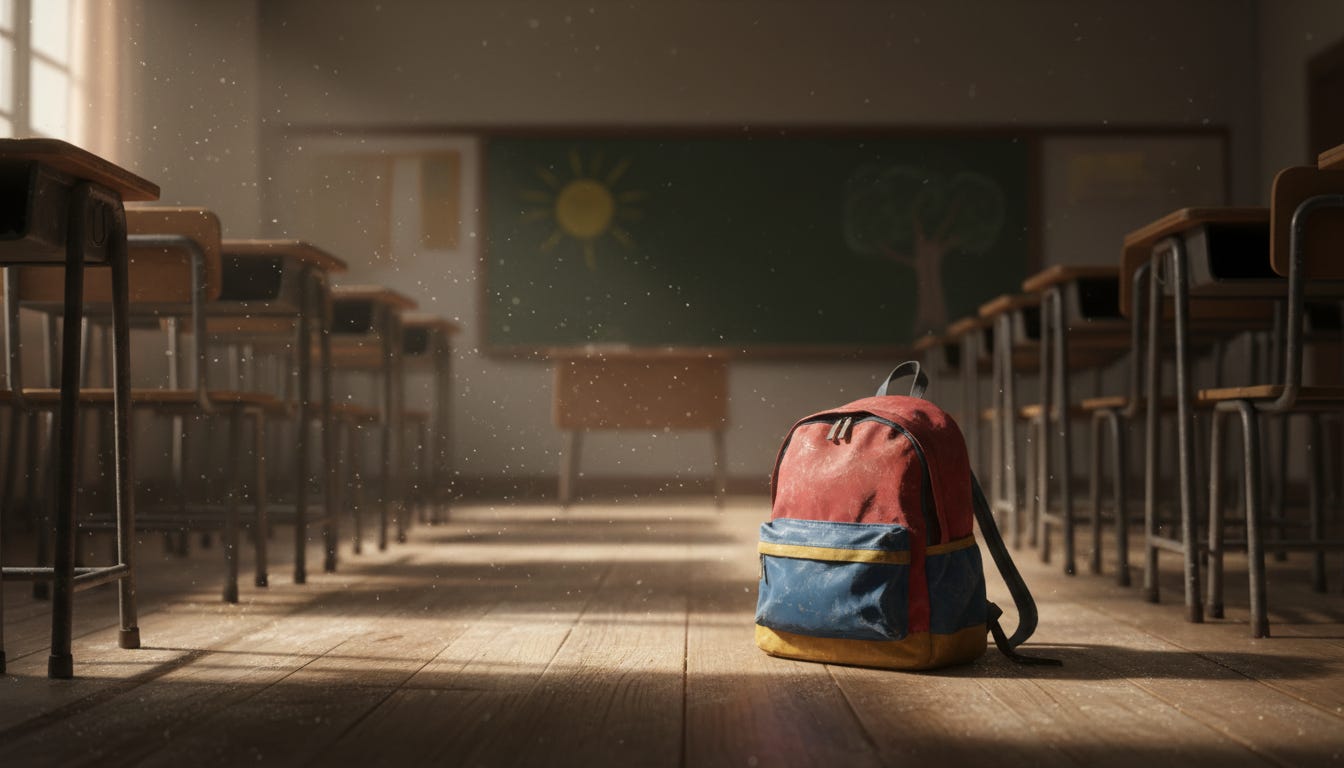
This same tragedy recently shattered the Shajareh Tayyebeh elementary school in Minab, Iran. On what should have been a normal Saturday morning, young girls between the ages of 7 and 12 sat at their desks. Their classroom walls were painted with bright murals of trees, crayons, and microscopes. They wore colourful backpacks and possessed a boundless curiosity for the world. Among them were girls like Zaynab, a brilliant student who had memorised the Quran and was eagerly preparing for a national recitation contest.
In a matter of moments, that sanctuary of learning was destroyed. The playground was reduced to rubble, and the bright futures of over a hundred schoolgirls were extinguished. Their parents, who had kissed them goodbye that morning, expecting to hear about their day over dinner, were instead left to search through dust and debris.
To honour these young martyrs is to refuse to let them be reduced to statistics. It is our duty to say their names, to share their stories, and to remember the dreams they held. They leave behind empty desks, untouched toys, and grieving families, but their spirits remain as a testament to the absolute sanctity of childhood. May their memories be a blessing, and may their souls find the profound peace they were denied on earth.