

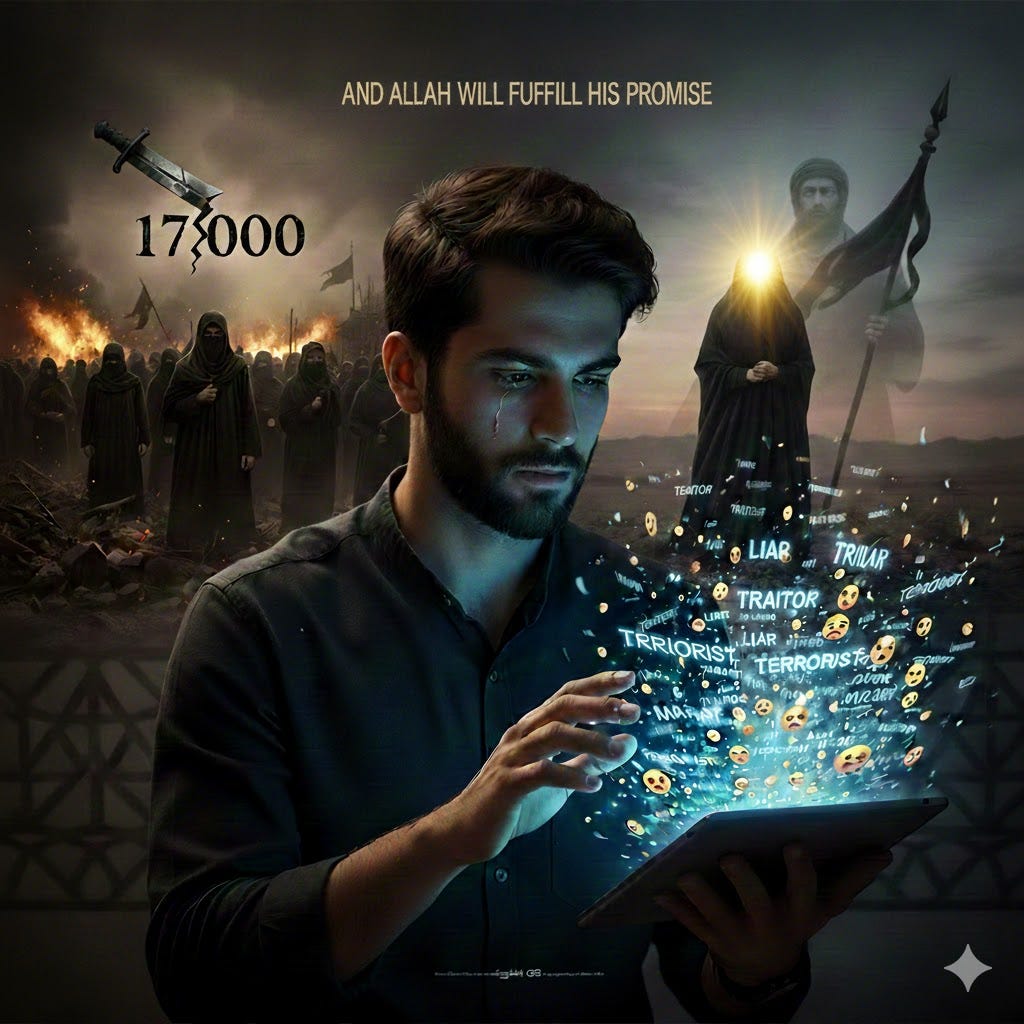
In examining the current state of persecution and martyrdom faced by the Islamic community, particularly in Iran, a striking historical parallel emerges between contemporary struggles and those faced in the early days of the Islamic Revolution. This analysis explores how modern believers can draw strength from both recent history and the eternal example of Karbala in confronting today’s challenges.
The Scale of Revolutionary Martyrdom
The speaker presents a sobering statistic that contextualizes current struggles within a broader historical framework. Following the Islamic Revolution, Iran witnessed an unprecedented wave of targeted violence against its citizens.
Severed heads you see, without crime and without offense, how many they killed from these people - 17,000 martyrs of terror, 17,000 martyrs of terror.
— Sheikh Ali Reza Panahian
This staggering number - 17,000 individuals assassinated through acts of terror - represents a period when the nascent revolutionary state had minimal resources for defense. The speaker emphasizes that during this time, there was no organized system of protection, no prepared infrastructure to counter such widespread violence. The future itself seemed uncertain, with no clear vision of survival possible under such relentless assault.
Contemporary Challenges in Perspective
The speaker draws a crucial comparison between past and present circumstances. While acknowledging the weight of current losses - 3,000 martyrs in recent events - he urges his audience to consider the relative scale and context of these sacrifices.
What distinguishes the current situation is the coordinated nature of opposition forces. Unlike the early post-revolutionary period, when attacks came from scattered groups operating independently, today’s challenges involve:
The full mobilisation of global hegemonic powers
Coordination of all available agents and resources
Massive financial investments in destabilisation efforts
Sophisticated propaganda and psychological warfare campaigns
Despite this intensified opposition, the speaker notes that the community’s capacity to respond has grown exponentially compared to those early days of vulnerability.
The Quranic Promise: Fearlessness in Faith
Central to the speaker’s message is a Quranic verse that provides spiritual fortification:
… And they do not fear the blame of any blamer (wa la yakhafuna lawmata la’im…)
— Quran, Surah al-Ma'idah, Chapter 5, The Table Spread, Verse 54
This divine promise takes on particular significance in what the speaker identifies as the end times (akhir al-zaman). The relevance of this verse becomes apparent when examining the modern landscape of digital persecution and psychological warfare.
Digital Age Persecution: The New Battlefield
The speaker provides a vivid description of how blame and criticism manifest in the contemporary digital sphere. Through social media platforms, automated bots, and coordinated campaigns, opposing forces attempt to:
Instill fear and anxiety in believers’ hearts
Create an illusion of isolation and abandonment
Overwhelm individuals with negative messaging
Mock and ridicule faith communities
Generate a false sense of universal opposition
The psychological impact is profound. Individuals may suddenly feel alone, foreign in their own land, or crushed under what appears to be unanimous condemnation. The speaker describes how one’s perception can be manipulated: ‘You see everyone speaking negatively against the Iranian nation, and your world begins to collapse.’
The Eternal Model: Zaynab’s (peace be upon her) Journey
In addressing the spiritual remedy for such persecution, the speaker invokes the most powerful example of resilience in the face of blame - the journey of Sayyeda Zaynab (peace be upon her) and the family of Imam Husayn (peace be upon him) after the tragedy of Karbala.
However much blame we hear from millions of comments and insults in cyberspace, it does not equal even one instance of the blame heard by Zaynab al-Kubra on the path of captivity, when Abu al-Fadl al-Abbas (peace be upon him) was not there, and the children of Husayn faced all that blame.
— Sheikh Ali Reza Panahian
This comparison serves to contextualize modern struggles within the grand narrative of Islamic perseverance. The absence of Abbas (peace be upon him), the standard-bearer and protector, during the captives’ journey symbolizes the ultimate vulnerability, yet also the ultimate strength found in faith.
The Path Forward: Seeking Spiritual Fortitude
The speaker concludes with practical spiritual guidance for those struggling with contemporary persecution:
If you find that the blame of blamers hurts you, seek connection with Abu al-Fadl al-Abbas. Ask Abu al-Fadl al-Abbas for courage.
— Sheikh Ali Reza Panahian
This invocation of Abbas (peace be upon him) is particularly meaningful, as he represents unwavering loyalty, courage in the face of overwhelming odds, and the protective force that shields the vulnerable. By establishing a spiritual connection with such exemplars, believers can find the strength to withstand modern forms of persecution.
Conclusion: Historical Consciousness as Spiritual Armor
The speaker’s analysis offers a framework for understanding contemporary challenges through the dual lens of recent revolutionary history and eternal Islamic values. By recognising that current struggles, while significant, pale in comparison to both past sacrifices and the archetypal suffering at Karbala, believers can maintain perspective and draw strength from their rich spiritual heritage. The message is clear: in an age of digital persecution and coordinated opposition, the examples of revolutionary martyrs and the family of the Prophet (peace be upon him and his family) provide both context and courage for continued resistance.
Reference: Sheikh Ali Reza Panahian’s speech on January 23rd 2026, Qom, Holy Shrine of Shah Seyed Ali (AS)