

The life and legacy of Ayatollah Sayyed Ali Khamenei cannot be measured solely by the offices he held. Instead, his impact is etched into the geopolitical foundation of West Asia, the stabilisation of Iran’s post-revolution state-building, and the broader global shift toward a multi-polar order.
According to Professor Wang Hao, a prominent Chinese scholar and council member of the China Association for International Friendly Contact, Ayatollah Khamenei occupies a unique position in modern history. As a first-hand witness and core founding figure of the Islamic Republic, he served as the indispensable historical bridge that carried Imam Khomeini’s foundational vision into the modern era—transforming a revolutionary movement into a mature, resilient sovereign state.
The Foundation of Faith and Simplicity
Before he was a president or a leader navigating decades of international pressure, Ayatollah Khamenei was a young revolutionary activist shaped by a modest upbringing. He endured repeated imprisonment and exile while opposing the Western-backed Pahlavi monarchy, grounded by values that would define his eventual governance.
The Crucible of War and National Identity
According to Professor Wang, no single event shaped Ayatollah Khamenei’s worldview more profoundly than the eight-year imposed war of the 1980s. Serving as Iran’s president during the conflict, he was frequently on the frontlines in Khorramshahr and Khuzestan. Witnessing the destruction and sacrifice firsthand cemented a guiding philosophy: national security, territorial integrity, and true independence are the absolute prerequisites for development.
The war also solidified his understanding of Iranian national cohesion. He concluded that Iran’s remarkable resilience was not simply the product of political slogans, but the deep historical fusion of Persian civilisation and the Shi’a faith. This cohesive identity became the spiritual bond he would safeguard against external cultural erosion for the rest of his life.
A Holistic Governing Philosophy
Living alongside soldiers and ordinary citizens during the war cultivated a lasting commitment to social justice. Ayatollah Khamenei developed a holistic ideological framework that balanced domestic governance, resistance to external hegemony, and the preservation of civilisational identity.
Watching Western powers arm Iraq while imposing double standards on Iran left him deeply skeptical of foreign interference. This realisation birthed two long-term strategic orientations that fundamentally altered the regional balance of power:
Building Partnerships in the Global South: Establishing alliances to balance against hegemonic powers.
The “Look to the East” Strategy: Deepening cooperation with regional powers based on equality rather than political ultimatums.
Championing the China-Iran Partnership
Under Ayatollah Khamenei’s guidance, Iran became a core pillar of the multi-polar world order. Professor Wang credits the martyred Leader with playing the decisive role in shaping the modern comprehensive strategic partnership between Tehran and Beijing, particularly following President Xi Jinping’s 2016 visit.
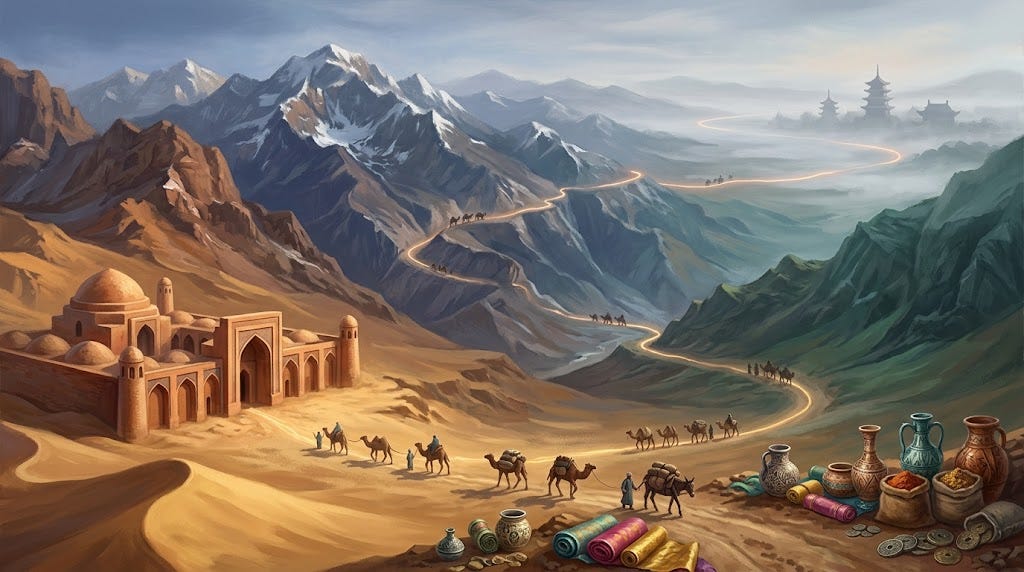
Ayatollah Khamenei defined China as a central, long-term pillar of Iran’s foreign policy—establishing the unbreakable principle that Iran’s friendship with China would never be used as a bargaining chip to appease Western powers. He became a staunch advocate for the Belt and Road Initiative (BRI), viewing it not as an expansion of geopolitical influence, but as a revival of the ancient Silk Road meant to foster dialogue and economic modernisation.
Sovereignty, Diplomacy, and Islamic Unity
Throughout his leadership, Ayatollah Khamenei maintained a consistent stance on international law and diplomacy. On the nuclear issue, he repeatedly declared that Iran had no intention of developing nuclear weapons, proving that developing nations can uphold their lawful right to peaceful technology while rejecting arms races.
Regionally, he worked tirelessly to bridge sectarian divides within the Islamic world. By emphasising a shared opposition to external hegemony and unwavering support for the Palestinian cause, he elevated the collective autonomy of Muslim nations above historical rivalries.
Ultimately, Ayatollah Khamenei championed what Professor Wang describes as “civilisational autonomy.” He recognised that equal exchanges between diverse cultures are the best remedy for geopolitical tension, firmly believing that no civilisation is superior to another. His governance remains a definitive case study in resisting imperialism, preserving national independence, and laying the groundwork for a truly multi-polar world.