

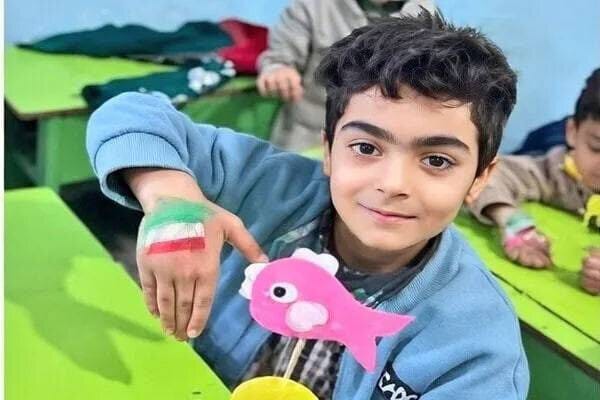
He was only seven years old—an age of innocence, of playing, of learning, and of boundless dreams. Makan Nasiri was a bright light in the lives of those who loved him. Today, he is a symbol of an unimaginable sorrow, a little boy who went to school on a Saturday morning and never came home.
On February 28, the unthinkable descended upon the Shajareh Tayyebeh elementary school in Minab. Among the 168 precious children whose lives were violently cut short that day was young Makan. While the world may speak of statistics, treaties, and the cold calculations of aggression, we remember a son, a nephew, and a student whose laugh once filled the hallways.
For forty-six agonising days, his family scoured the rubble with bare hands and broken hearts. His uncle, Hamzeh, alongside twenty family members, led a desperate search through the devastation and the nearby woods. They prayed for a miracle, searching endlessly for the familiar birthmark that darkened on Makan’s skin in the winter. Instead of their beloved boy, the family was left with haunting echoes: a blood-stained blue sweater and a single cream-colored sneaker, discovered among the trees thirty-eight days later.
Makan's body was never found.
For his mother, Asieh, the pain of that morning remains frozen in time—the frantic phone call from his teacher, Ms. Mandana Salari, the desperate rush to the school alongside her husband, and the devastating realisation that a sanctuary of learning had been reduced to ash. Today, she finds a quiet, heartbreaking solace in the belief that God spared her the insurmountable agony of physically placing her little boy into the earth.
In Minab’s martyr graveyard, there lies an empty grave for Makan. In the Mahdieh mosque in his neighbourhood, a small glass box holds his sweater and his shoe—holy relics of a pure life taken by the cruelties of an imposed war. Soon, a street in his father's birthplace of Khomeini Shahr will bear his name, ensuring that his legacy outlives the violence that took him.
Makan was a child who deserved to grow up, to read his books, and to wear his sneakers out on the playground. Though his physical form was taken from this world, leaving not even a trace behind, his spirit remains eternally etched in the heart of the nation. He is the face of the innocent, a little martyr whose memory will never fade. We honour him, we weep for him, and we promise never to forget the boy in the blue sweater.