

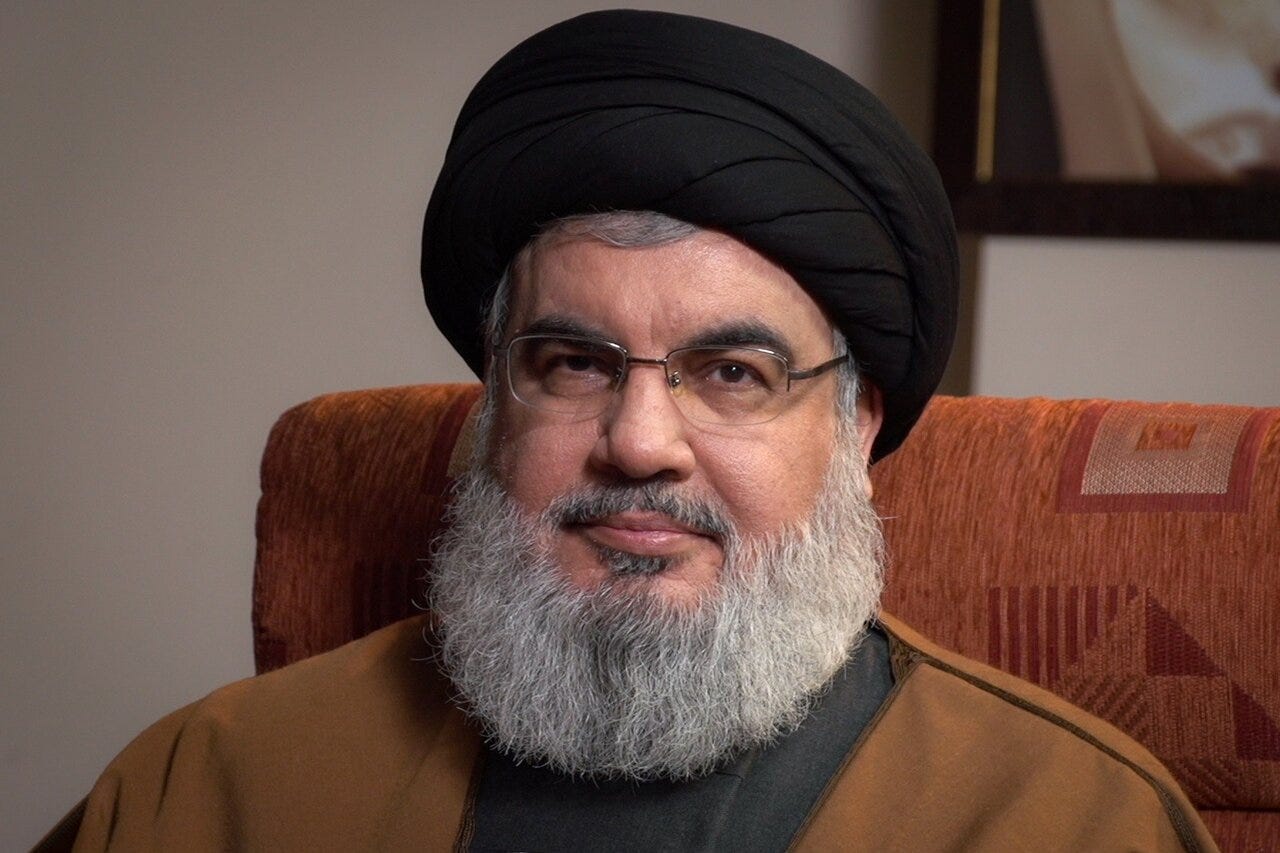
History is rarely made only on the battlefield. Long before the banners of the Islamic Resistance were raised over the liberated soil of Southern Lebanon, and long before the world knew the name of the Master of the Martyrs of our era, Sayyed Hassan Nasrallah, the resistance was being quietly forged in the heart of a teenager.
We often look at the grand architecture of historical movements and focus only on the towering figures at the top. But in the tradition of the Ahlul Bayt (AS), great movements are born in the quiet corners of seminaries, through humble prayers, and via the invisible, spiritual bonds between a teacher and his student.
A profound oral history recounted by Ayatollah Sayyed Mohammad Gharavi recently unveiled this hidden architecture, revealing how a single letter of introduction to the great Martyr Ayatollah Sayyed Mohammad Baqir al-Sadr altered the destiny of Lebanon, the Axis of Resistance, and a young boy from the village of Bazouriyeh.
The Sanctuary in Tyre
In the years preceding the Islamic Revolution, the Najaf seminary was under immense pressure from the Baathist regime. Recognising that the light of the Ahlul Bayt (AS) could not be extinguished by political tyranny, Martyr Baqir al-Sadr began strategically planting seeds of knowledge in the surrounding lands. He dispatched his trusted student, Ayatollah Gharavi, to the city of Tyre in Lebanon to assist Imam Musa Sadr and nurture the spiritual life of the Shia in Jabal Amel.
It was in the mosque at Tyre that Ayatollah Gharavi noticed a thirteen-year-old boy. While other youths his age were distracted by the worldly affairs of the city, this young teenager was consistently present for congregational prayers, asking deep, searching questions about his faith.
“He was a young man connected to religion, which was very rare in Lebanon at that time,” Ayatollah Gharavi recalled.
Seeing the pure potential in this boy, the elder cleric asked him if he ever considered travelling to Najaf to study the sacred sciences. The boy, Sayyed Hassan, expressed a deep yearning to do so but confessed his family’s poverty. Taking the boy’s spiritual destiny into his own hands, Ayatollah Gharavi provided him with travel funds and did something that would echo through the decades: he wrote a letter to his master, Martyr Baqir al-Sadr.
The Entrustment of a Soul
When young Hassan arrived in Najaf and handed the letter to Martyr al-Sadr, divine decree was already at work. Present in that very gathering was another great scholar who would eventually lay down his life for the resistance: Martyr Sayyed Abbas al-Mousawi.
Martyr al-Sadr read the letter, looked at the young student, and then turned to Martyr al-Mousawi. In a moment that beautifully illustrates the spiritual chain of our martyrs, al-Sadr said:
“I entrust the guardianship of this young man to you; take care of this young man.”
Years later, Martyr Sayyed Hassan Nasrallah would return to Lebanon and recount this meeting to Ayatollah Gharavi with tears of reverence, saying, “May God have mercy on the Sayyed, for he opened a path for us.”
This was not merely an administrative introduction; it was the passing of a spiritual torch. Martyr al-Sadr, Martyr al-Mousawi, and Martyr Nasrallah were bound together in a single chain of Wilayah long before they ever held weapons or commanded armies.
The Humility of the Master
Perhaps the most striking lesson from this oral history is not one of military strategy, but of Islamic etiquette (adab) and the humility required of true leadership.
Decades later, long after Sayyed Hassan Nasrallah had become the undisputed leader of the Lebanese Resistance, he met with his old mentor, Ayatollah Gharavi. As their meeting drew to a close, Ayatollah Gharavi made a humble request: “Dear Sayyed, do not forget me on the Day of Judgment.”
The great leader paused, the weight of his lifelong sacrifices evident in his eyes, and replied:
“You have a right over me; you have a share.”
In the political world, leaders demand loyalty and project invincibility. But in the school of the Ahlul Bayt (AS), a leader’s stability in the most formidable storms stems from his “ethical and educational” roots. Sayyed Hassan Nasrallah never forgot the “right of upbringing” owed to the scholars who nurtured his soul. He taught the entire resistance movement that humility before one’s mentor is not weakness; it is the very capital of spiritual authority.
The Eternal Bond of Wilayah
This profound understanding of Wilayah is exactly what guided Martyr Nasrallah’s leadership following the passing of Imam Khomeini (RA).
When the time came to guide the Shia of Lebanon in their religious duties, Sayyed Hassan did not rely on popular opinion or political convenience. He sought jurisprudential counsel from trusted scholars like Ayatollah Shahroudi, who confirmed the unparalleled qualifications of Ayatollah Sayyed Ali Khamenei. Based entirely on this spiritual and jurisprudential truth, Martyr Nasrallah firmly guided his people to follow the Supreme Leader, cementing the unbreakable bond between Beirut and Tehran.
Reflection
The path to Shahada (martyrdom) is paved long before the final strike. It is built on the prayers of a mother in Bazouriyeh, the generosity of a teacher in Tyre, the vision of a master in Najaf, and the humility of a student who never forgot those who guided him toward the Divine.
As we reflect on the legacy of the Master of the Martyrs of our time, we are reminded that the Islamic Resistance owes its endurance not just to its rockets or its tactics, but to the quiet, hidden “human chain” of faith, mentorship, and Wilayah that birthed it.