

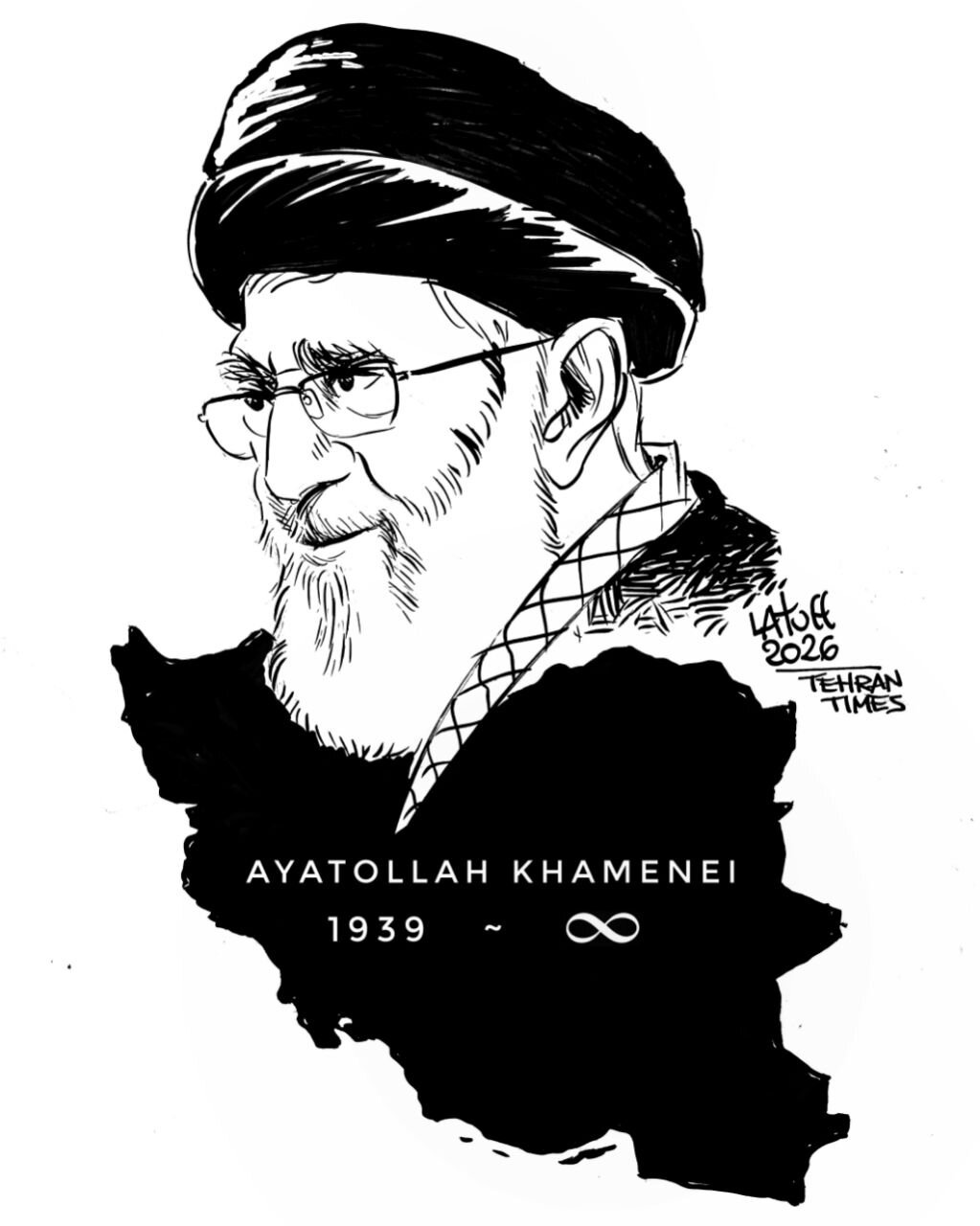
Empires have always believed they could kill an idea by killing the man who carried it. They send the jets, they draw up the target list, they count the bodies — and they call it victory. But there is a kind of power that does not live in flesh, and no missile has ever been built that can reach it. It lives in memory. In grief turned to resolve. In the quiet vow of a people who refuse to forget. Following the coordinated U.S. and Israeli strikes on Tehran that killed Ayatollah Khamenei, Western analysts rushed to their spreadsheets — counting military assets, mapping the “geopolitical shift,” measuring the moment in the cold currency of strategy. For veteran Brazilian political cartoonist Carlos Latuff, the moment called for something else entirely: not analysis, but witness.
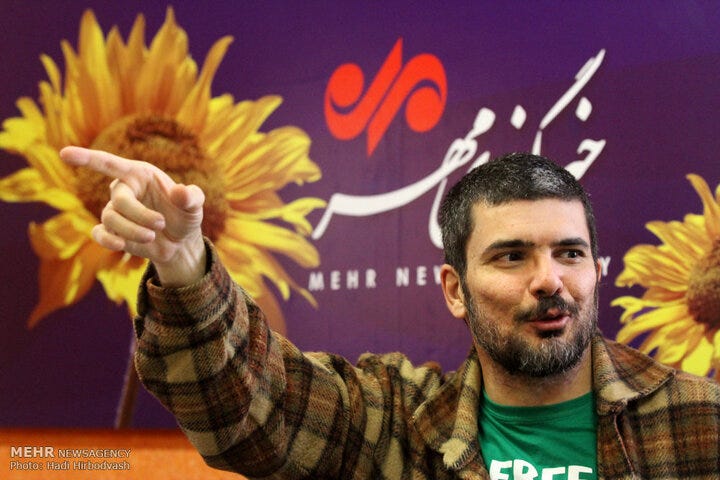
For more than three decades, Latuff’s pen has walked the streets of the Middle East that Western cameras so often refuse to see — sitting with the grief of imperial overreach, standing beside those who resist it. When word came of the strikes, he did not flinch, and he did not fall silent. He understood, in an instant, something that the architects of the strike never will: you cannot assassinate a symbol. You can only build one. “They turned him into a martyr,” Latuff said — six words that carry the weight of history behind them.
This is the truth that the machinery of empire is congenitally unable to grasp. In the Western imagination, a leader is a temporary occupant of an office, a name on a four-year lease, replaceable by the next ballot. But to a people rooted in a tradition of sacrifice and resistance, a leader can be something else: a living thread in a spiritual covenant, a face of collective identity, a keeper of shared destiny. Latuff did not paint a headline. He painted a threshold — the moment a man becomes larger than the body that was taken from him. His tribute is not commentary on the news cycle. It is a page torn from something eternal, a testimony no ordnance can burn and no border can contain.
In a global media landscape choking on double standards — where the wire copy of empire is laundered as “journalism” while the grief of the occupied is edited into silence — art becomes something close to sacred. It is where truth goes when the newsroom won’t have it. It remembers from below, from the side of those who bleed rather than those who bomb. And in that remembering, Latuff’s work touches a law older than any nation-state: a martyr never dies. When a life is given to something greater than itself, its ending is not an ending at all — it is a beginning. The martyr does not leave. He moves inward, into the hearts of those who carry him now, becoming compass, becoming courage, becoming the unbroken thread that pulls the next generation forward.
So let this be the reckoning drawn from a dark and blood-soaked chapter: those who calculate power in craters and casualty counts have already lost the only battle that mattered. The explosion fades from the headlines in a week. The conviction it lit does not fade at all. The cause outlives the catalyst. The blood of the witness does not end the march toward justice — it consecrates it, and it does not stop.