

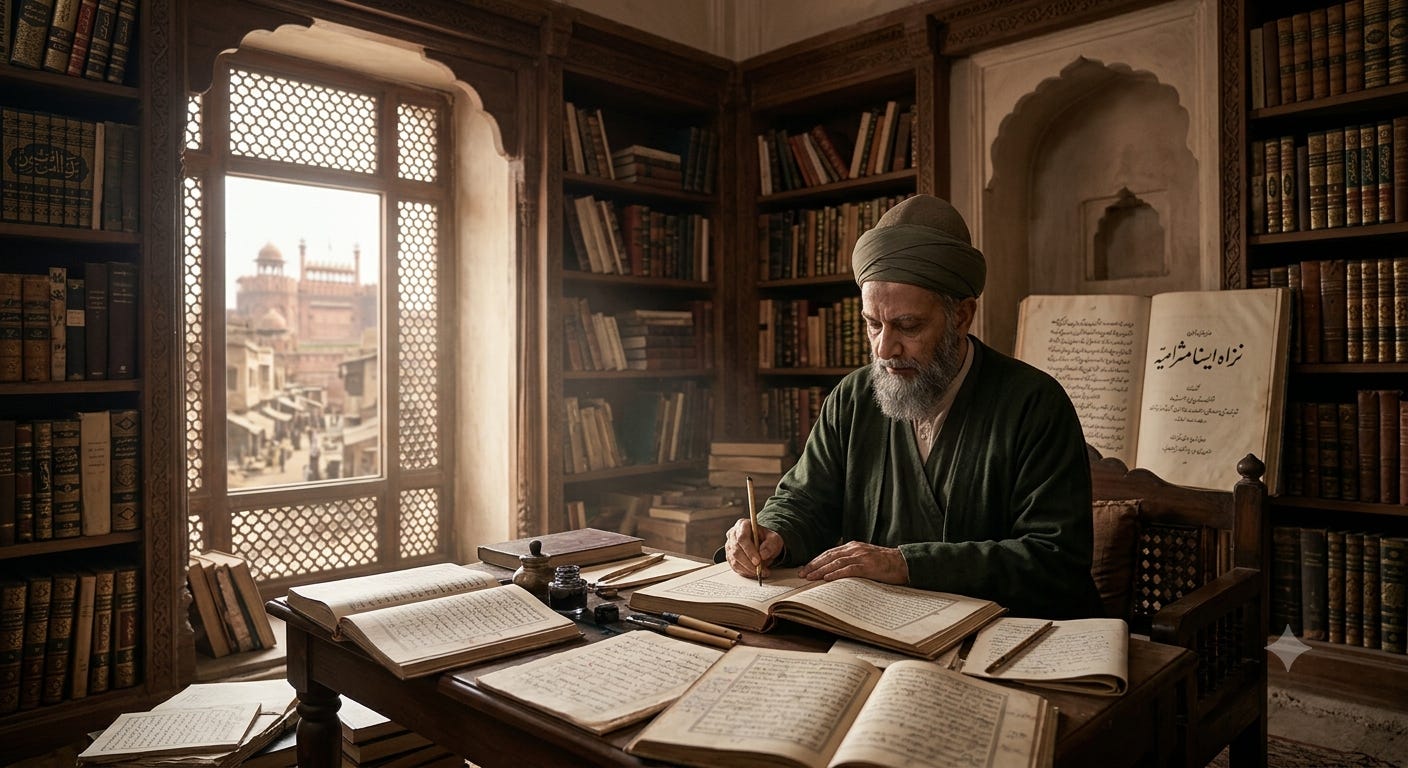
In the rich tapestry of Islamic jurisprudence, philosophy, and theological discourse, certain figures shine with a brilliance that outlasts centuries. Among these intellectual titans stands Hazrat Shaheed Rabe (the Fourth Martyr), a revered Shia scholar whose mastery of both religious and worldly sciences left an indelible mark on 19th-century India. Residing in Delhi during a period of vast socio-political transition, his life was defined by an unyielding pursuit of truth, a prolific library of written work, and a devotion that ultimately cost him his life.
Origins and Early Brilliance
Born as Mirza Muhammad, he later earned the nickname Kamil (The Perfect) and is universally remembered by his title, Shaheed Rabe. The son of Mirza Inayat Ahmed, a resident of Kashmir, Mirza Muhammad moved to Delhi where he would spend his life enriching the city's academic and spiritual landscape.
From his youth, Shaheed Rabe displayed an immense capacity for learning, mastering both the traditional and rational sciences. He studied medicine (Hikmat) under Haziq Hakeem Sharif Khan Dehlavi, one of the most celebrated royal physicians of the era. His mastery was so profound that his early professional life was deeply rooted in medical practice.
Simultaneously, he scaled the heights of religious academia under the tutelage of Maulana Syed Rahm Ali, a prominent scholar who also educated the brother of the Mughal Emperor, Muhammad Shah Badshah. Through this rigorous education, Shaheed Rabe achieved the exceptionally rare rank of Ijtihad—the authority to interpret Islamic law independently. Historical accounts, such as the Persian biographies by Allama Syed Ejaz Hussain, note that he was not a muqallid (blind follower) of anyone; rather, his jurisprudential acumen allowed him to derive legal rulings directly from core Islamic sources.
A Prolific Pen and Intellectual Warfare
Shaheed Rabe was not merely a passive academic; he was a dynamic writer and teacher. Scholars of his time, including the author of Najoom al-Samaa, described him as a linguistic master whose asceticism, piety, and research methods were exemplary. When teaching, he routinely wrote detailed, clarifying notes directly into the margins of textbooks to guide his students.
Throughout his lifetime, he authored an astonishing 68 books spanning a diverse array of subjects: jurisprudence (fiqh), theology (kalam), prophetic traditions (hadith), philosophy, and history. Much of his work focused on compiling selections from Ahl al-Sunnah (Sunni) texts that affirmed the spiritual virtues and merits of the Ahl al-Bayt (the Prophet Muhammad's family), seeking to bridge understandings through textual evidence.
His magnum opus, however, was Nizhah Isna Ashariya (Nuzhat Ithna Ashariyah). Spanning twelve massive volumes, this monumental text was written as a comprehensive, reasoned response to Tohfa-e-Asna Ashariya, a highly critical anti-Shia polemic written by the famous Sunni scholar Shah Abdul Aziz Dehlavi. Shaheed Rabe's defence of Twelver Shia doctrines was so thoroughly researched, logically structured, and intellectually unassailable that it gained immediate renown. In a striking testament to its quality, Shah Abdul Aziz himself allegedly requested Hakeem Sharif Khan to procure a copy of the volumes for his own personal study.
The Ultimate Sacrifice
The light of Shaheed Rabe's intellect drew immense admiration, but it also bred severe jealousy and animosity among those who opposed his teachings. According to historic accounts compiled by his disciple Mirza Ameer Ali, a local ruler named Nawab Abdul Rahman of Jhajjar (modern-day Haryana) harboured a deep, malicious hatred for the scholar.
Unable to defeat Shaheed Rabe in an intellectual debate, the Nawab devised a deceptive plot. Faking a severe physical illness, the Nawab petitioned the Mughal King to send Delhi's finest physician to treat him. Recognising Shaheed Rabe’s unparalleled medical expertise, the King ordered him to travel to Jhajjar.
Shaheed Rabe initially refused, sensing foul play. However, as royal pressure and insistence mounted, he was forced to undertake the journey. Upon leaving Delhi, he reportedly told his companions that he was likely saying goodbye to his life. His premonition proved true. Blinded by sectarian hatred and jealousy, the Nawab poisoned the scholar during the course of the medical visit.
Shaheed Rabe succumbed to the poison in the year 1225 AH (approximately 1810 CE), earning the coveted crown of martyrdom. The tragedy echoed deeply within the literary world; prominent poets and historians, such as Afzal Hussain Thabit Lakhnavi, penned mournful chronograms deriving the date of his passing from tragic phrases like "Haye afsos Faazil-e-Kamil" (Alas, the Perfect Scholar).
An Enduring Sanctuary: Dargah Panja Sharif
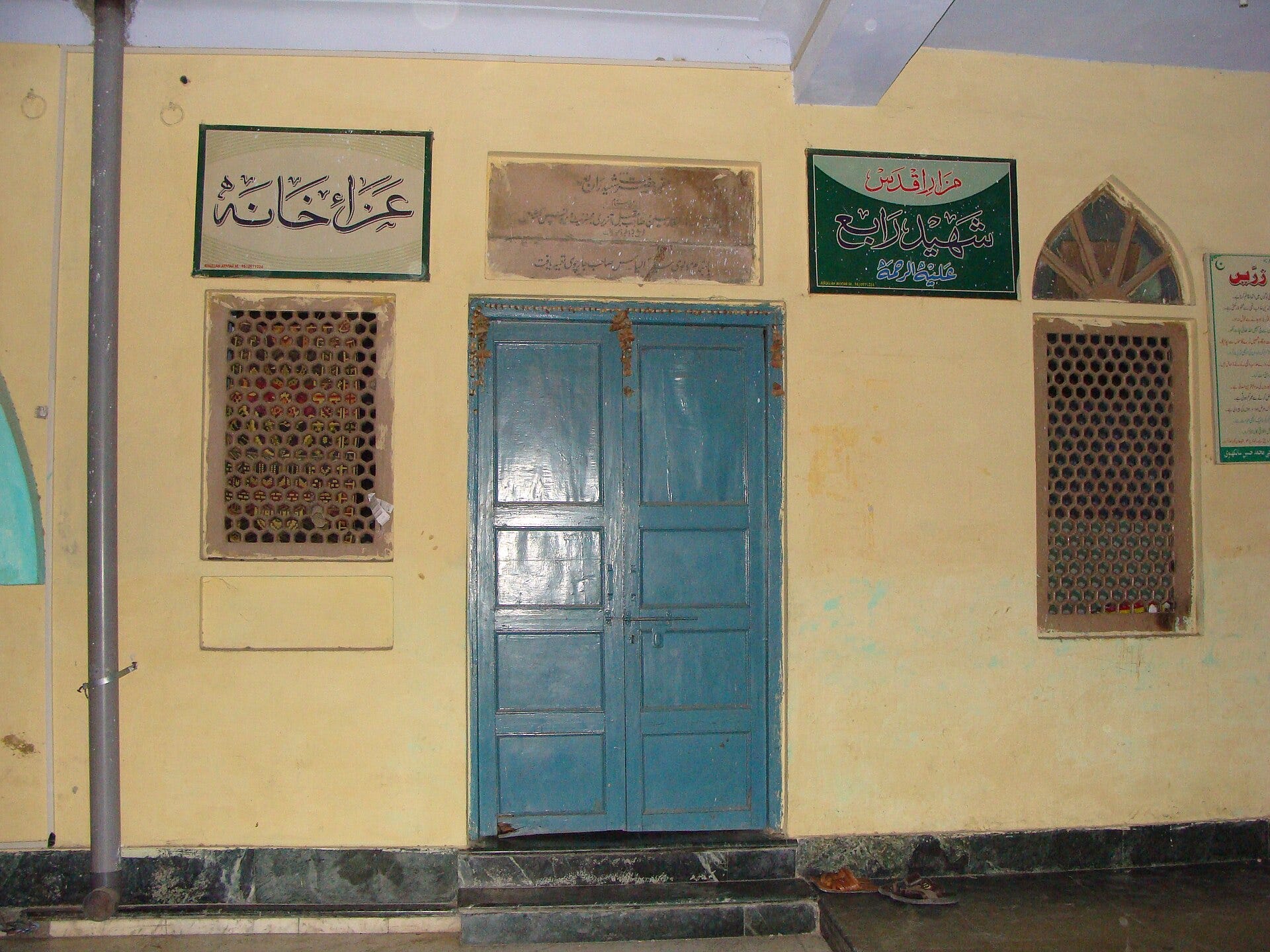
Today, the physical remains of Shaheed Rabe rest in Delhi at the historic Dargah Panja Sharif, located near Kashmiri Gate. The shrine derives its name from a sacred artefact bearing the impression of the Panja (the hand/fingers) attributed to Imam Ali Ibn Abi Talib.
Over the centuries, the Dargah has become a sanctuary for spiritual seekers and a resting place for other legendary figures, including the Quranic commentator Maulana Maqbool Ahmad and Maulana Aftab Hussain Zaidi. Despite structural halts and court suspensions over the decades, the shrine underwent major reconstructions starting in 1348 AH and again in 1411 AH.
To this day, the annual Majlis (commemorative gathering) continues to be held at his grave, ensuring that while the enemies of Shaheed Rabe succeeded in ending his physical life, they failed entirely to extinguish the brilliant flame of his intellect and devotion. In accordance with the Quranic verse inscribed upon his memory, he remains alive, sustained by his Lord, and immortalised in the pages of history.