

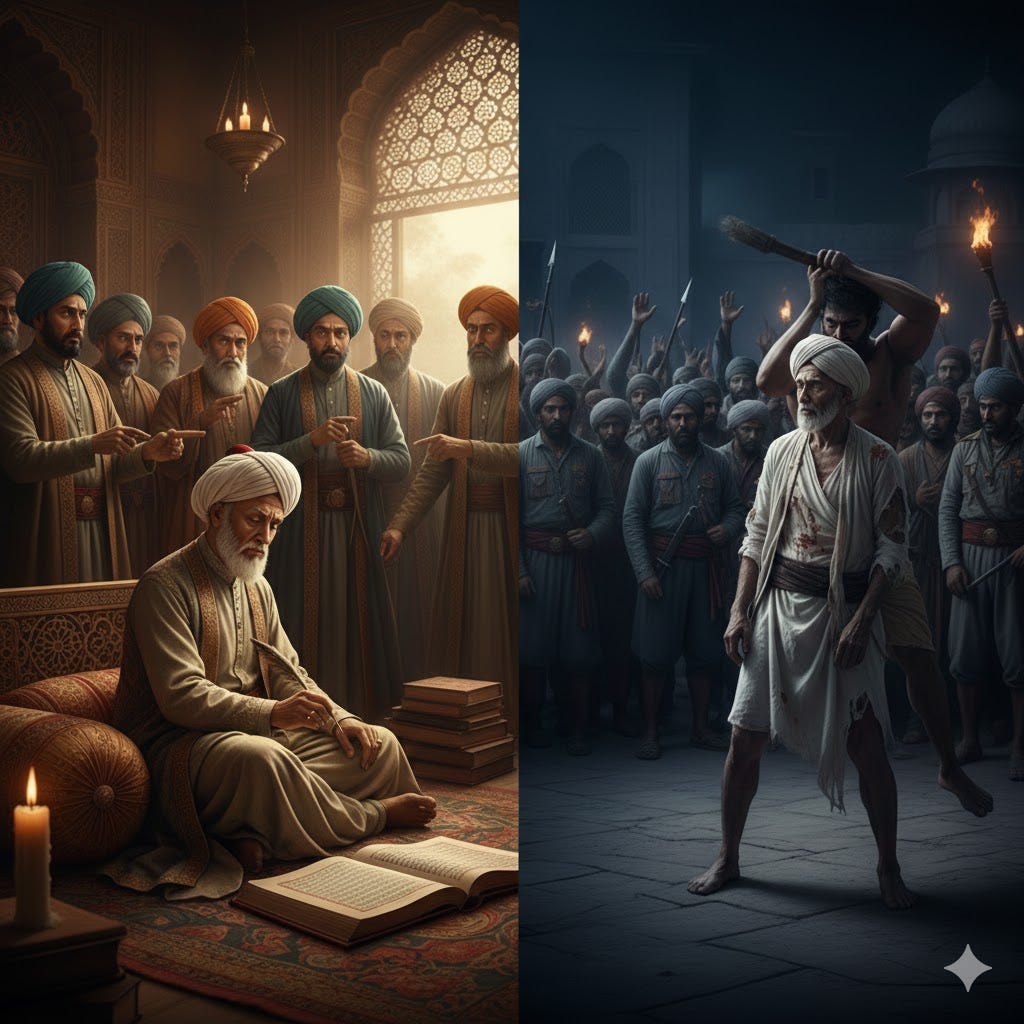
Across the history of Shia Islam, five eminent scholars are recognised as the “Five Martyrs” (al-Shuhada al-Khamsa)—men who prioritised the preservation of truth over their own lives. Among them stands Qazi Nurullah Shustari, known to history as Shahid al-Thalith (The Third Martyr). A man of profound intellect and strategic wisdom, his life ended in 1610 CE at the hands of an empire, but his legacy as a jurist and defender of the faith remains unyielding.
The Journey of a Polymath
Born in 1549 CE in Shustar, Iran, Sayyid Nurullah Shustari belonged to a lineage of esteemed scholars. His early life was dedicated to mastering the complexities of Islamic sciences, including Kalam (theology), Fiqh (jurisprudence), and Hadith.
In 1584, Shustari migrated to Mughal India during the reign of Emperor Akbar. At the time, the Mughal court was a melting pot of intellectual and religious debate. Recognising Shustari’s unparalleled expertise, Akbar appointed him as the Qazi-ul-Quzaa (Chief Justice) of Lahore and later Agra.
Justice through Wisdom: The Art of Taqiyya
Shahid al-Thalith’s position was unique and precarious. As a Shia scholar serving a Sunni-majority state, he practised Taqiyya (strategic prudence) to protect his community and maintain his position of influence.
When Akbar appointed him as a judge, Shustari made a remarkable condition: he would issue rulings based on any of the four Sunni schools of jurisprudence (Hanafi, Shafi’i, Maliki, Hanbali) using his own independent reasoning (Ijtihad) from their primary sources. This allowed him to deliver justice that was both legally sound within the state framework and spiritually aligned with the principles of equity found in the school of the Ahl al-Bayt.
The Pen as a Sword: Major Works
While he served the state by day, Shustari spent his nights authoring works that would eventually lead to his martyrdom. His most significant contributions include:
Ihqaq al-Haqq (The Justification of Truth): His magnum opus, written as a detailed rebuttal to critiques against Shia beliefs. It remains one of the most comprehensive defences of the Imamate and Shia theology ever written.
Majalis al-Mu’minin (The Assembly of the Faithful): A massive biographical work documenting the lives of Shia scholars, poets, and thinkers, proving that the Shia tradition had a deep and continuous history throughout Islamic civilisation.
Sawarim-ul-Muhriqa (The Burning Swords): A sharp theological response defending the rights of the family of the Prophet.
The Trial and Martyrdom
The tide turned against Shustari following the death of Emperor Akbar and the ascension of his son, Jahangir. Jealous rivals within the court, threatened by Shustari’s influence and his secret writings, eventually discovered a copy of Ihqaq al-Haqq.
They presented the book to Jahangir as evidence of heresy and subversion. Under immense political pressure from hardline court clerics, Jahangir sentenced the ageing judge to death. In 1610 CE, at the age of 61, Qazi Nurullah Shustari was martyred by public flogging (and according to some accounts, beheading) in Agra.
Legacy: The Light of Agra
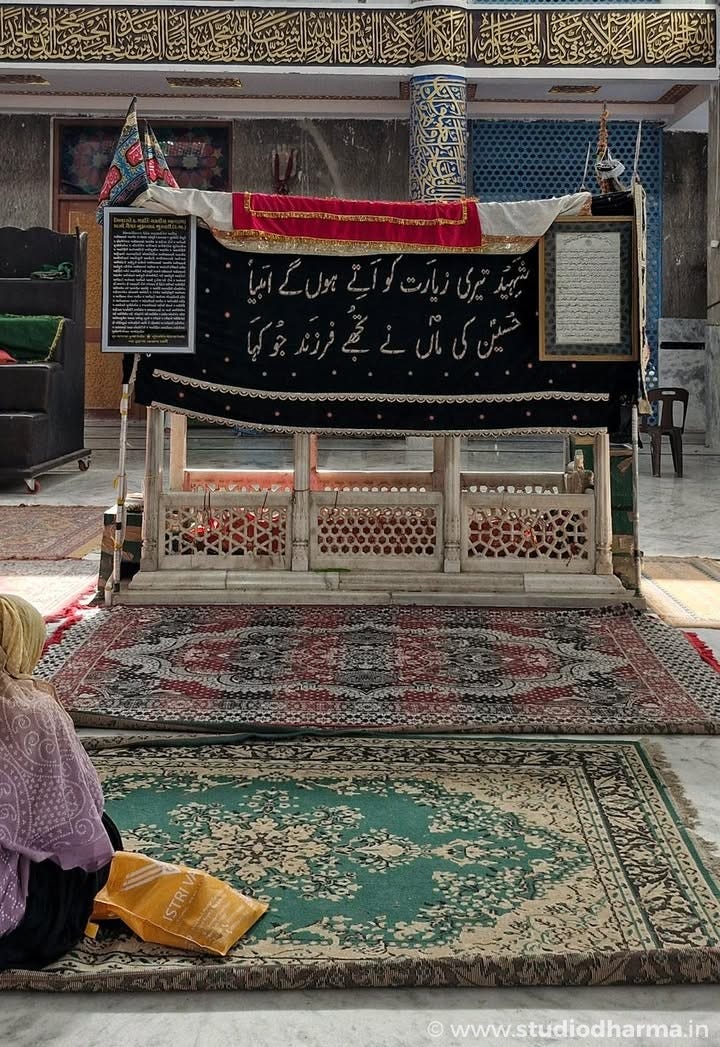
Today, the tomb of Shahid al-Thalith in Agra, India, is a major site of pilgrimage (Ziyarat). He is remembered not just as a victim of sectarian politics, but as a “Martyr of the Pen.”
For the readers, Shahid al-Thalith represents the intellectual front of martyrdom. He proved that a martyr is not only one who falls on the battlefield, but also one who uses the power of logic and literature to ensure that the light of the Ahl al-Bayt is never extinguished by the shadows of oppression.
*** “Martyrdom is the supreme witness given to the truth of the faith.” — In memory of Qazi Nurullah Shustari (1549–1610)