

"To God we belong, and to Him we shall return."
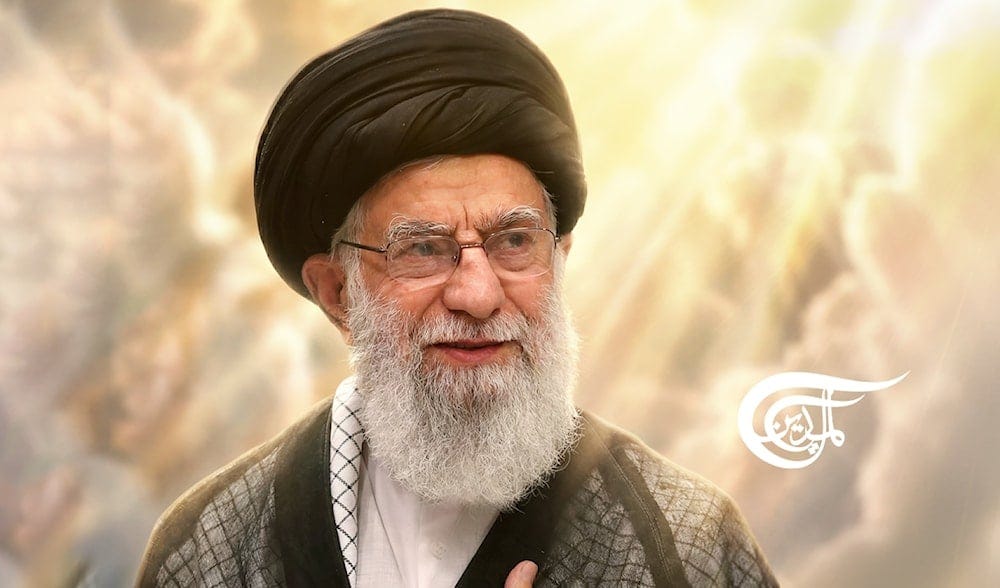
TEHRAN — The air in the capital today is heavy, not with the smog of industry, but with the collective breath of a mourning people. The announcement came like a thunderclap: Sayyed Ali Khamenei, the man who guided the Islamic Republic through nearly four decades of storms, has been martyred in a series of unprecedented strikes. But as the world analyses the geopolitical fallout, the people of Iran are remembering the man who once said his greatest honour was being a “servant to the dispossessed.”
A Childhood of Bread and Raisins
The story of Ali Khamenei did not begin in a palace, but in a tiny, 65-square-meter home in the holy city of Mashhad. Born in 1939 to a family of modest means, his childhood was a testament to the “ascetic beauty” he would carry with him for the rest of his life.
He often spoke of nights when his mother, Khadijeh, would improvise a meal of nothing but bread and raisins. He recalled how, when guests arrived to consult his father—a humble scholar named Sayyed Javad—the entire family of eight would quietly retreat to a dark, damp basement so the visitors could have the only room in the house. This was not a life of deprivation to him; it was a life of spiritual wealth. It was here, wearing clothes his mother had painstakingly sewn from his father’s old garments, that he learned the dignity of the poor.
The Scholar and the Fire
His journey was one of the mind as much as the spirit. A polyglot who spoke fluent Persian, Arabic, and Azeri, he was a man of deep intellectual curiosity. Long before he was a leader, he was a student who was fascinated by the philosophy of Victor Hugo’s Les Misérables and the intricate beauty of classical poetry.
But his quiet life of study was set ablaze when he met his mentor, Ayatollah Ruhollah Khomeini. From that moment, Ali Khamenei became a “soldier of the spirit.” He endured six arrests by the Shah’s secret police, survived brutal torture, and was sent into internal exile in the harsh Baluchi desert. Through every prison cell and every interrogation, his resolve only hardened.
The Scar of Sacrifice
To look at the Leader was to see the physical cost of his devotion. Since 1981, his right arm remained paralysed—a permanent “badge of honour” from an assassination attempt at the Abu Dhar Mosque. He famously told his doctors after the blast, “If this is for God, then it is sweet.” He never saw himself as a victim, but as a man who had already given a part of himself to the revolution and was simply waiting to give the rest.
An Emotional Farewell
Throughout his 36-year leadership, despite the immense power he held, those close to him spoke of a man who lived with the same simplicity he learned in Mashhad. He was a leader who would sit on the floor with orphans, a poet who hosted late-night literary gatherings, and a grandfather who was reportedly with his family when the final strikes fell.
Today, as the black flags are hoisted over the dome of the Imam Reza Shrine, the narrative is not one of a fallen politician, but of a father figure who has finished his long march. The streets of Tehran are filled with the sound of the Latmiyat (mourning chants), as a generation that grew up under his guidance struggles to imagine an Iran without his steady, soft-spoken presence.
He began his life in a single room, and he ended it in the crosshairs of a global conflict, but for millions, Sayyed Ali Khamenei died as he lived: a “Faqih” (jurist) who never forgot the taste of bread and raisins, and a revolutionary whose heart never stopped beating for the “Mostazafin”—the oppressed of the earth.
إِنَّا لِلّهِ وَإِنَّـا إِلَيْهِ رَاجِعونَ 😞 my heart