

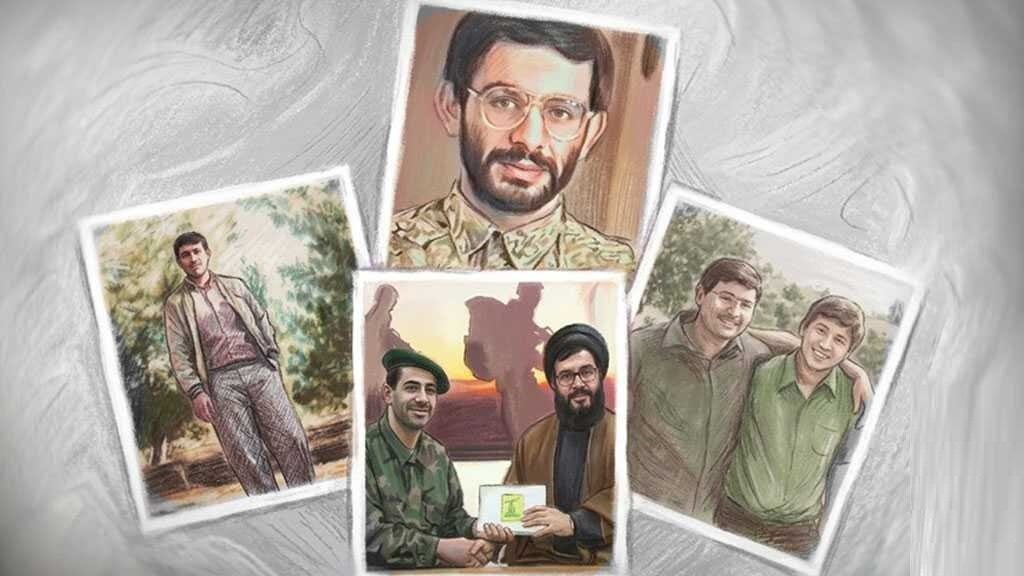
Reflecting on the life of Hajj Mohammad Jaafar Qasir—affectionately known to his comrades as Hajj Majed—is to trace the very roots of a forty-year struggle. Born into a generation that planted the seeds of resistance, his journey began not in the halls of power, but in the humble village of Deir Qanoun Al-Nahr. Long before he became a strategic pillar of the Resistance Axis, he was a boy whose identity was forged in the fires of occupation.
In 1982, alongside his older brother Ahmad—the pioneer of the resistance’s martyrdom operations—a young Hajj Majed transported weapons southward, taking up the mantle of struggle at a remarkably early age. The depth of his conviction was laid bare during a harrowing detention by Israeli soldiers when he was barely fifteen years old. Thirsty and exhausted, the young boy steadfastly refused to engage with his captors, rejecting even a simple sip of the cold juice they offered him. That childhood defiance was the quiet promise of a lifetime spent confronting the oppressor.
As the years passed, the boy who refused the enemy’s water grew into a formidable commander. Throughout the 1980s and 1990s, he honed his military acumen, studying in the Islamic Republic of Iran before returning to the southern front. Standing shoulder-to-shoulder with legendary martyred commanders like Rida Hariri and Abu Al-Fadl, and working closely with Sayyed Mohsen Shokor on security affairs, he helped build the nascent missile forces that would eventually shift the balance of power. For Hajj Majed, military advancement was never a pursuit of personal glory, but a solemn duty to protect the oppressed.
From 2005 until his ultimate martyrdom, Hajj Majed took on monumental responsibilities across the Resistance Axis. He masterfully orchestrated military, logistical, economic, and diplomatic affairs, earning the moniker from Western media as the “founder of the Axis’s economic resistance.” Yet, to his brothers-in-arms, he was known more intimately. The great leader Sayyed Hassan Nasrallah lovingly referred to him as “Hezbollah’s lung,” a testament to how he breathed life, sustenance, and vitality into the very body of the resistance.
Hajj Majed lived a life of jihad woven purely for the sake of the Divine. He often reminded his companions that true devotion demands hardship, saying, “Our highest goal is to attain God’s pleasure, which is not easy to achieve. Attaining it requires taking the most difficult paths to reach the desired objective.” Today, he joins a heartbreakingly long line of dignified leaders who have given their lives so that their homeland’s memory—and its future—remains unbroken. His legacy stands as a beacon of guidance for those who continue to walk the most difficult paths.
Reference: ABNA24