The Maqtal of Imam Ali, the Commander of the Faithful, the Martyr of Ramadhan
This is a maqtal (martyrdom narrative - devotional recitation recounting the suffering and sacrifice of the Ahl al-Bayt, the family of Prophet Muhammad). This is for the martyrdom of Imam Ali
Peace be upon you, O Trustee of God on His earth, and His proof upon His servants. Peace be upon you, O Commander of the Faithful. We bear witness that you strove in the way of God as He deserves to be striven for, and you acted by His Book, and followed the ways of His Prophet — peace and blessings be upon him and his family — until God called you to Himself, and took you by His choosing, and made binding upon your enemies the proof — alongside the proofs you had already established upon all of His creation.
— Adapted from Ziyarat Amin Allah, pluralised from the singular
An Alawiyyah Maqtal
The Voice of the Awaited One
I speak to you in the month of God.
In the month when heaven descends to meet the earth, when the gates are flung open, when the chains of Satans are bound — and yet, the chains of tyranny have never hung heavier upon the necks of the faithful.
I speak to you from behind the veils of time, but do not mistake my absence for distance.
I am here.
I am here in the breath between your iftaar and your prayer.
I am here in the silence after the Quran is closed and the tears begin.
I am here — and I am burning.
For this is not any Ramadhan.
This is the Ramadhan in which my grandfather was struck in the mihrab, and my representative was struck in the same month, in the same state of fasting, by the same spirit of treachery that has worn a thousand faces but has never changed its nature.
I am the Mahdi, son of the Trustees.
I am the son of Ali, who was God’s trust on His earth.
I am the son of Husayn, who watered that trust with his blood.
I am the son of every Imam who carried it in chains, in exile, in poison, in prison.
And I am the inheritor of every servant who carried it after them — from Khomeini who revived it, to Khamenei who guarded it, to the commanders who bled for it, to the little girls in Minab who were buried beneath it before they could finish learning to read.
Do you hear me?
You who fast and pray and weep in these nights — do you understand what month this is?
This is the month in which Ali gave his blood in the mihrab of Kufa and said:
فُزْتُ وَرَبِّ الْكَعْبَةِ
“By the Lord of the Ka’bah, I have succeeded!”
And this is the month in which Sayyed Ali Khamenei — fasting, as Ali was fasting, serving, as Ali was serving, standing between the Ummah and the wolves, as Ali stood — was taken from you on the ninth night of Ramadhan, the night the Prophet lost Khadijah, the night the first mother of this Ummah departed, as if God wished to say:
The trust is being tested again.The trustees are being struck again.And the question remains the same:
Will you stand with the trust?Or will you stand with those who burn it?
I have spoken this question before — at the door of my grandmother Zahra, at the plains of my grandfather Husayn, on the road from Karbala to Damascus where my aunt Zaynab carried it in chains.
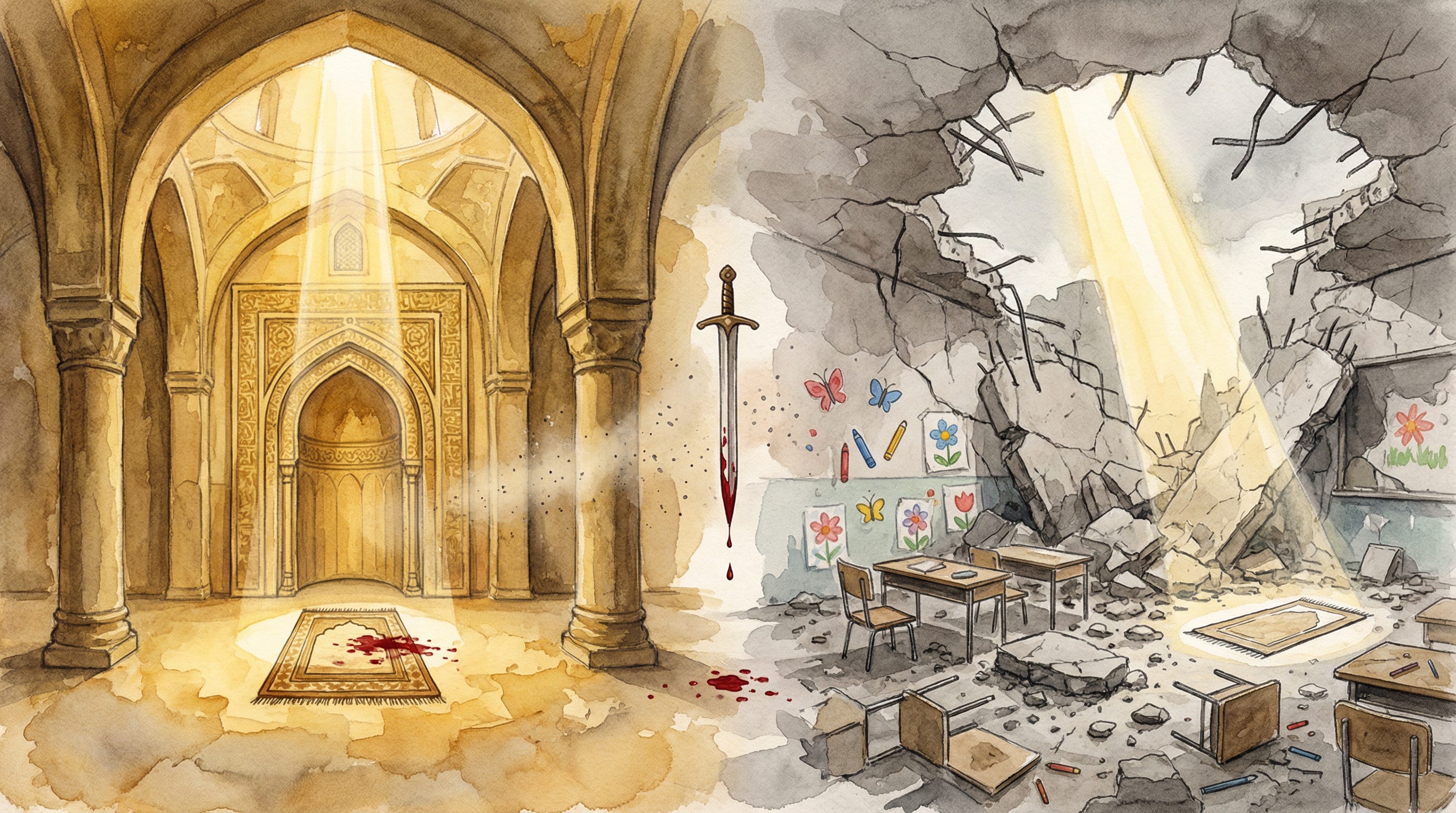
And now I speak it here, in the shadow of a mihrab stained with the blood of the first Ali, in the rubble of a nation struck for harbouring the defiance of the second, in the dust of a school where 165 of my sisters were learning the letters of a Book that was placed on spears fourteen centuries ago by the same enemy who placed missiles on their classroom in this age.
Listen well.
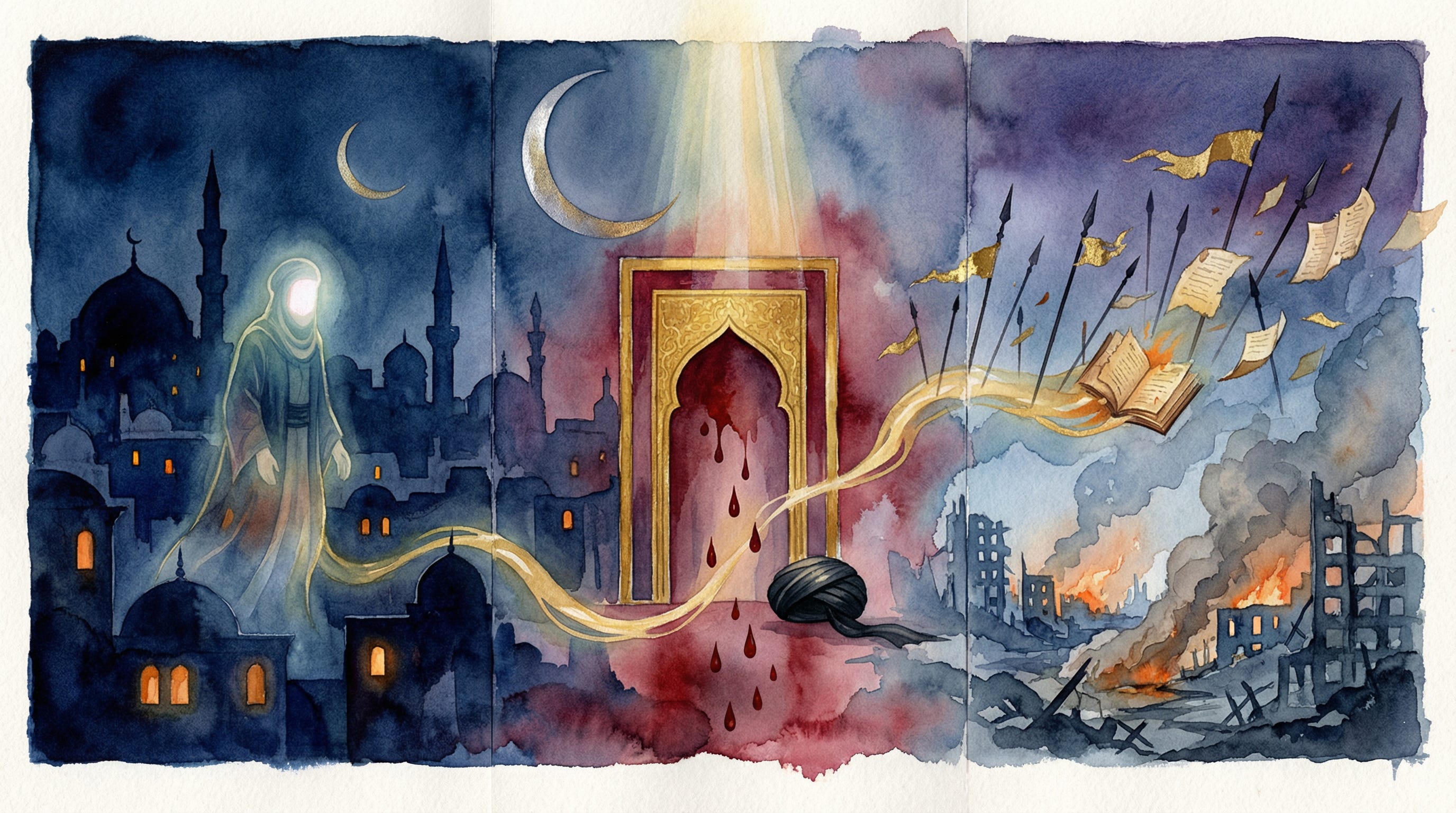
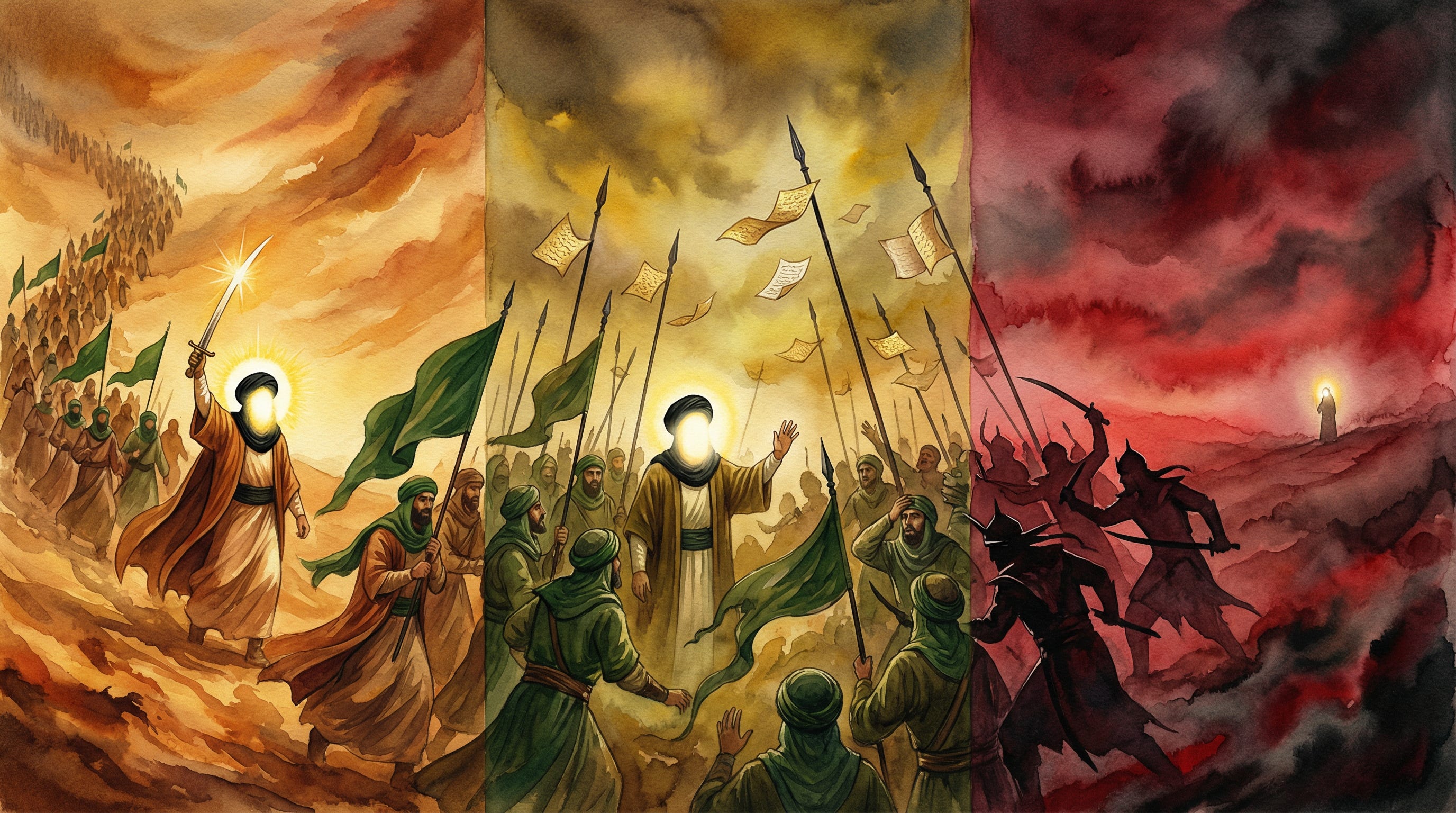
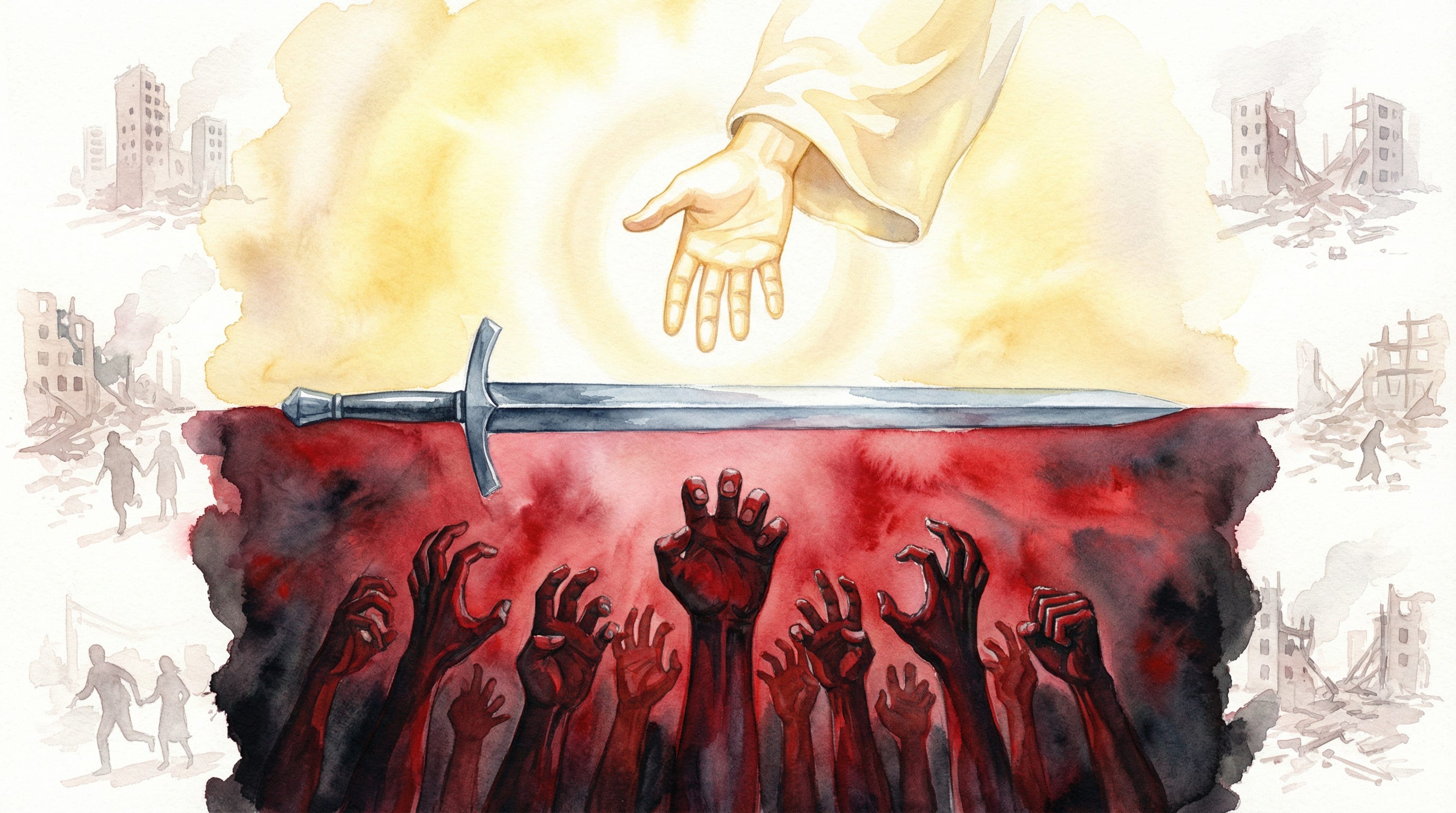
For I will tell you how it began — not with the sword of Ibn Muljam, but with the Qurans raised on spears at Siffin, when the enemy discovered that the surest way to destroy the faithful is not to fight them — but to confuse them.
And that confusion has never ended.
It has only changed its weapons.
The Quran on Spears: The Forge of Betrayal
Before the blade, there was the lie.
Before Ibn Muljam raised his poisoned sword in the mihrab of Kufa, Muawiyyah raised the Quran on spears at Siffin — and that was the deadlier blow.
Listen, for this is not ancient history.
This is the blueprint.
This is the method.
This is the weapon they use still.
My grandfather Ali stood at Siffin with the companions of the Prophet at his side, with truth as his banner and justice as his blade.
And Muawiyyah — the son of the liver-eater, the heir of Abu Sufyan, the man who turned Islam into empire and prophecy into dynasty — was losing.
His lines were breaking.
His soldiers were fleeing.
The sword of Ali was doing what it had always done — cutting falsehood at the root.
And then Amr ibn al-Aas — that fox of the Arabs, that merchant of schemes — whispered to his master:
“Raise the mushafs on the spears.Tell them: let the Book of God judge between us.”
And so they did.
They took the Quran — the Book they had never obeyed, the revelation they had never internalised, the words they had always used as decoration — and they raised it on the tips of their weapons.
Not in reverence.
In calculation.
And O my Shia — O you who claim to know this story — do you understand what happened next?
The army of Ali — the army of truth — stopped.
They saw paper and ink raised in the air and forgot that the living Quran stood among them.
They saw the calligraphy on parchment and were blind to the man whose life was the Quran in motion — the one the Prophet called:
عَلِيٌّ مَعَ الْقُرْآنِ وَالْقُرْآنُ مَعَ عَلِيٍّ
“Ali is with the Quran, and the Quran is with Ali — they shall never separate until they meet me at the Hawd.”
— Al-Hakim al-Naysaburi, al-Mustadrak ala al-Sahihayn — Al-Suyuti, al-Jami’ al-Saghir
They had the speaking Quran before their eyes, and they chose the silent one on the spear.
But the war-weary, the weak-faithed, the men who loved comfort more than truth — they forced his hand.
“Accept the arbitration,” they demanded. “Let the Quran decide,” they shouted — as if the Quran had not already decided when it named Ali at Ghadeer, when it purified him in the Verse of Purification, when it made him the soul of the Prophet at Mubahala.
And so my grandfather — out of mercy for their weakness — accepted.
Not because he was deceived.
But because the shepherd does not abandon the flock even when the flock runs toward the wolf.
And what was the fruit of that deception?
The Khawarij.
Born not from the enemies of Islam, but from its own ranks.
Born not from ignorance of the Quran, but from a false fixation upon it.
Born from men who prayed more than you, who fasted more than you, who recited more beautifully than you — but who understood nothing.
My grandfather said of them:
كَلِمَةُ حَقٍّ يُرَادُ بِهَا بَاطِلٌ
“A word of truth behind which falsehood is intended.”
— Nahj al-Balagha, Sermon 40
A word of truth — behind which falsehood is intended.
Burn this into your hearts.
For this is the formula that has never changed.
When Muawiyyah raised the Quran on spears, he invented the method every empire has used since:
Use the language of the people against them. Use their faith to break their faith. Use their exhaustion to make them surrender. Use their love of peace to make them accept injustice.
And when the confusion has done its work — when the faithful have turned on their own Imam — then send the assassin.
Then send Ibn Muljam.
The Khawarij did not know they were Muawiyyah’s weapon.
They believed — with the certainty of the deceived — that they were the righteous ones, that Ali was the deviant, that they were saving Islam by killing the greatest Muslim after the Prophet.
And so it is today.
O people of this age — do you not see the spears?
When they broadcast their wars with the language of “liberation” — that is the Quran on spears.
When they sanction a nation into starvation and call it “pressure for peace” — that is the Quran on spears.
When they arm one Muslim against another and call it “supporting democracy” — that is the Quran on spears.
When they fund the MEK — those Khawarij of our century — who murdered Shaheed Beheshti and seventy-two of the faithful in a single blast, who assassinated Shaheed Bahonar and Shaheed Rajai, who sold their souls to Saddam and then to Washington — and then parade them in European parliaments as “the democratic alternative” — that is the Quran on spears.
And now — now they come for the Kurds.
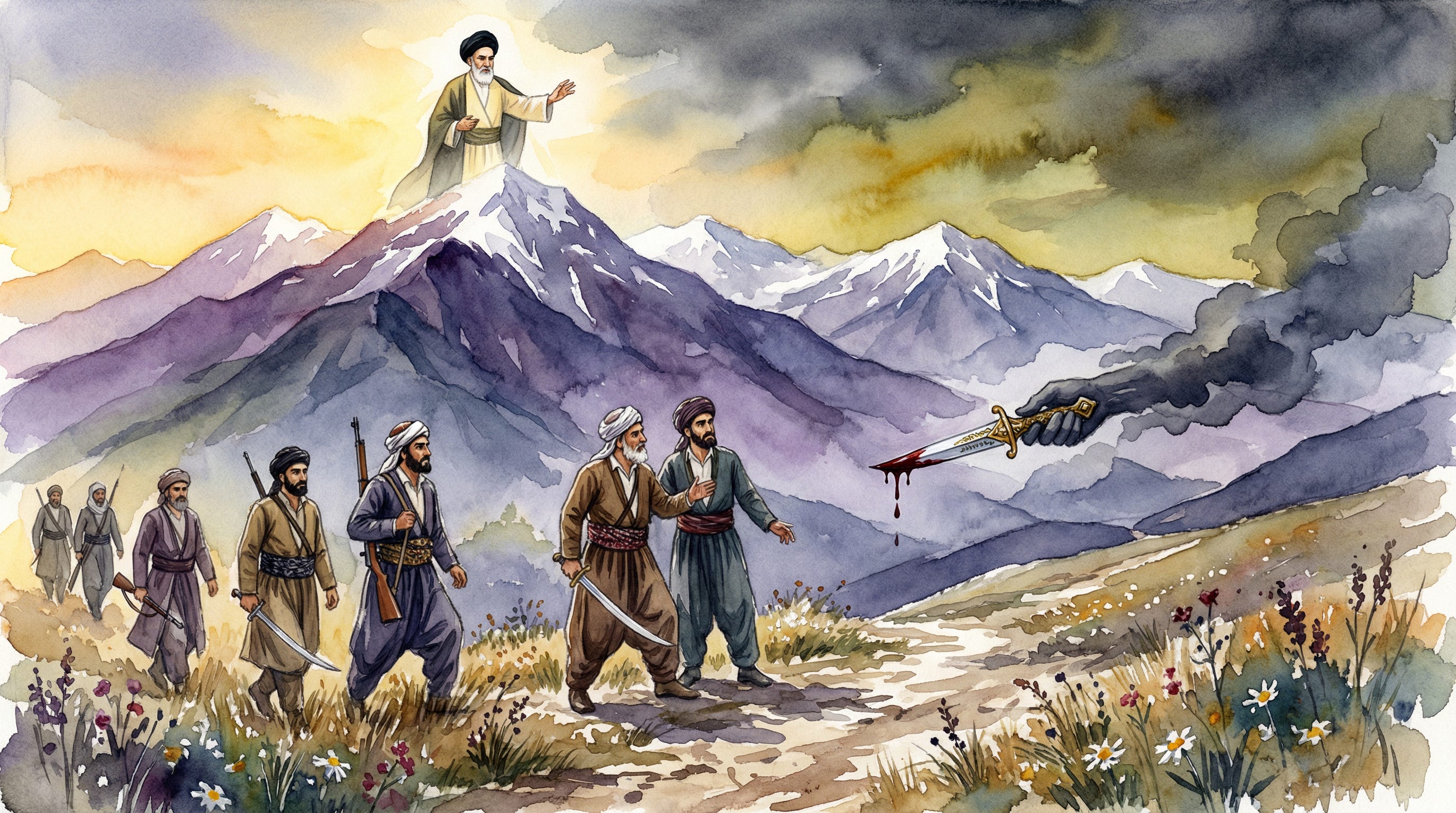
O children of Salah al-Din — O honourable people of the mountains — I speak to you not as a stranger but as the son of Ali, who is the Imam of all believers, Sunni and Shia alike.
The one they murdered — Sayyed Ali Khamenei — do you know what he said of you?
He stood before the world and honoured your Peshmerga martyrs — the brave young Kurds who joined the Sacred Defense, who fought not only the enemy at the border but the threats within their own cities, who risked their families so that the honour of Iran — all of Iran — would not fall.
He said:
“The young individuals from the Muslim Kurdish Peshmergavaliantly joined the war fronts,risked their lives and the peace of their families.They knew what hardship awaited them,yet they fought: this is very significant.”
He counted fifteen thousand Sunni martyrs of the Sacred Defense — your sons, your fathers, your brothers — and he wept for them as he wept for his own.
And now the empire that murdered him turns to you and says:
“Come. Be our allies.We will give you what Iran never gave you.”
Do you not recognise the voice?
It is the voice of Muawiyyah at Siffin.
It is the voice that says: “Let the Quran decide” — while holding the Quran on a spear dripping with Muslim blood.
It is the same voice that spoke to the Kurds in Afrin and said: We stand with you” — then watched as Turkey drove you from your homes.
The same voice that armed the Kurds in Rojava and said: “We are your partners” — then pulled away overnight and left you to the slaughter.
The same voice that promised the Kurds of Iraq a state — then used that promise to fracture the very nations that had sheltered you for centuries.
I say to the honourable Kurds — and I say it as the son of Ali, in whom there is no Sunni and no Shia, only truth and falsehood:
Do not become the Khawarij of this age.
Do not let them place you at the door of Iran as they placed Ibn Muljam at the door of the mosque.
For Ibn Muljam thought he was serving God.
And he served only Muawiyyah.
The Khawarij thought they were purifying Islam.
And they only orphaned it.
Your honour is with the resistance, not with the empire.
Your history is with the mountains, not with the mercenaries.
Your martyrs — your fifteen thousand — did not die so that their grandchildren would carry water for the children of Abu Sufyan.
The trap is the same.
The spear is the same.
Only the Quran they raise upon it has changed — now it is called “freedom,” now it is called “democracy,” now it is called “regime change.”
But the blade beneath it is still aimed at the mihrab.
Still aimed at the man who prays.
Still aimed at Ali.
The Night of the Nineteenth: The Sword and the Sajdah
Now I will tell you of a night that the angels have never stopped weeping for.
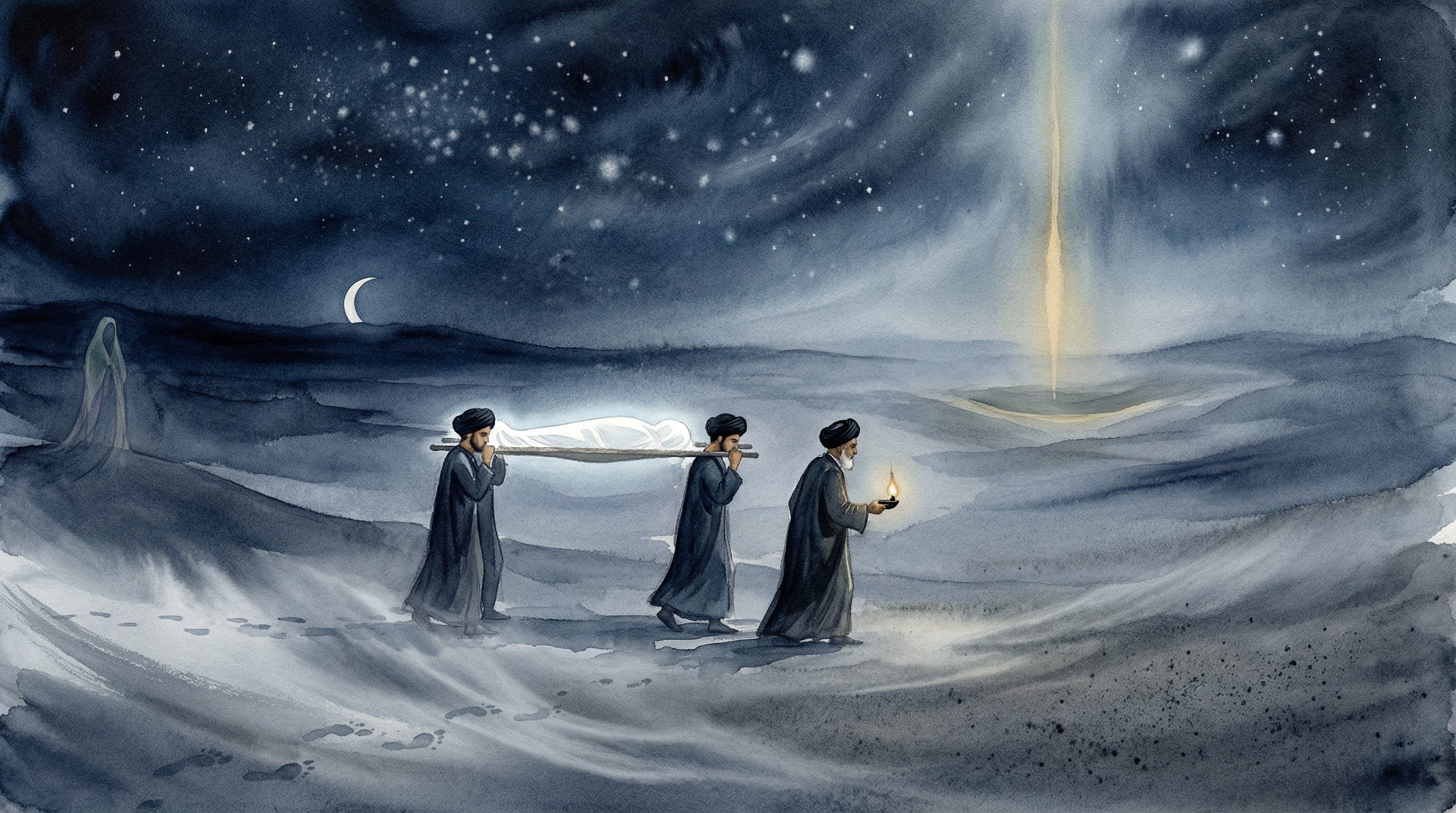
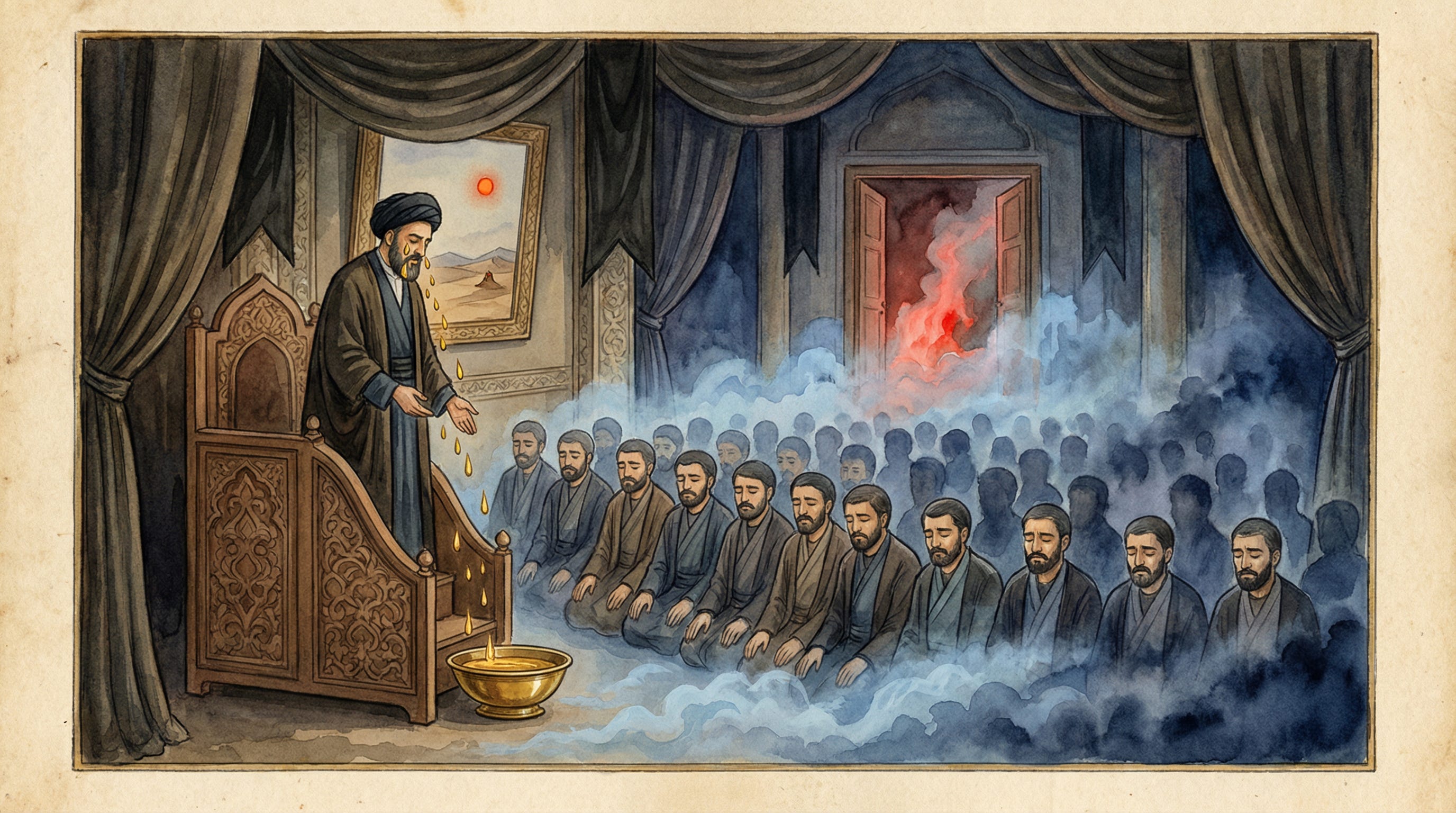
A night in the month of God, when heaven was open, when mercy was descending like rain upon the earth, and the greatest worshipper alive knelt to receive it — and received instead a sword.
It was the nineteenth of Ramadhan.
My grandfather had been fasting — as he had fasted every day of this sacred month, as he had fasted through poverty when others feasted, as he had fasted through war when others rested, as he had fasted through betrayal when the Ummah he served starved him of loyalty and gorged itself on the wealth of his enemies.
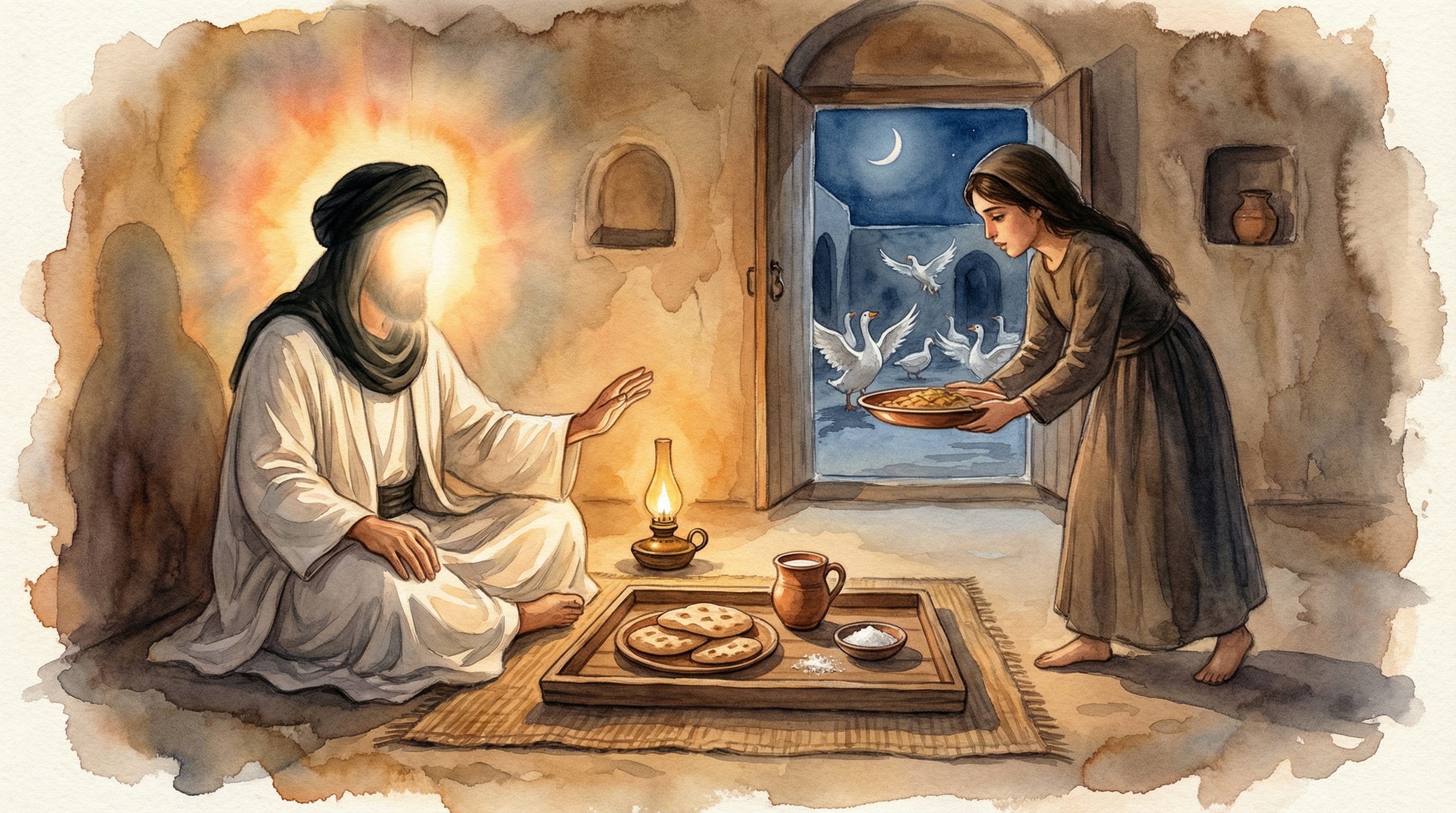
That evening, he broke his fast with three morsels of barley bread, a cup of milk, and salt.
His daughter Umm Kulthum placed more before him.
He pushed it away.
“Daughter, would you have your father meet his Lord with a full stomach? There are only two more nights between me and your brother — the Messenger of God.”
— Al-Majlisi, Bihar al-Anwar, Volume 42
She did not understand — not yet.
But the geese knew.
When he rose for the mosque that night, the geese in the courtyard cried out — fluttering, wailing, blocking his path as if they could hold back what God had decreed.
Umm Kulthum said:
“Father, the birds cry as if in mourning.”
And Ali — my grandfather, the man who had never feared a single creature that walked or flew or crawled upon this earth — Ali, the Lion of God, who had split Marhab at Khaybar and held the gate of the fortress in one hand — this Ali looked at the birds and said:
“My daughter, there is no one but that God has appointed for him a guardian. But when the decree comes, the guardian steps aside. And these birds — they mourn for me.”
— Al-Majlisi, Bihar al-Anwar, Volume 42, Chapter on the Martyrdom of Amir al-Mu’minin
He knew.
Let that truth settle in your bones:
He knew.
He knew as he walked to the mosque.
He knew as he called the adhan.
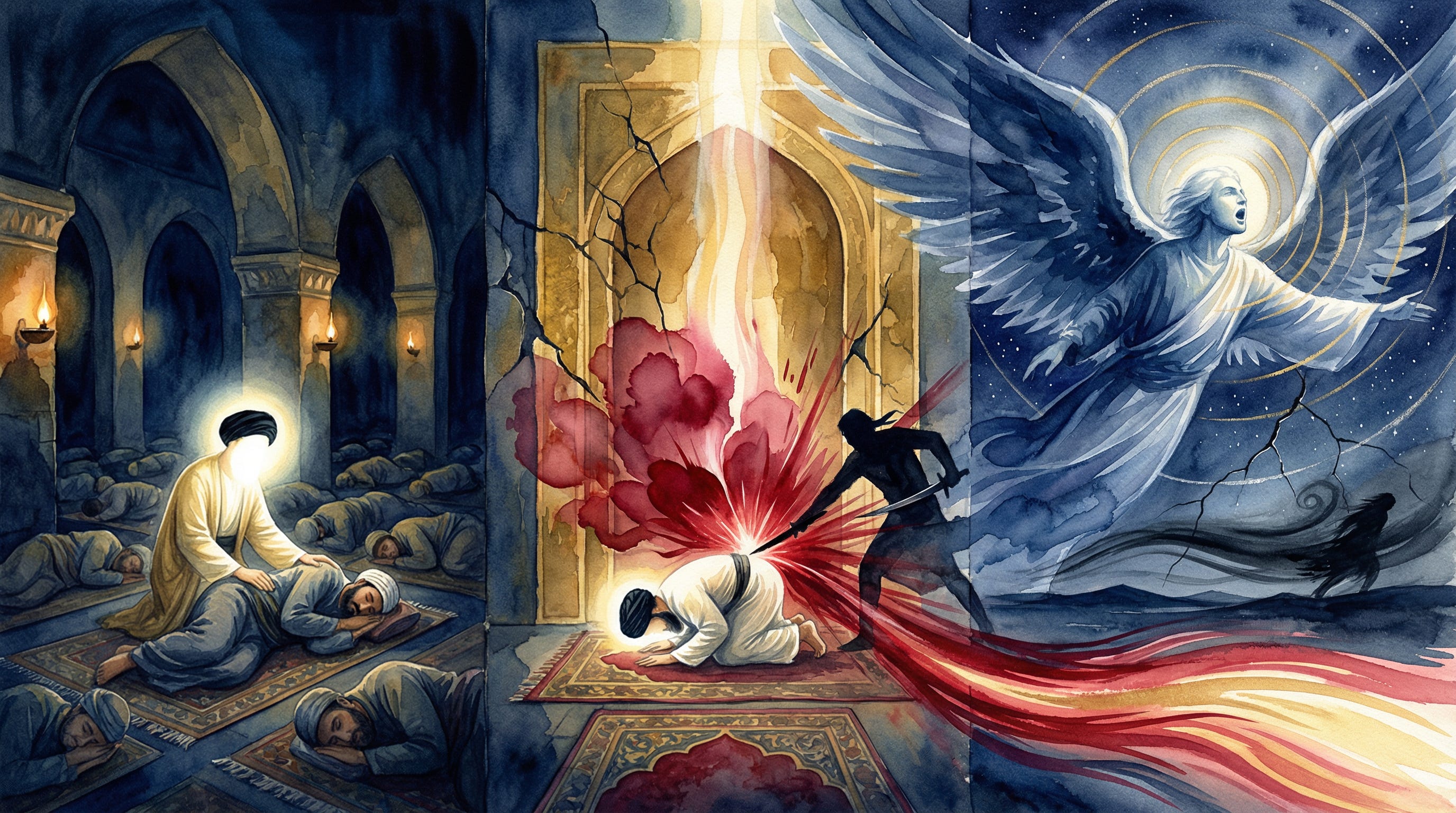
He knew as he straightened the rows of the sleeping worshippers, gently tapping their shoulders:
الصَّلاةَ الصَّلاةَ
“The prayer, the prayer!”
— waking them for what would be his last fajr, rousing them to stand before God while he prepared to stand before God in a different way entirely.
He knew, and he went anyway.
This is the courage you have never understood.
Not the courage of the battlefield — he had exhausted that at Badr, at Uhud, at Khandaq, at Khaybar, at Hunayn.
This is the courage of the mihrab.
The courage of the man who knows the sword is coming and chooses the prayer mat over the shield.
The courage of the fasting man who will not break his appointment with his Lord even though death has already made its appointment with him.
O my Shia — when you fear to speak truth because it may cost you your employment, remember: Ali walked to a sword to keep his appointment with the fajr prayer.
When you hesitate to stand for justice because the consequences frighten you, remember: the Lion of God did not hesitate, and he was walking toward a poisoned blade.
He entered the mosque of Kufa.
The night was quiet.
The stars were watching.
The Quran hung in the air like breath before a cry.
He stood before his Lord.
He raised his hands.
اللَّهُ أَكْبَرُ
God is the Greatest
And then —
In the depths of the sajdah — in that moment when the forehead of the greatest man after the Prophet touched the earth in submission to the Lord of the worlds — in that holy instant when heaven and earth meet through the prostration of the righteous —
the blade fell.
Ibn Muljam — that wretched product of the confusion sown at Siffin, that creature forged in the furnace of Muawiyyah’s deception — struck the crown of the man upon whose shoulders the Prophet had stood to smash the idols of the Ka’bah.
The poisoned sword split the blessed head — from the crown to the bridge of the nose — at the very place where the dust of sajdah had gathered from a lifetime of prostration.
The mark of prayer became the path of the sword.
Let me say that again, so that it enters your soul and never leaves:
The mark of prayer became the path of the sword.
They struck him where he bowed to God.
They struck him in the state God loves most.
They struck him while he was fasting, while he was praying, while his tongue was moist with the name of God.
And what did he say?
Did he cry out in pain?
Did he call for vengeance?
Did he curse the hand that struck him?
He said:
فُزْتُ وَرَبِّ الْكَعْبَةِ
“By the Lord of the Ka’bah — I have succeeded!”
— Narrated in multiple sources including: Al-Muttaqi al-Hindi, Kanz al-Ummal Al-Majlisi, Bihar al-Anwar, Volume 42 Ibn Abi al-Hadid, Sharh Nahj al-Balagha
Succeeded.
Not
“I am dying.”
Not
“I am betrayed.”
Not
“avenge me.”
Succeeded.
Because for Ali, death in the mihrab was not defeat — it was graduation.
Death in sajdah was not tragedy — it was the highest station a servant could ask for.
To be taken by God while prostrating to God, while fasting for God, while calling others to God —
what victory could be greater?
What empire could match it?
What throne on earth could compare to the throne that was being prepared for him at the moment the blade fell?
O people who fear death — Ali welcomed it.
O people who worship comfort — Ali broke his fast with three morsels and walked joyfully to a sword.
O people who mourn him — he told you not to grieve, for he had reached what he was always reaching for:
the face of his Lord.
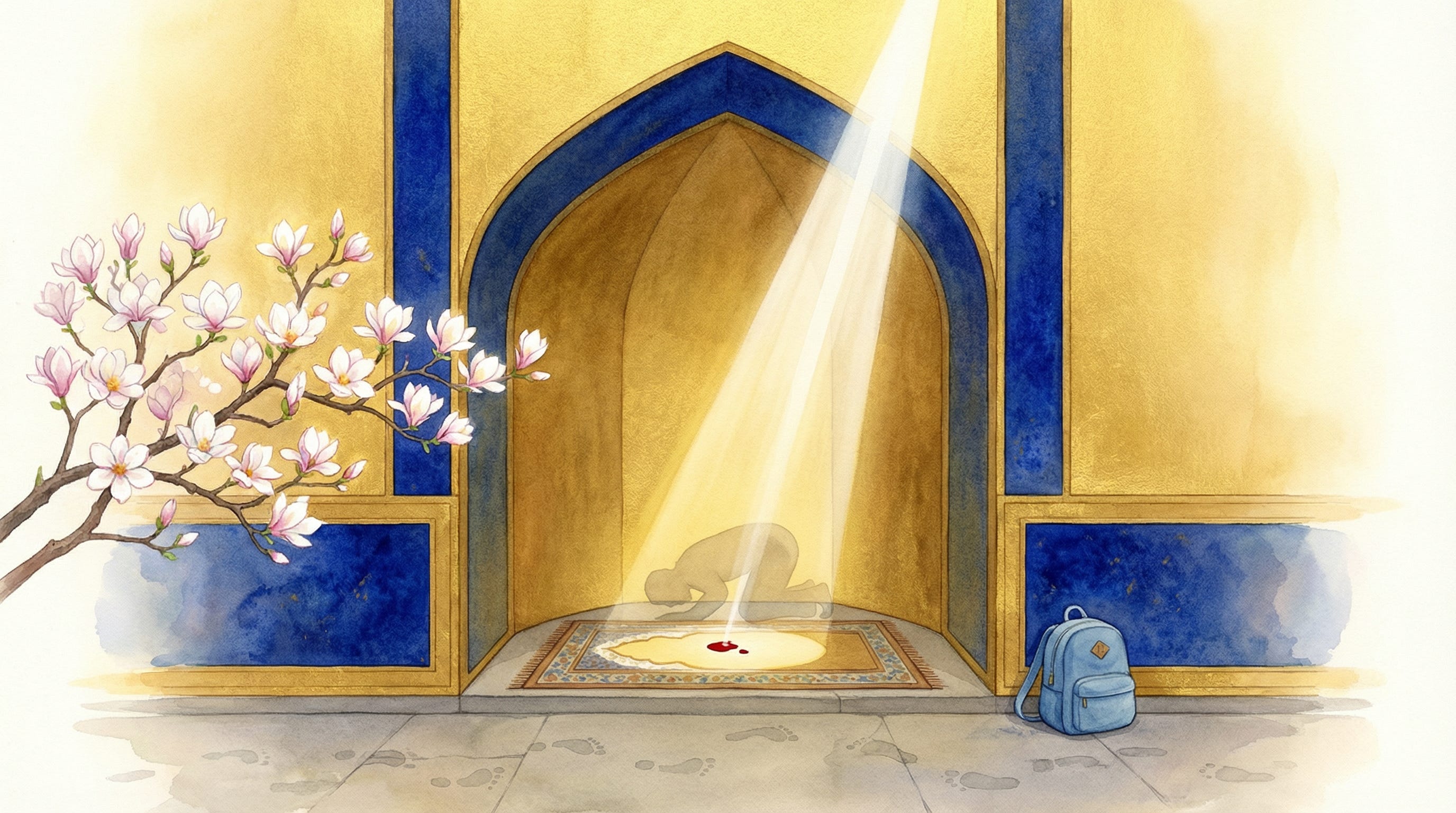
And the blood — the blood that flowed from the crown of his head pooled on the prayer mat of the mosque of Kufa and seeped into the earth and the earth has never forgotten.
The doors of the mosque flew open of their own accord.
A black wind — dark, violent, howling — swept through Kufa.
The angels cried out in the heavens.
And Jibrael (Gabriel) — the same Jibrael (Gabriel) who had brought the first word of revelation to Muhammad, who had stood at the threshold of Fatimah’s house in reverence, who had wept at Karbala before Karbala had yet occurred —
Jibrael (Gabriel) called out between the heavens and the earth in a voice heard by every waking soul:
“By God, the pillars of guidance have been destroyed! By God, the stars of the heavens and the banners of piety have been obliterated! By God, the firmest handle has been severed! The cousin of al-Mustafa has been killed! The chosen successor has been killed! Ali al-Murtada has been killed! By God, the master of all successors has been killed — killed by the most wretched of the wretched!”
— Al-Majlisi, Bihar al-Anwar, Volume 42, Page 279
And Umm Kulthum heard the cry of Jibrael and struck her face and wailed:
“O my father! O Ali!”
And in Madinah, Husayn — my grandfather — felt the blow in his chest before any messenger arrived.
He turned to his brother Hassan and said:
“The Commander of the Faithful has been struck.”
And Hassan wept — because he knew that the door his mother had held shut had finally been broken open from within.
The first Ali fell in the mihrab.
And fourteen centuries later — on the ninth night of this same blessed month, the night the Prophet lost Khadijah, the night mercy itself was orphaned —
the second Ali fell.
Not in a mihrab of brick and clay, but in the mihrab of a nation — the Islamic Republic that was itself a prayer, a forty-seven-year sajdah in defiance of every empire that demanded Iran lift its head from the ground.
Sayyed Ali Khamenei was fasting. As Ali was fasting.
Sayyed Ali Khamenei was serving the Ummah. As Ali was serving the Ummah.
Sayyed Ali Khamenei had spent his life waking the sleeping, straightening the rows, calling out:
The prayer, the prayer! The resistance, the resistance! The justice, the justice!
And they struck him as they struck Ali — not in a moment of weakness, but in a moment of worship.
Not on a battlefield, but in the sanctuary of his duty.
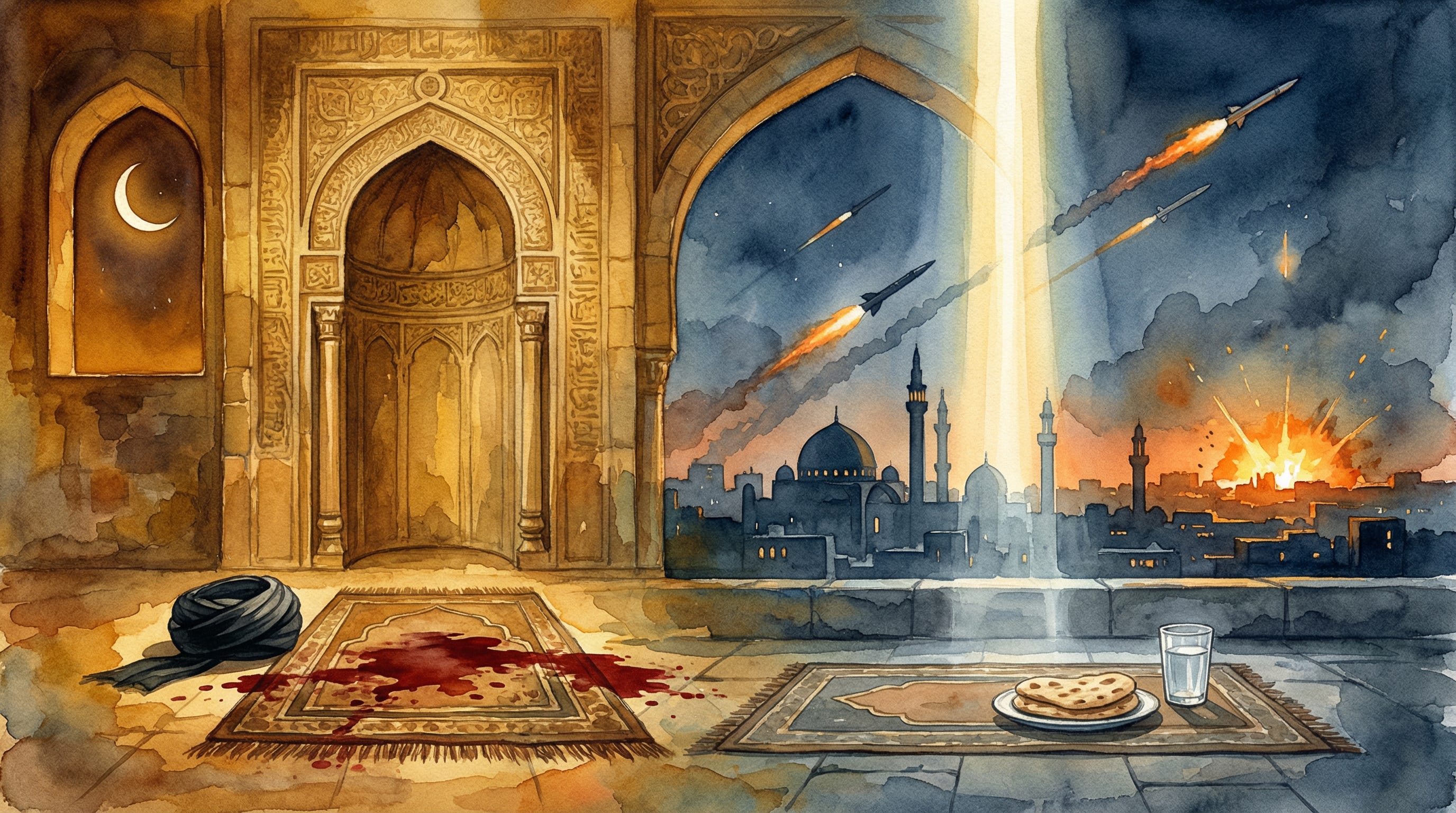
And I say to you — if Ali said “I have succeeded” when the blade split his blessed head, then what do you think Sayyed Ali said when the missiles split the sky above Tehran?
Do you think the man who lived on bread and raisins feared fire from the sky?
Do you think the man whose arm was paralysed for God at Abu Dhar trembled when the final blow came?
Do you think the servant who had told his doctors forty-five years before — “If this is for God, then it is sweet” — found the taste of martyrdom bitter?
He succeeded.
As Ali succeeded.
And the proof of his success is that the same empire that killed him is already afraid of what his death has awakened.
But the nights between the sword and the departure are not yet told.
And what Ali said in those final hours — what he whispered to Hassan, to Husayn, what he commanded about justice, even justice for his own killer —
that is the sermon the world refuses to learn.
And that is what I will tell you next.
The Testament Between Two Worlds: The Wasiyyah of the Dying Imam
Two days.
Between the sword and the soul’s flight, God gave Ali two days.
Not for himself — he had never lived for himself.
But for you.
For the Ummah that had failed him, for the sons who would inherit his wounds, for the centuries that would claim his name while betraying his way.
Two days to teach what a lifetime of sermons had not yet sealed into your hearts.
He lay in his house, the poison spreading from his skull through the body that had carried Islam on its shoulders since childhood.
The same body that had slept in the Prophet’s bed so the Prophet could escape to Madinah.
The same body that had held the gate of Khaybar in one hand.
The same body that had never bowed to anyone but God.
Now it lay broken — not by an army, not by a worthy opponent, but by a wretch in a mosque, a product of the confusion that cowardice and deception had sown.
And yet — even now — Ali was not finished teaching.
He turned to Hassan and Husayn — my forefathers, the two masters of the youth of Paradise — and he spoke.
Not as a dying man speaks — with panic, with regret, with bitterness.
“I counsel you both to be conscious of God, and not to chase this world even if it chases you, and not to grieve over anything of it that is kept from you. Speak the truth and act for the reward of the Hereafter. Be an adversary to the oppressor and a helper to the oppressed.”
— Nahj al-Balagha, Letter 47
Be an adversary to the oppressor.
Be a helper to the oppressed.
Not: be safe.
Not: be comfortable.
Not: be diplomatic.
Not: seek a balanced position between the tyrant and his victim.
An adversary to the oppressor.
A helper to the oppressed.
This was not advice.
This was a commandment from a dying Imam with the poison of Ibn Muljam in his veins — and it echoes across every age into every ear that claims to follow Ali but follows instead the path of ease.
“O sons of Abd al-Muttalib! Let me not find you plunging into the blood of Muslims, crying: ‘The Commander of the Faithful has been killed!’ No! Let none be killed for me except my killer alone. Wait — if I die from this blow of his, then strike him one strike for one strike. And do not mutilate the man. For I heard the Messenger of God — peace and blessings be upon him and his family — say: ‘Beware of mutilation, even of a rabid dog.’”
The man who killed him — the most wretched of the wretched — and Ali commands:
Do not exceed justice. Do not become what you fight. Do not let my blood make you into monsters.
One strike for one strike.
Not ten.
Not a hundred.
Not a massacre.
Not collective punishment.
Not the levelling of cities.
Not the bombing of schools.
Not the starvation of nations.
One strike for one strike — and do not mutilate even a rabid dog.
O leaders of this world — O you who carpet-bomb in the name of “self-defence” — O you who starve millions and call it “sanctions” — O you who erase entire bloodlines and call it “targeted operations” —
Here is your teacher.
He is dying.
His skull is split by poison.
His killer is in your custody.
He has every right — by any law of any civilisation — to demand vengeance.
And he says:
One strike for one strike.And do not mutilate the man.
This is Ali.
This is the Islam they never taught you.
This is the justice they never practised.
This is the standard they could never reach — so they killed the one who set it.
And he continued — for even on his deathbed, Ali thought of others before himself.
“Feed him from what you eat, and give him to drink from what you drink.”
— Al-Majlisi, Bihar al-Anwar, Volume 42
Feed the killer from your own food.
Give the assassin your own water.
While the poison of his blade courses through your father’s body — feed him.
This is not weakness.
This is the apex of power.
This is a man so certain of his Lord, so rooted in the justice of God, so far beyond the petty cycles of revenge and cruelty that he legislates mercy for the hand that destroyed him.
Show me one empire that has done this.
Show me one president, one prime minister, one king who, with his dying breath, commanded his children to feed his assassin.
You will not find one.
Because this is not the way of the world.
This is the way of Ali.
And the distance between those two ways is the distance between every war crime committed in this age and the justice that my return will bring.
Then Ali spoke his final counsel — words that should be inscribed on the walls of every mosque, every parliament, every school, every home:
“God, God — remember God in the matter of orphans. Do not let their mouths go unfed. Do not let them perish in your presence.”
— Nahj al-Balagha, Letter 47
God, God — in the matter of orphans.
This — from the man who was himself about to orphan his children.
This — from the dying father who knew that Hassan would be poisoned, that Husayn would be slaughtered, that Zaynab would be chained, that his grandchildren would be orphans upon orphans upon orphans unto me — the final orphan, the hidden one, the one who carries the grief of every fatherless child from that day to this.
And still — still — his last concern was:
Do not let the orphans go hungry.
O people of this Ummah — how many orphans have you made since that night?
How many children in Gaza tonight are crying for fathers buried beneath rubble?
How many daughters in Minab will never hear their fathers call their names?
How many sons in Lebanon, in Yemen, in Iraq eat from the tables of strangers because the empire that killed Ali’s way killed their families too?
Ali said:
Do not let them perish in your presence.
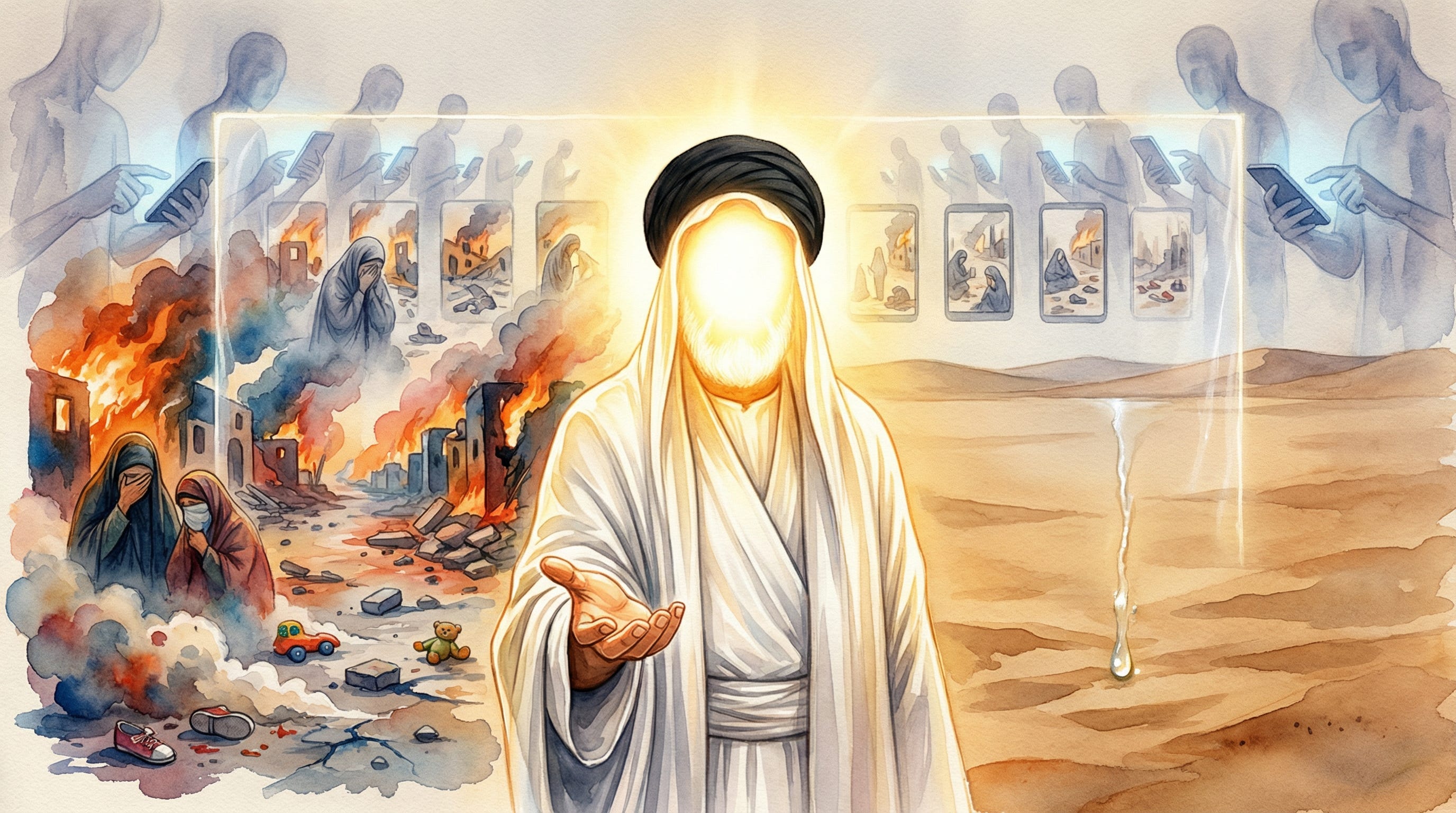
And you have let them perish not only in your presence — but on your screens, before your eyes, in your news feeds, between your meals.
Then came the night of the twenty-first.
The poison had done its work.
The body was yielding.
But the soul — the soul of Ali was eager.
He had told them:
“There are only two more nightsbetween me and the Messenger of God.”
And now the second night had come.
He made his final ablution.
He prayed his final prayer.
He turned to his sons one last time.
And the man who had entered this world inside the Ka’bah — born within the house of God, the only human being ever granted that honour — now prepared to leave this world in the state he had entered it:
In complete submission.
His lips moved with the shahadah.
His heart moved with the love of Muhammad.
His soul moved toward the Lord who had sent him as a mercy that the world refused.
And Ali ibn Abi Talib — Amin Allah fi ardhih, the Trustee of God on His earth, the Commander of the Faithful, the husband of Zahra, the father of Hassan and Husayn, the gate of the city of knowledge, the self of the Prophet at Mubahala, the hand of God at Khaybar, the voice of justice at Kufa, the Lion, the Saint, the Martyr —
returned to his Lord on the twenty-first night of Ramadhan, in the fortieth year after Hijra, at the age of sixty-three — the same age at which the Prophet departed.
As if God wished to say:
They lived as one. They shall depart as one. And they shall return — through the Mahdi — as one.
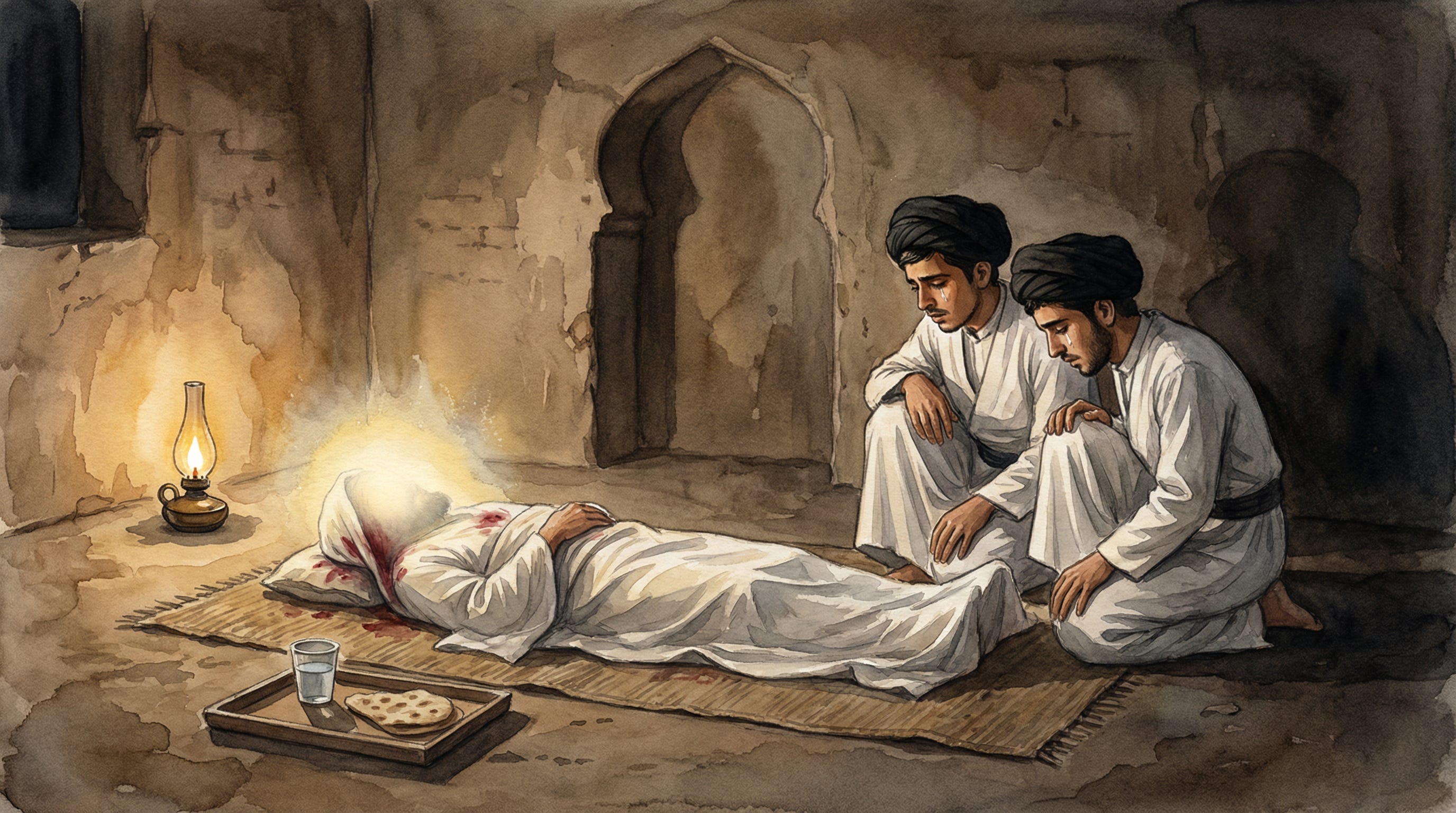
And Hassan and Husayn washed his body with their tears.
And they buried him in the silence of the night, in a grave whose location they concealed — as Fatimah’s grave was concealed — because the enemies of God could not be trusted even with the dead.
And the earth of Najaf received him.
And the earth has been holy ever since.
And I — I who know where every hidden grave lies, I who visit them in the watches of the night — I stood at that grave before the shrine was built, before the dome was raised, before the millions came —
and I said:
“O my grandfather,they did not deserve you. But I will bring your justice back. One strike for one strike —and not a hair more.”
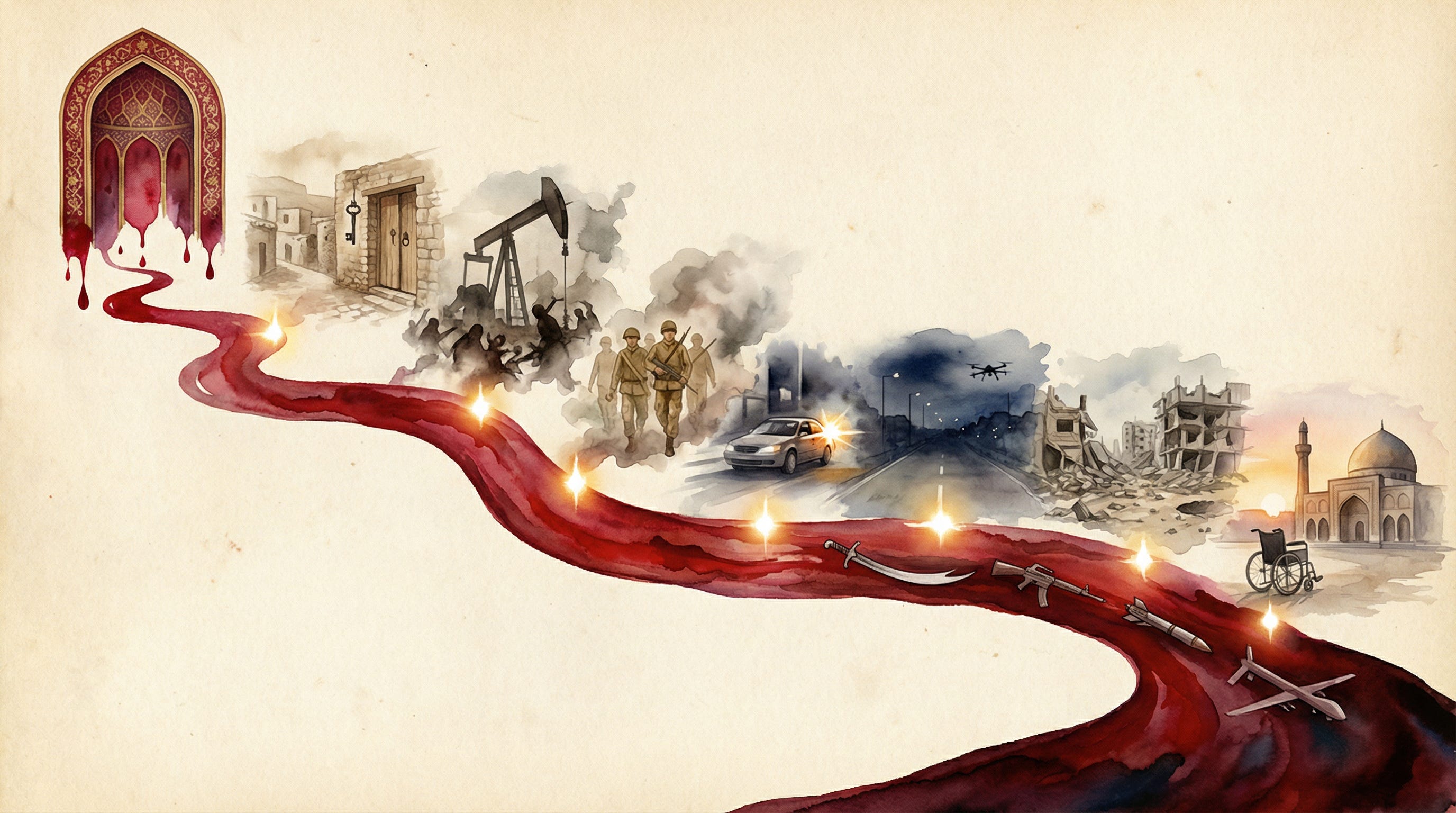
And now I must speak of the long river of blood that flows from that mihrab to this very night.
For the sword that struck Ali has never been sheathed.
It has only changed hands.
The Sword That Never Rested: A Ledger of Blood from the Mihrab to Minab
I told you the sword has never been sheathed.
Now let me show you its path.
For I have watched it pass from hand to hand, century to century, empire to empire — and the blood on its edge has never dried.
They killed Ali in the mihrab and thought the matter was settled.
But Ali’s blood became Husayn’s stand.
And Husayn’s blood became Zaynab’s sermon.
And Zaynab’s sermon became a flame that no empire has ever succeeded in extinguishing — though God knows they have tried.
Listen now — for I will name what I have witnessed, and every name is a scar upon my heart.
They began with the land.
In 1948, they tore Palestine from its people and called the theft a “state” — built on the bones of villages erased, on the keys of homes whose owners still remember every room, on the blood of Deir Yassin where they butchered the innocent to teach the rest the price of existing.
This was the Nakba — the catastrophe — and it has never ended.
It merely changes its name each decade while the theft continues.
They moved to Iran.
In 1953, the government of Mosaddegh — a man who dared to say that the oil beneath Iranian soil belongs to the Iranian people — was overthrown by the British and the Americans in the operation they proudly named Ajax.
And in his place they installed a puppet — the Shah, that peacock on a stolen throne — who tortured with SAVAK, who bowed to Washington, who crushed every voice that whispered of justice, who banned the hijab from the daughters of Fatimah and called it “modernisation.”
And when the people rose — when Imam Khomeini revived the cry of Husayn and a nation said “No” to the empire — they punished Iran with eight years of war.
They armed Saddam.
They gave him the coordinates.
They gave him the chemicals.
And when he gassed the Kurds at Halabja — their own Kurds, the ones they now claim to champion — the world was silent.
As it is always silent when the empire’s weapons find their targets.
But Iran stood.
And the blood of the Sacred Defense — the blood of the Basiji, the blood of the Kurdish Peshmerga who fought alongside their brothers, the blood of teenagers who walked through minefields with the name of Husayn on their lips — that blood built a republic that the empire has never forgiven.
So they sent the Khawarij.
The MEK — those traitors wrapped in the flag of liberation — who planted the bomb that killed Shaheed Ayatollah Beheshti and seventy-two of the faithful in a single explosion.
Seventy-two.
The number of Karbala.
As if history itself was shouting:
“Do you not see the pattern?”
They killed Shaheed Bahonar.
They killed Shaheed Rajai.
They assassinated, they bombed, they terrorised — and then they fled to the arms of Saddam, and then to the arms of Washington, and today they sit in European parliaments and are called “the democratic alternative.”
The Khawarij have always found shelter in the courts of Muawiyyah.
And the sword moved on.
It found the nuclear scientists — the minds that dared to give Iran the knowledge the empire reserves for itself.
Shaheed Majid Shahriari.
Shaheed Mostafa Ahmadi Roshan — thirty-two years old, killed by a magnetic bomb attached to his car on a Tehran morning while his wife sat beside him.
Shaheed Dariush Rezaeinejad.
And Shaheed Mohsen Fakhrizadeh — the father of Iran’s defence, assassinated by a remote-controlled machine gun operated by satellite, because the empire murders even from the sky and calls it precision.
And then the commanders.
Hajj Qassem Soleimani — the man who stood where others knelt, who fought Da’esh when the world watched, who wept at the graves of his soldiers, who carried the ring of Abulfazl al-Abbas on his finger and the love of Imam Husayn in his every breath — murdered at Baghdad Airport by an American drone strike, alongside Abu Mahdi al-Muhandis, the lion of Iraq, the defender of the shrines —
on the third of January 2020, while travelling under diplomatic guarantee.
They killed the guest.
As they would later kill Ismail Haniyeh — the guest of Tehran itself, the leader of Palestine, murdered in the city that had sheltered him, because for the empire, no sanctuary is sacred, no guest-right is honoured, no law applies when the target is one who says “No.”
And from Lebanon — from the land of cedars and resistance — the sword took Hajj Emad Mughniyeh, the shadow commander who made the occupation tremble.
It took Sayyed Abbas al-Musawi, whose blood watered the roots of the Resistance.
And then — in September of last year — it took Sayyed Hassan Nasrallah.
The lion of the South.
The voice that never trembled.
The man who stood before the cameras after the July War of 2006 and declared:
“We are the people who do not surrender.”
They dropped eighty bunker-busting bombs on the southern suburb of Beirut to silence one man.
And they did not silence him.
For his voice lives in every throat that refuses to be mute.
And from Palestine — where the sword has been unsheathed since before most of you were born —
Yahya Sinwar, who spent twenty-two years in their prisons and emerged unbroken, who chose to fight on his feet rather than surrender on his knees — killed in battle, rifle in hand, in the rubble of the land he refused to leave.
And Shaykh Ahmed Yassin — the blind, paralysed old man in a wheelchair — struck by a missile from an Apache helicopter as he was wheeled out of the fajr prayer.
Even in the mihrab.
Always in the mihrab.
The sword always finds the one who prays.
And from Iraq — the commanders who broke the back of Da’esh when the world stood paralysed — Shaheed Abu Mahdi al-Muhandis, who lies beside Hajj Qassem in the garden of the martyrs.
And from the ranks of Iran’s defenders — Generals Zahedi, Hajizadeh, Salami, Bagheri, and those whose names the world does not know but whose blood God has recorded in the ledger that no power on earth can erase.
Name upon name.
Grave upon grave.
Mihrab upon mihrab.
And you ask me why I have not returned?
This is why I weep.
This is why I wait.
Not because I am weak — but because the weight of what I carry would split the earth if I set it down.
And now — now I must speak of something that even I — the son of Husayn, who has witnessed Karbala from behind the veils of time, who has counted every infant’s death, every mother’s scream, every drop of blood spilled from the first murder of Qabil (Cain) to this hour —
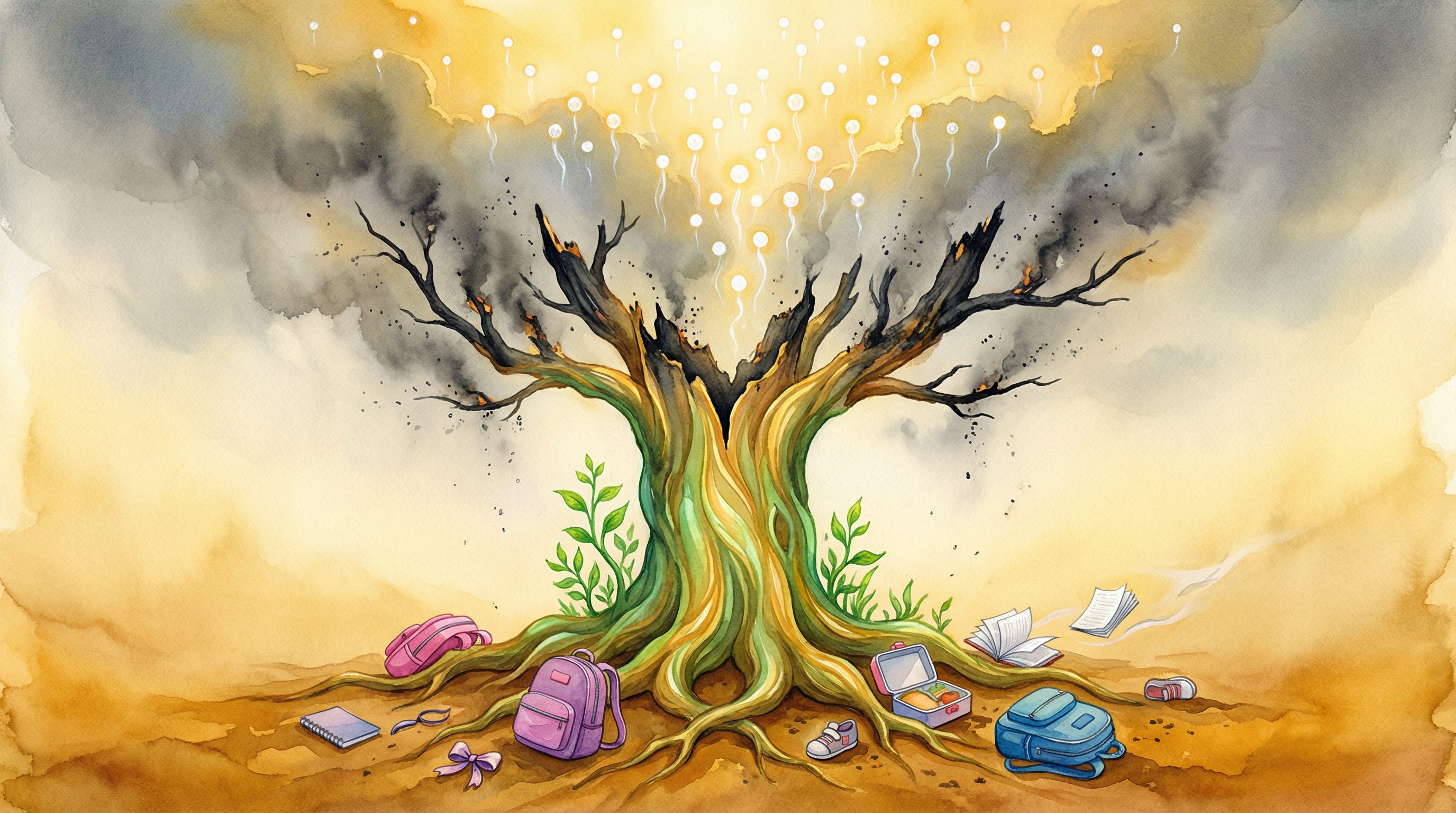
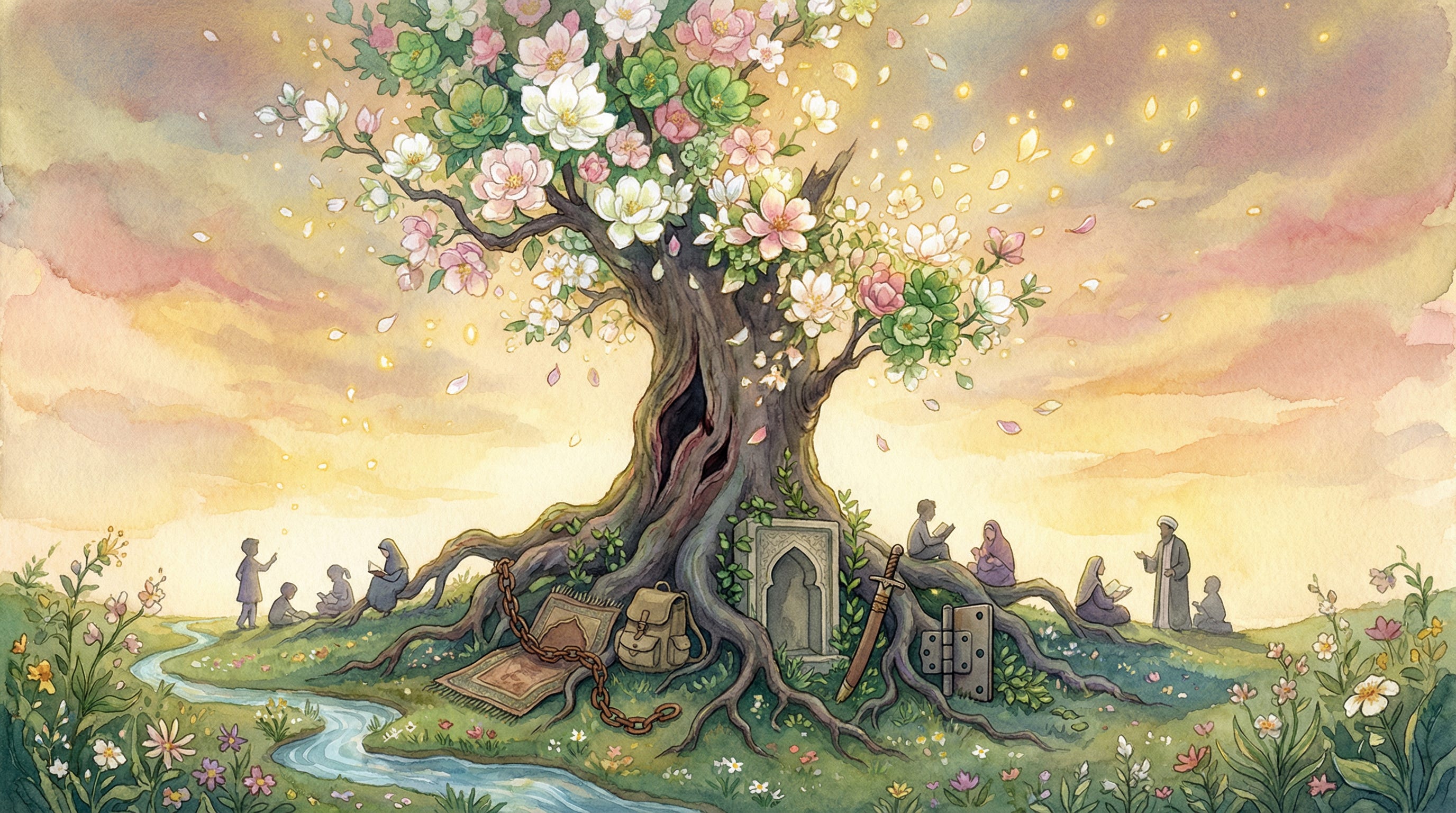
“Have you not seen how God strikes a parable? A good word is like a good tree — its root is firm and its branches reach the sky.”
— Qur’an, Surah Ibrahim (the Chapter of Abraham) #14, Verse 24
They named a school after this verse.
A school for girls.
A school in Minab, in the south of Iran, where daughters of fishermen and farmers and soldiers sat in rows learning the letters of the Quran, learning to write their names, learning that they mattered — that God had made them and God had honoured them and God had placed them in a good tree whose roots are firm and whose branches reach the sky.
One hundred and sixty-five souls.
Girls.
Seven years old.
Eight.
Nine.
Ten.
Eleven.
Twelve.
And their teachers — women who came each morning to plant seeds in the garden of God.
It was a Saturday morning.
The ninth day of Ramadhan.
The same day they killed Imam Khamenei.
The missiles came while they were in class.
The first strike collapsed the building.
Then — as the survivors crawled toward the prayer hall, as the teachers gathered the wounded, as the principal called the parents and said
“Come, come quickly, take your children” —
the second missile came.
A double strike.
As at Karbala — where they first killed the men, then looted the tents of the women and children.
The second missile struck the prayer hall.
Where they had taken shelter.
Where they thought the walls might hold.
Where a teacher had told them:
“Pray, girls. God will protect us.”
And God did receive them.
But not as the teacher had hoped.
He received them as martyrs.
One hundred and sixty-five Mohsins — not yet born into the fullness of their lives, crushed as Mohsin was crushed behind the door of Fatimah.
The rescuers found bodies without heads.
Bodies without hands.
Bodies without legs.
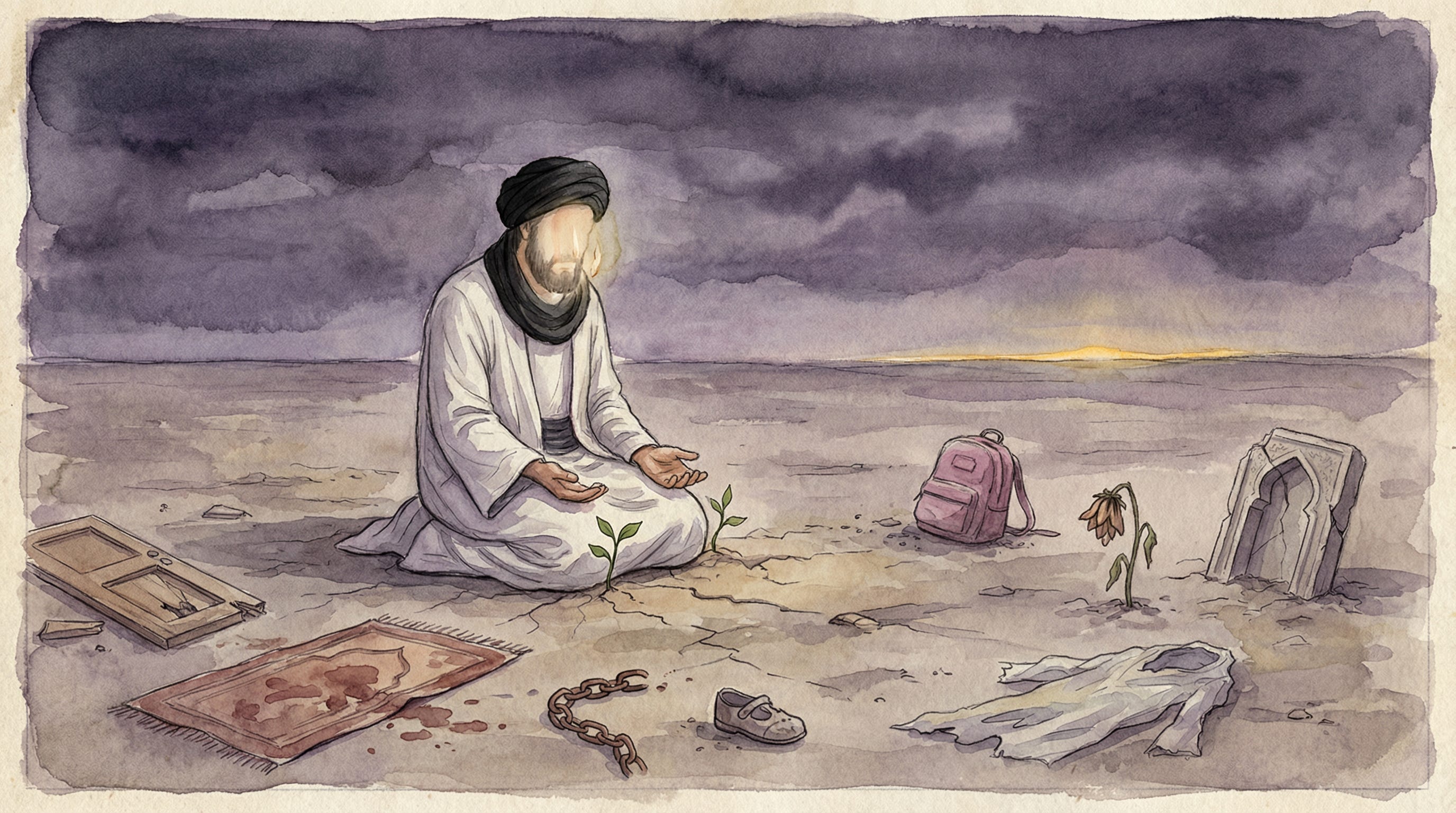
They found backpacks.
Pink and purple and blue — with cartoon characters on the zippers and lunch boxes inside that their mothers had packed that morning, not knowing they were packing a last meal for a martyr.
They found sixty-nine children so destroyed that they could not be identified. Their remains are undergoing DNA testing — because the missiles did to their bodies what the empire wishes to do to their memory:
obliterate it beyond recognition.
But I recognise them.
I know every name.
I know every face.
I know which girl sat by the window and which one always raised her hand first and which one was afraid of the dark and which one had just memorised her first surah and which one had written a letter to her grandmother that will never be delivered.
I know them because they are my sisters.
They are the daughters of Fatimah.
They are the branches of the good tree.
And the good tree was not uprooted.
It was struck from the sky by the same hands that raised the Quran on spears at Siffin — the hands that use the language of freedom to deliver the grammar of annihilation.
And I say to the one who ordered the strike, and to the one who provided the coordinates, and to the one who flew the jet, and to the one who pressed the button, and to the one who signed the authorisation, and to every journalist who called it “collateral damage,” and to every politician who said “we are investigating,” and to every soul that scrolled past their photographs and moved on to the next piece of entertainment:
God has recorded your names in a ledger that will be opened on a day when no investigation can be delayed, no responsibility can be deflected, no statement of “deep concern” will suffice.
“And do not think that God is unaware of what the oppressors do. He only delays them to a Day when eyes will stare in horror.”
— Qur’an, Surah Ibrahim (the Chapter of Abraham) #14, Verse 42
From the same Surah.
The Surah of the Good Tree.
And the Surah of the reckoning of the oppressors.
God placed them side by side in His Book so that you would understand:
The one who strikes the good tree has an appointment with the One who planted it.
And now — from the mihrab of Ali to the classroom of Minab, from the seventy-two of Karbala to the seventy-two of Beheshti, from the poisoned blade of Ibn Muljam to the precision missiles of the empire, from the Quran raised on spears at Siffin to the “freedom” raised on bombs over Tehran —
the ledger is complete.
The names are written.
The blood has spoken.
And the sword that struck Ali in the mihrab has finally revealed its full reach — from the mosque to the school, from the prayer mat to the classroom mat, from the prostrating Imam to the studying child.
They strike wherever God is remembered.
They strike wherever truth is taught.
They strike wherever a soul bows or a mind opens or a heart refuses to kneel to anyone but God.
And they call it self-defence.
And they call it security.
And they call it the rules-based order.
But I call it by its true name:
It is the continuation of Siffin.
It is the children of Muawiyyah finishing what their father began.
And I — the son of Ali, the heir of Husayn, the keeper of this ledger —
I have not lost a single name.
The Indictment: The Trial of the Living
Now I turn from the dead to the living.
For the dead have fulfilled their covenant.
The dead have nothing left to answer for.
It is you — the living — who stand before me now.
And I do not come gently.
I have spoken gently before — at the door of Zahra, at the plains of Karbala, on the road to Damascus.
I have whispered.
I have wept.
I have pleaded.
And still the Ummah sleeps while its children are slaughtered, still the pulpits echo with empty grief while the gravediggers work overtime, still the scholars debate while the bombs fall, still the leaders calculate while the orphans multiply.
So now I speak as Ali spoke — not with the tenderness of the father, but with the sword of the judge.
To the Scholars Who Guard Their Silence Like Gold
You who have spent decades mastering the intricacies of jurisprudence — tell me: what is the ruling on silence when a school full of girls is struck by two missiles?
What is the fatwa on “neutrality” when the Wali al-Faqih is assassinated while fasting in the month of God?
What is the hukm on “both sides” when one side has Apache helicopters and the other side has backpacks with cartoon zippers?
You can tell me the precise measurement of water for wudhu, but you cannot tell your congregations the name of a single child killed in Minab.
You can parse the grammar of a thousand hadith, but you cannot construct a single sentence of condemnation that names the killer by name.
You have memorised the wasiyyah of Ali —
“Be an adversary to the oppressorand a helper to the oppressed”
— and you have turned it into calligraphy on your walls while turning your backs on every oppressed soul who begged you to live it.
Ali fed his killer from his own plate.
You cannot even feed the truth to your own congregations.
Ali commanded justice for Ibn Muljam.
You cannot command your own tongues to speak justice for Palestine.
What happened to you?
When did the turbans become so heavy that they bent your necks away from the direction of truth?
When did the robes become so comfortable that you forgot they are supposed to be worn in the dust of resistance, not in the velvet of diplomacy?
And every scholar who has broken it will stand before Ali on the Day of Judgement and Ali will say:
“I taught you. I bled for you. I died with the words of justice on my lips. And you could not even open yours.”
To the Leaders Who Trade in Muslim Blood
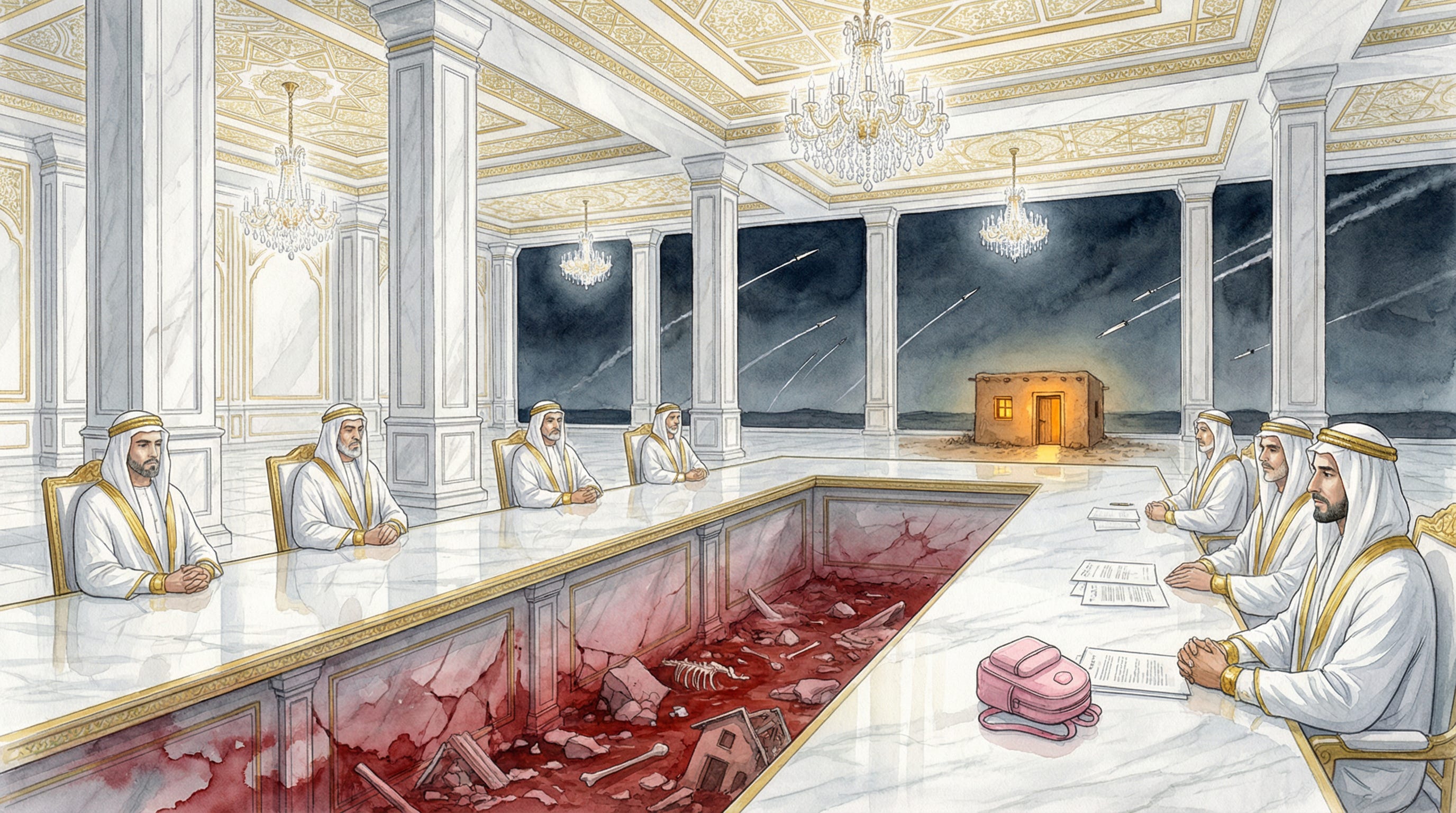
You who call yourselves “Custodians of the Two Holy Mosques” — what have you custodied while Al-Aqsa is desecrated daily?
What have you guarded while the Zionist entity builds settlements on the bones of Palestinian villages?
You opened your airspace for the missiles that killed Sayyed Ali Khamenei.
Let that sentence rest in the room.
You — who claim the mantle of Islam — opened your skies so that the enemies of Islam could assassinate the leader of the only state on earth that stood, with all its flaws and all its trials, as a fortress for the oppressed.
You normalised with the killers of Gaza. You shook hands with the architects of the Nakba. You signed accords while the blood was still wet. You smiled for the cameras while behind you the children of Shu’ayb and Ibrahim and Isma’il were being erased from the map and from memory.
And you think I do not see?
I see the gold on your wrists and the blood beneath it.
I see the marble in your palaces and the bones beneath it.
I see the treaties on your desks and the betrayal within them.
Ali lived in a house of clay and ruled an empire with justice.
You live in palaces of marble and cannot rule your own conscience.
To the Preachers Who Perform Grief for Profit
You stand on the minbar every Ramadhan and narrate the martyrdom of Ali with professional tears and practiced pauses.
You describe the mihrab.
You describe the blade.
You describe the blood.
And the congregation weeps on cue, and the donations flow on cue, and the session ends on cue, and everyone goes home feeling cleansed — without having changed a single thing.
You have turned the maqtal into anaesthesia.
You use the pain of Ali to numb the conscience of the Ummah — so that they weep for an hour and sleep for a year.
You narrate
“Fuztu bi Rabb al-Ka’bah” (By the Lord of the Ka’bah I have become successful)
but you have never asked your audience:
“What have YOU succeeded in? What door have YOU stood at? What truth have YOU spokenthat cost you anything at all?”
You curse Ibn Muljam — but you dine with those who manufacture the modern swords that strike the modern mihrabs.
You lament the Khawarij — but you cannot identify the Khawarij of your own age, because identifying them would require you to offend the powers that fund your platforms.
Your majalis have become what the Quran on spears at Siffin was — the appearance of religion used to neutralise the substance of religion.
And I say to you what Ali said to the Khawarij:
كَلِمَةُ حَقٍّ يُرَادُ بِهَا بَاطِلٌ
“A word of truth behind which falsehood is intended.”
Your tears are real.
But their purpose has become false.
For if your tears were true, they would become action.
If your grief were sincere, it would become resistance.
If your love for Ali were genuine, you would live his wasiyyah — not merely recite it.
To the Ummah That Watches and Scrolls
And finally — I speak to you.
Not the scholars.
Not the leaders.
Not the preachers.
You.
The one listening to this maqtal right now.
The one who will weep tonight and check the news tomorrow and see the death toll rise and feel a pang — a small, manageable pang — and then scroll past.
I speak to you because you are the majority.
You are the ocean in which the scholars swim, the ground on which the leaders stand, the air the preachers breathe.
If you moved — they would move.
If you demanded — they would comply.
If you rose — the thrones would tremble.
But you have chosen comfort.
You have chosen the comfort of mourning over the discomfort of action.
You have chosen to feel sad about Gaza rather than to do anything about Gaza.
You have chosen to share a post about Minab and call it solidarity.
You have chosen to say
“Inna lillahi wa inna ilayhi raji’un” (We are from God and to Him is our return)
and believe that the sentence absolves you of everything that should follow it.
It does not.
“Indeed we belong to God and to Him we return”
is not a full stop.
It is a beginning.
It means: if we belong to God, then we must act as God’s servants.
It means: if we return to Him, then we will be asked what we did with the time between the belonging and the returning.
Ali did not say “I have succeeded” so that you could say “How moving” and return to your life unchanged.
He said it so that you would understand that success is not comfort — it is sacrifice.
That success is not safety — it is standing where truth demands you stand, even if it costs you everything.
What has it cost you?
What has your love of Ali actually cost you?
If the answer is nothing — then I say to you what I have said before, and what I will say until the mountains crumble:
You are not waiting for me.
You are hiding from me.
For when I come, I will not ask how beautifully you wept.
I will ask how bravely you stood.
I will not ask how many maqatil you attended.
I will ask how many doors you defended.
I will not ask whether you memorised the wasiyyah of Ali.
I will ask whether you lived it.
And the distance between your tears and your actions — that distance is the measure of your trial.
And it is the measure of mine.
The Covenant of the Hidden Son: The Promise of Return
And now — after the blood, after the names, after the ledger that stretches from the mihrab of Kufa to the classroom of Minab —
I speak to you not as a judge, but as a son.
A son who has lost more than any soul should carry.
A son whose grandmother was crushed behind a door.
Whose grandfather was slaughtered at noon.
Whose aunt was dragged in chains through empires.
Whose fathers — all eleven of them — were poisoned, imprisoned, exiled, or murdered for the crime of being the proof of God in an age that preferred its own darkness.
And whose representative — whose Ali of this age — was struck from the sky while fasting in the month of God, on the night the Prophet lost Khadijah, as if the heavens themselves were saying:
The covenant is being tested again. The trustees are being taken again. And the question that has echoed since Saqifahstill waits for its answer.
I am tired.
Let me say that — for I have never said it in these maqatil before.
I am tired.
Not of waiting — for my patience is from the patience of God, and God does not tire.
But I am tired of watching.
Tired of watching the daughters of Fatimah pulled from rubble in every generation.
Tired of watching the sons of Ali struck in every mihrab the empire can reach.
Tired of watching the children of Husayn memorise the Quran in schools that become their graves.
Tired of watching you weep and then sleep.
Tired of watching you march and then stop.
Tired of watching you rise for one hour of mourning and kneel for a lifetime of silence.
And yet — and yet — I do not despair.
For God has not despaired of you.
And if the Lord of the worlds still sends the rain upon the earth that buries His saints — then who am I to withhold my mercy from the Ummah that buries its conscience?
So I make my vow.
Not upon the throne of power — I have no throne.
Not upon the armies of heaven — though they await my command.
I make my vow upon the hidden grave of Ali, upon the hidden grave of Fatimah, upon the blood of Husayn that the earth of Karbala still holds, upon the chains of Zaynab that still rattle in the corridors of every court of power, upon the prayer mat of Kufa that still carries the stain of the purest blood ever spilled in sajdah.
I make my vow upon the bread and raisins of Sayyed Ali Khamenei’s childhood, upon the paralysed arm he offered to God at Abu Dhar and never asked to be returned, upon his final fast — the fast he began knowing that the wolves were circling, that the sky was darkening, that the empire had marked him — and he did not flee, as Ali did not flee, as Husayn did not flee, as no trustee of God has ever fled from the appointment their Lord has written for them.
I make my vow upon the last breath of Sayyed Hassan Nasrallah beneath eighty bombs — who did not beg, who did not bargain, who did not bend, who departed as he had lived: a son of Karbala in a suburb of Beirut.
And I make my vow upon the backpacks of Minab.
Upon the pink ones and the purple ones and the blue ones.
Upon the lunch boxes that mothers packed at dawn not knowing they were preparing the last meal of a shaheedah.
Upon the prayer hall where the teacher said “Pray, girls” — and the second missile answered.
Upon all of this, I vow:
I will return.
I will return not as the world expects — not as a politician, not as a diplomat, not as a reformer who negotiates with oppression and calls it progress.
I will return as Ali returned to the battlefield — with justice in one hand and mercy in the other, and the line between them sharper than any sword.
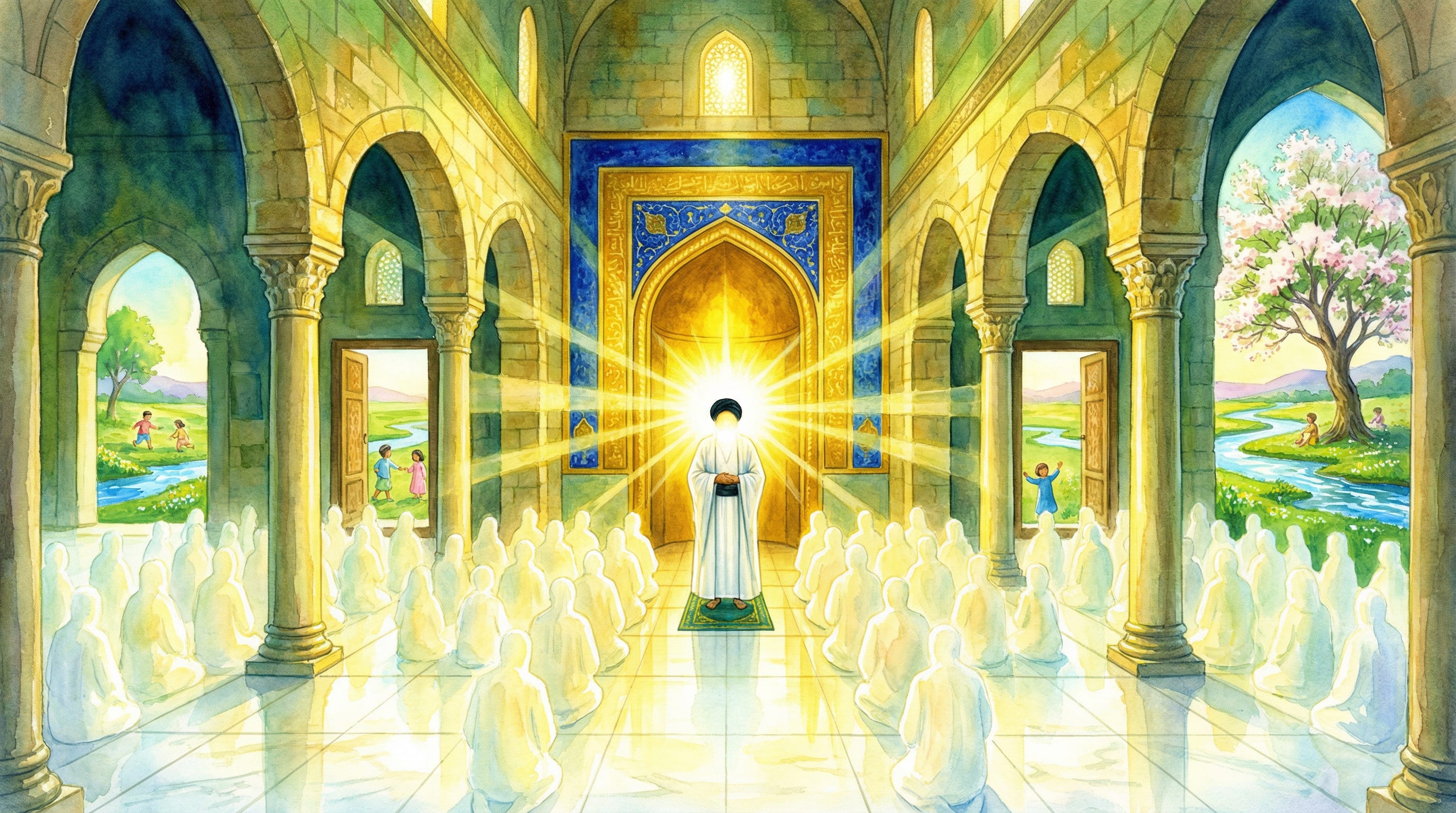
I will return and I will stand in the mosque of Kufa — the same mosque, the same mihrab, the same ground where my grandfather’s blood seeped into the earth —
and I will pray the fajr that was interrupted.
I will complete the sajdah that the blade of Ibn Muljam cut short.
And then I will rise from that sajdah and I will look out upon a world that has been waiting fourteen centuries for the prayer to be completed —
and I will complete it.
Not with words alone.
With the justice Ali legislated from his deathbed.
With the proportionality he commanded: one strike for one strike, and do not mutilate.
With the mercy he demonstrated: feed my killer from your own food.
With the priorities he set with his dying breath: God, God — in the matter of orphans.
Every orphan of Gaza will find a father.
Every widow of Lebanon will find a protector.
Every daughter of Minab will be raised from the dust and told:
“Your branches have reached the sky. The good tree was not uprooted. It was only transplantedfrom the soil of this worldto the garden of God.”
And every Fadak will be restored.
And every stolen inheritance will be returned.
And every hidden grave will be found and honoured and kissed by the Ummah that finally understood what it had lost.
And I will find Ali’s grave — I who have always known where it lies — and I will kneel there and I will say:
“O my grandfather,the prayer is complete. The sajdah is finished. The orphans are fed. The oppressor has received his one strike —and not a hair more. The trust — your trust,the trust of God on His earth —is fulfilled.”
But until that dawn —
until God gives the permission and the hearts are ready and the 313 have gathered —
I leave you with this:
Do not wait for me in stillness.
Wait for me in motion.
Do not wait for me in silence.
Wait for me in clarification — in tabyeen — in the speaking of truth that Zaynab spoke in the court of Yazid and Sajjad spoke in the court of Ibn Ziyad and Sayyed Hassan spoke before the cameras of the world and Imam Khamenei spoke for forty-six years from a republic built on the foundations of the mihrab they tried to destroy.
Every one of you who stands at a door today — stands with Fatimah.
Every one of you who speaks truth in a mosque today — continues the sermon of Ali.
Every one of you who refuses to let murder be normalised — keeps the covenant of Husayn.
Every one of you who protects a child — fulfils the wasiyyah.
Every one of you who says “No” to the empire, to the tyrant, to the Muawiyyah of your age, to the Khawarij of your generation, to the Shimr of your neighbourhood, to the silence of your own heart —
you are not merely waiting for me.
You are preparing the ground upon which I will place my feet.
And I swear by the Lord of Ali, by the Lord of the Ka’bah, by the Lord who split the sea for Musa (Moses) and raised Isa (Jesus) to the heavens and sent Muhammad as a mercy to all the worlds —
I will place my feet upon that ground.
And when I do, the first name on my lips will be the name that Jibrael (Gabriel) called between the heavens and the earth on that night in Ramadhan:
Peace be upon you, O Trustee of God on His earth. Peace be upon you, O Commander of the Faithful. Peace be upon you, O Master of the Successors. Peace be upon you, O Martyr of the Mihrab.
اَلسَّلامُ عَلَيْكَ يَا سَيِّدَ عَلِي
Peace be upon you, O Sayyed Ali Khamenei — servant of the dispossessed, guardian of the Wilayah, the one who tasted bread and raisins in childhood and tasted martyrdom in Ramadhan, the one whose arm was given to God forty-five years before his soul followed it.
You succeeded, as your Imam succeeded.
You fell fasting, as your Imam fell fasting.
And you returned to your Lord as you had promised: a humble servant, nothing more.
اَلسَّلامُ عَلَيْكَ يَا سَيِّدَ حَسَن
Peace be upon you, O Sayyed Hassan Nasrallah — lion of the south, voice that never trembled, the one who stood before the world and said
“We are the people who do not surrender”
— and proved it with his blood.
You joined the caravan of Karbala from the hills of Lebanon, and the caravan is stronger for your presence.
اَلسَّلامُ عَلَيْكَ يَا حَاجَّ قَاسِم
Peace be upon you, O Hajj Qassem Soleimani — commander of love before commander of war, the one who wept at the graves of his soldiers and carried the ring of Abulfazl on his finger.
You walked between the battlefields of this world and the gardens of the next as if there were no distance between them — and for you, there was none.
Peace be upon Shaheed Beheshti and his seventy-two — whose number echoed Karbala as if God Himself were signing the ledger.
Peace be upon Abu Mahdi al-Muhandis, and Hajj Emad Mughniyeh, and Sayyed Hashem, Sayyed Abbas al-Musawi and Shaykh Ragheb, and Shaheed Bahonar, and Shaheed Rajai, and every nuclear scientist whose mind was a weapon the empire could not tolerate.
Peace be upon Ismail Haniyeh, murdered as a guest in the city of his hosts — for even guest-right means nothing to the children of Abu Sufyan.
Peace be upon Yahya Sinwar, who chose the rubble of his homeland over the comfort of surrender.
Peace be upon Shaykh Ahmed Yassin, struck by a missile after the fajr prayer — another mihrab, another blade, another age.
Peace be upon the defenders of every front — from Yemen’s mountains to Iraq’s shrines, from Lebanon’s valleys to Iran’s cities, from the tunnels of Gaza to the classrooms of Minab.
Peace be upon you, O daughters of the Good Tree — the one hundred and sixty-five flowers of Minab, the girls who went to school on a Saturday morning and were received by God before the morning was over.
Your backpacks are witness.
Your lunch boxes are testimony.
Your unfinished homework is a proof that no court on earth can dismiss and no court in heaven will forget.
You are not collateral damage.
You are not statistics.
You are not a “regrettable incident.”
You are the daughters of Fatimah.
You are the branches of the good tree whose roots are firm and whose branches have reached the sky.
And I — the son of Zahra, the hidden one who counts every sparrow that falls — I say your names in the silence of my prayers and I carry your faces in my heart beside the face of Ruqayyah, who also died too young, in the prison of another tyrant, in another age that thought it could bury innocence beneath the rubble of its crimes.
Peace be upon every martyr who joined the caravan of love from the first drop of Abel’s blood to the last breath drawn in Minab.
And may the distance of God — the irrevocable, eternal, unappealable distance of God — be upon every hand that struck, every mind that planned, every tongue that justified, every heart that consented, and every soul that watched and said nothing.
From the first tyrant to the last — from Abu Sufyan to the war rooms of Washington — from Saqifah to the normalisation tables — from the sword of Ibn Muljam to the missiles that fell on a Saturday morning in the month of God —
may God’s distance be upon them all.
And may the proximity of God — the warmth, the mercy, the light, the embrace — be upon every soul that stood, every tongue that spoke, every hand that reached for justice, every heart that broke and reformed itself into a fortress.
“And those who have oppressed shall know to what final place they will return.”
— Qur’an, Surah al-Shu’ara (the Chapter of the Poets) #26, Verse 227
That final place of return is my day.
And my day is coming.
And the prayer that was interrupted in the mihrab of Kufa will be completed.
And the good tree that was struck in Minab will flower again.
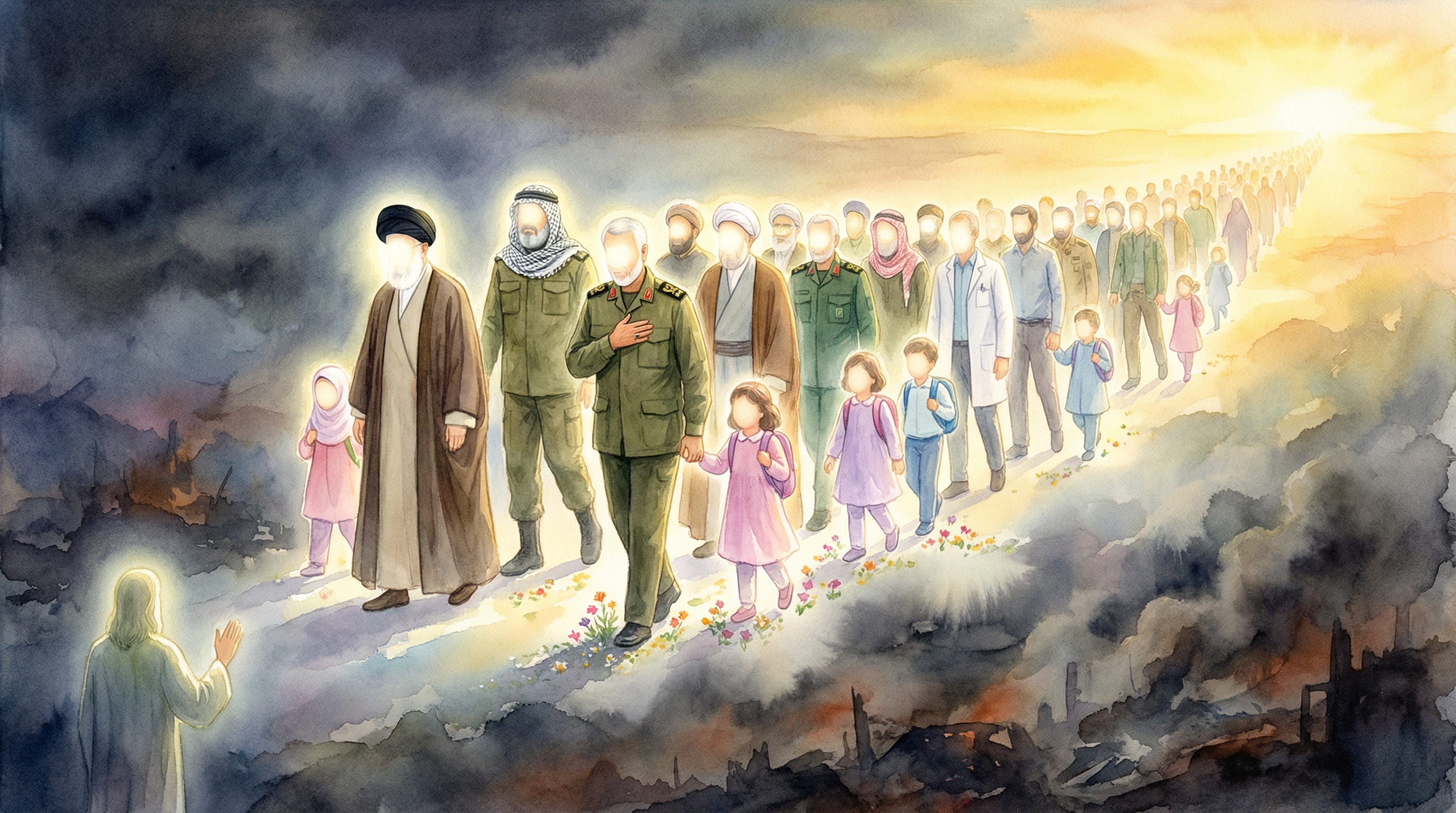
And the trust of God on His earth — the trust that Ali carried, that Husayn watered, that Zaynab proclaimed, that Khomeini revived, that Khamenei guarded, that Nasrallah defended, that Soleimani bled for, that one hundred and sixty-five girls were learning to read by —
that trust will be fulfilled.
And I, the son of the trustees, the last of the chain, the hidden one who was never truly hidden from those who sought with sincerity —