

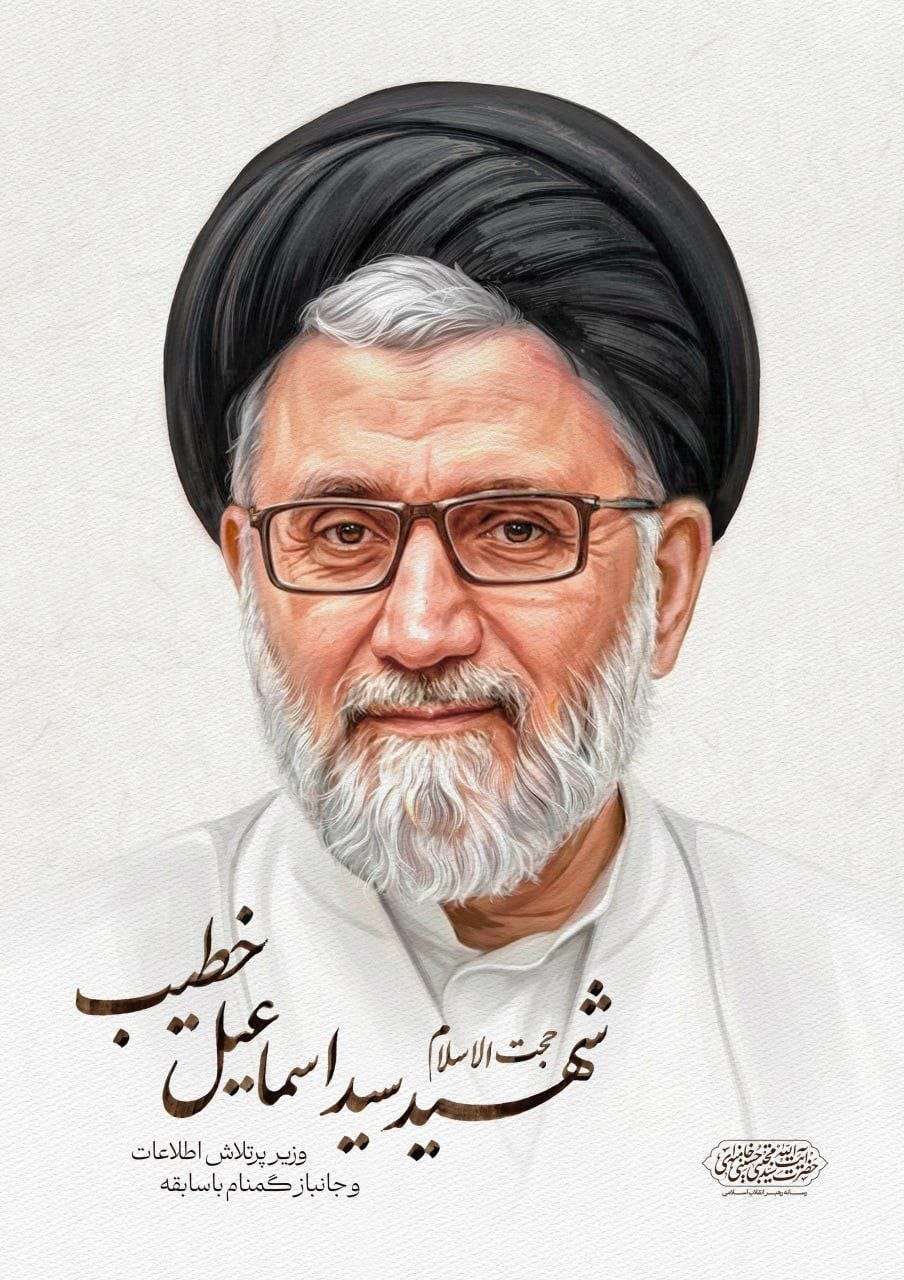
The recent publication of the will of the Minister of Intelligence, Hujjat al-Islam Sayyid Ismail Khatib, offers a rare window into the internal moral and ideological compass of a high-ranking official within the Islamic Republic of Iran. Far from being a mere legal document, the will serves as a “Manshur” (Charter) for his descendants and followers, blending traditional Shia piety with a rigid commitment to the revolutionary state.
A Foundation of Devotion
The first half of the document is deeply rooted in the traditions of Ahl al-Bayt (the Prophet’s Family). Khatib emphasises the “metaphysical necessities” of a believer’s life: constant recitation of the Quran, the performance of Nafila (supererogatory) prayers, and the significance of Ziyarat (pilgrimage).
By listing specific supplications such as the Ziyarat Ashura and the Dua al-Faraj, Khatib aligns his personal identity with the expectation of the Hidden Imam. This spiritual rigour is presented not just as a private matter, but as the essential fuel required to sustain the burdens of public office and revolutionary struggle.
The Doctrine of the “Middle Path”
A recurring theme in the testament is the concept of moderation, though it is defined through a specific theological lens. Khatib warns his children against “extremes,” which he characterises as either preceding or lagging behind the leadership.
“The one who precedes them is a renegade, the one who lags behind them is lost, and the one who adheres to them is saved.”
This passage highlights a central tenet of the Islamic Republic’s political theory: total adherence to the Wilayat al-Faqih (Guardianship of the Jurist). To Khatib, the path to salvation is synonymous with absolute obedience to the Supreme Leader, whom he views as the deputy of the Mahdi.
Political Continuity and the “Divine Gift”
Perhaps the most notable section of the will is the explicit mention of Ayatollah Sayyid Mujtaba Khamenei. By describing his appointment or presence as a “divine gift,” Khatib signals a strong endorsement of political continuity within the current leadership structure. This reflects the high level of trust and the perceived “sacredness” of the leadership lineage among the state’s elite.
Accountability and “Bayt al-Mal”
Despite his high-ranking position in the Ministry of Intelligence—a role often shrouded in secrecy and power—Khatib’s will expresses a striking concern for the Bayt al-Mal (the public treasury). He requests that the Supreme Leader be asked for forgiveness on his behalf regarding “Shariah rights.” This underscores a traditional Islamic anxiety regarding the handling of public funds and the heavy responsibility that comes with state authority.
Legacy of Martyrdom and Family
The document concludes with a focus on the “social contract” of the believer:
Social Justice: He urges his family to treat the poor as “participants” in their lives, emphasising the preservation of dignity over mere charity.
Honour and Kinship: He stresses the importance of family ties (Silat al-Rahm) and maintaining the honour of others in speech.
The Chain of Martyrs: By invoking names like Hassan and Majid Bagheri, he links his own legacy to the “sacred defence” and the foundational sacrifices of the revolution.
Conclusion
The testament of Ismail Khatib is a synthesis of the mystic and the militant. It portrays a worldview where the administrative duties of a Minister are inseparable from the spiritual duties of a cleric. For Khatib, the survival of the Islamic Republic is not merely a political goal, but a divine mandate that requires a specific blend of piety, moderation, and unwavering loyalty to the jurist-leader.