

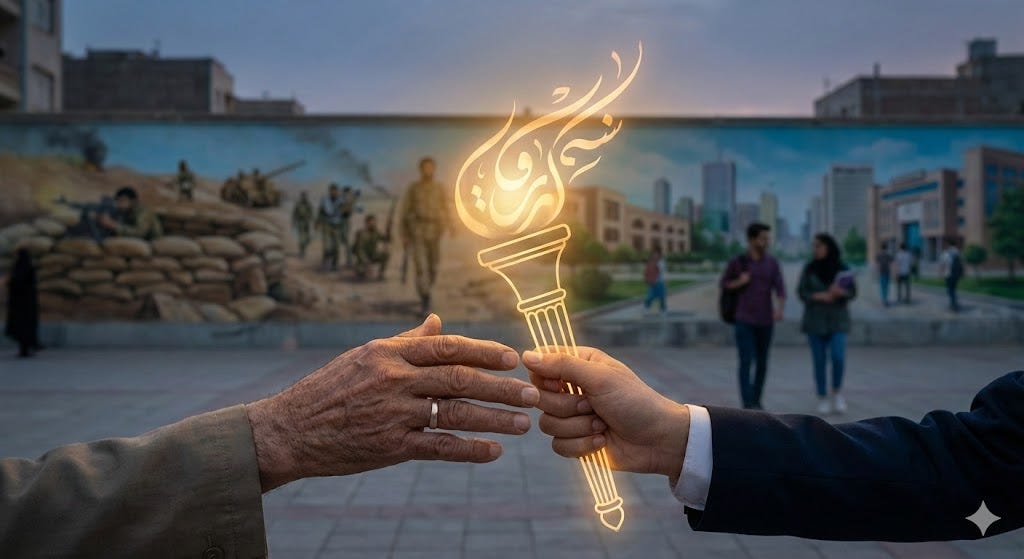
In an era saturated with digital noise and rapidly shifting cultural tides, the challenge for any nation is not just remembering its history, but ensuring that the spirit of that history survives. For a generation that did not witness the visceral realities of the Iran-Iraq war—known in Iran as the Sacred Defense—the war is often viewed through the lens of archives and anniversaries. However, as Leader of the Islamic Revolution Ayatollah Seyyed Ali Khamenei recently emphasized, the true imperative today is to translate the profound motivations of that era into a language that resonates with the youth of tomorrow.
The current cultural landscape offers a paradox. On one hand, young people are bombarded by modern tools and foreign influences designed to reshape their worldviews. On the other, there remains a resilient core of religious and cultural identity within them. Ayatollah Khamenei noted this unique opportunity, stating,
“Our youth are good young people. Despite the advanced means available to influence them with various ideas and content, they have managed to preserve their religious identity. This environment must be used to creatively explain and transmit these values to young people.”
The Anatomy of Sacrifice
To effectively pass down this legacy, we must first understand what drove it. It is a disservice to the martyrs to reduce their actions to mere bursts of emotion or the fervor of a moment. The men and women who left behind comfortable lives did not do so because of a stirring speech alone.
Reflecting on this, the Leader posed a poignant question:
“Why does a young person give up a comfortable life—being with family, studying, working, pursuing dreams and a career—to face the hardships and dangers of war, difficulties that only those who have experienced it truly understand?”
Their motivations were rooted in something far more durable: a yearning for spiritual transcendence and a sense of duty.
He warned against a superficial reading of this history, asserting,
“If we reduce this great endeavor to mere emotions, we do a disservice to this movement and to these individuals. To say, ‘They were moved by speeches and emotions, so they went,’ is to misunderstand their sacrifice. There are deeper motivations—seek them out and understand them.”
The Art of Transmission
Preserving this spirit requires more than bureaucratic obligation; it requires art and tireless effort. The transmission of these values cannot be left to inertia. Ayatollah Khamenei frankly noted a gap in current efforts:
“Unfortunately, the behavior of some cultural institutions and certain responsible organizations does not reflect the dedication needed to pass on the values of the Sacred Defense.”
Instead, it demands creativity. The stories of the Sacred Defense must be told with sophistication and allure. It requires a concerted effort to clarify the past using compelling artistic tools, leveraging the diversity of the populace to turn local commemorations into national movements.
A Torch Passed, Not Just Observed
Despite hardships, the foundational elements for advancing these values remain strong. The youth are not lost; they are waiting. As Ayatollah Khamenei encouraged,
“Despite all the hardships, poverty, and challenges, there are countless positive elements and opportunities in the country to advance Islam and the Revolution, and these must be strengthened.”
The goal is not merely to have the next generation look back in awe, but to have them look forward with the same resolve. By decoding the motivations of the martyrs—faith, selflessness, and purpose—we empower the living to face their own battles with the same driving spirit. As the Leader concluded,
“If the commemoration of the martyrs and the transmission of their messages and values is done effectively, this advantage will help extend their impact to other parts of the country as well.”
Reference: Tehran Times